Hat-trick in states guarantee of hat-trick in 2024: PM Modi
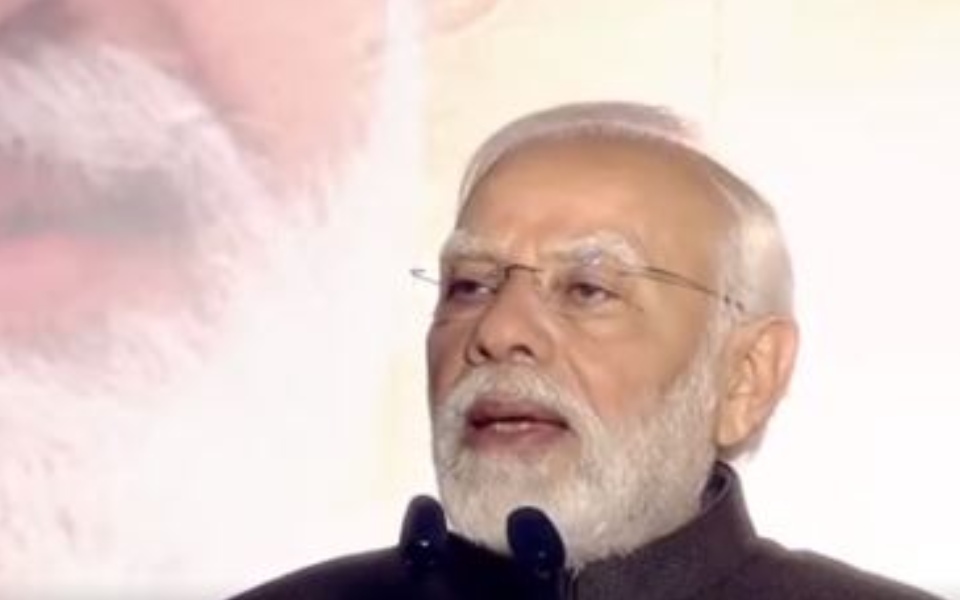
New Delhi, Dec 3: Prime Minister Narendra Modi on Sunday hailed BJP's big win in the assembly polls as a victory for his government's agenda of self-reliant India, asserting that its hat-trick in the states is a guarantee of its hat-trick of Lok Sabha poll wins in 2024.
"The results show popular support for our battle against corruption," he told a crowd of cheering supporters at the BJP headquarters here, adding that they have served a lesson to the Congress and the opposition's INDIA bloc that mere collecting some dynasts on dais may make for a good photograph but cannot win people's confidence.
Voters have delivered a warning to these parties involved in corruption to mend their ways or people will finish them off, he said.
No one should come in between the Centre's development and people, or the masses will remove them, Modi said in a stinging attack on opposition parties.
Some people are already saying our hat-trick in the states is a guarantee of hat-trick in the Lok Sabha polls in 2024, he said.
He told opposition parties to not support those working against the country's interests at a time when development is taking place at a fast pace.
Addressing a big gathering of BJP members, including many Union ministers, Modi said these results will ensure the world's belief in India and infuse more confidence into global investors for the country.
It shows that people are increasingly supporting our agenda for a developed India, he said.
The world is watching that people are voting for a stable government which enjoys a strong majority, he said.
People can distinguish between selfish politics and the politics of national interest, Modi said, asserting that they have realised that a strong BJP leads to the development of the country and every family.
He reiterated that women, youth, the poor and farmers are the four biggest castes and their empowerment will lead to the country's empowerment.
Noting that most members of Other Backward Classes and Scheduled Tribes belong to these categories, he said they have endorsed policies and roadmap presented by the BJP.
Every farmer, young voter and the poor and deprived are saying that they have won, Modi said, adding that the youth looking for a better future and every citizen wanting a developed India by 2047 is feeling successful following the poll results.
"I want to tell you with full honesty that your dream is my resolve," he said, noting how the country's infrastructure is undergong a transformation while its economy remains the fastest growing in the world.
Speaking from the @BJP4India headquarters. https://t.co/wlVWHoY3mF
— Narendra Modi (@narendramodi) December 3, 2023
Let the Truth be known. If you read VB and like VB, please be a VB Supporter and Help us deliver the Truth to one and all.
4 held for sexually assaulting woman, girl on moving bus after social media alert in UP's Agra
Agra (UP) (PTI): Four people were arrested, after a prompt response by police following a social media alert, for allegedly sexually assaulting a woman and a girl inside a moving bus here, officials said on Tuesday.
According to an official police statement, at 12:27 am on April 27, information was received on the social media platform X about an incident of sexual assault on a bus travelling from Kanpur to Ahmedabad, which was approaching Namner crossing in Agra.
Acting under the direction of Police Commissioner Deepak Kumar, the Agra Police social media team immediately alerted the Rakabganj police station within minutes and coordinated with the victims to confirm the incident and obtain the exact location, it stated.
Police teams launched intensive checking at Namner crossing and intercepted the bus as it reached the spot. The four accused involved in the incident were apprehended on the spot, and legal action was initiated against them, the statement said.
The police said the swift response and coordination between the social media team and field units ensured timely action, bringing relief to the victims and other passengers, who expressed gratitude towards the police, it added.