HC appoints former SC judge Ramasubramanian as observer for JNUSU elections
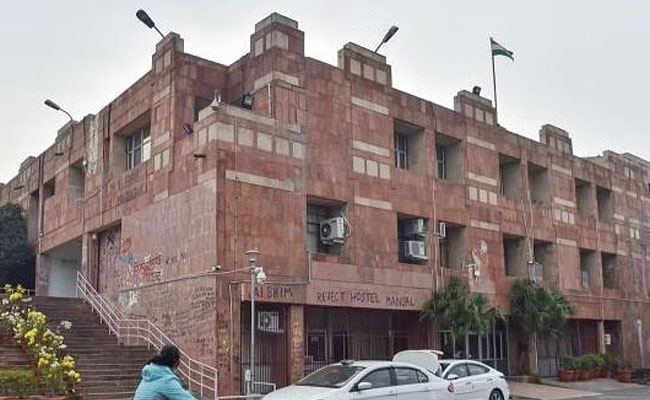
New Delhi (PTI): The Delhi High Court has appointed former Supreme Court judge V Ramasubramanian as an 'observer' to exercise oversight over the activities of the election committee constituted for the Jawaharlal Nehru University Students Union elections for the 2023-24 academic year.
Dealing with a petition filed by a student, Justice Sachin Datta also asked the grievance redressal cell set up in terms of the Lyngdoh Committee recommendations to examine and pass an order on grievances concerning the constitution of the election committee before the declaration of the final result.
"In case it is found that the constitution of the EC (election committee) is not in consonance with the law and/or with the Lyngdoh Committee recommendations (as approved by the Supreme Court), appropriate consequential orders as regards the impugned elections, would also be passed by the grievance redressal cell," Justice Datta said in an order passed on Friday.
"Respective counsel for the parties are also in agreement that in the meantime, for the purpose of the ongoing election process, a retired judge of the Supreme Court be appointed by this court, as the observer to exercise oversight over the activities/functions to be discharged by the election committee. For this purpose, Mr Justice V Ramasubramanian, former judge, Supreme Court of India, is appointed as the observer," the court said.
The JNUSU elections are scheduled to be held on March 22 and results will be declared on March 24.
The petitioner alleged that the procedure adopted for electing the members of the election committee was in complete contravention of the rules.
It was contended that the two students tasked with the responsibility of constituting the committee connived to constitute it with a clear bias towards candidates aligning with their ideological and political stance.
The court stated that it would be apposite if, in the first instance, the petitioner's complaints and grievances were examined by the grievance redressal cell, specifically constituted for the JNUSU elections. The court also gave liberty to the petitioner to approach it.
"In view of the election schedule that is stated to have been notified on 10.03.2024, the grievance redressal cell is directed to complete the aforesaid exercise and pass a reasoned order prior to declaration of the final results," the court ordered.
Petitioner Sakshi, a student of Bachelor of Arts, raised several grievances with respect to the scheduled elections, including the authorisation given to two students -- Aishe Ghosh and Md Danish -- to conduct the General Body Meeting (GBM) and the formulation of the election committee.
The petition sought a direction to conduct fresh GBMs strictly in accordance with the terms specified in the Lyngdoh Committee Report to ensure the sanctity and trust in the JNUSU elections.
In 2005, the Supreme Court directed the constitution of a committee headed by J M Lyngdoh, former chief election commissioner of India, with the intent to ensure fairness and transparency in holding elections to the students' unions in various universities across the country. The committee had made various recommendations in this regard.
The apex court adopted the Lyngdoh Committee recommendations, making them mandatory for universities.
Let the Truth be known. If you read VB and like VB, please be a VB Supporter and Help us deliver the Truth to one and all.
KKR defeat LSG via Super Over
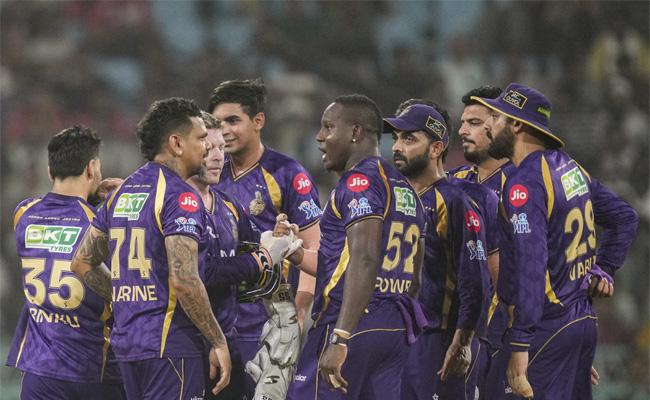
Lucknow (PTI): Kolkata Knight Riders edged Lucknow Super Giants via Super Overs in a battle between two bottom-placed teams in the IPL, here on Sunday.
Chasing a modest 156, LSG suffered a batting collapse and managed to tie the contest and take it to Super Over with No. 9 Mohammed Shami striking a last-ball six against a wayward Kartik Tyagi, who leaked 16 runs in the final over.
But Sunil Narine bowled a stunning Super Over conceding just one run and taking two wickets to give KKR an easy target.
Rinku Singh then finished the chase with a boundary off first ball from Prince Yadav.
Earlier the KKR were in deep trouble with 93/7 in 15 overs but Rinku smashed a sensational 83 not out from 51 balls including four sixes in a row in the final over to lift them to 155/7.
Cameron Green (34) was the only other batter to reach double-digit scores as KKR suffered a familiar batting meltdown with Mohsin taking his maiden fifer.
In reply, LSG continued their dismal show with the bat to succumb to their fifth loss in a row.
Brief Scores:
Kolkata Knight Riders 155/7; 20 overs (Rinku Singh 83 not out, Cameron Green 34; Mohsin Khan 5/23). Lucknow Super Giants 155/8; 20 overs (Rishabh Pant 42). KKR won via Super Over.