"Heavily abused": Ex-minister Arun Shourie moves SC against sedition law
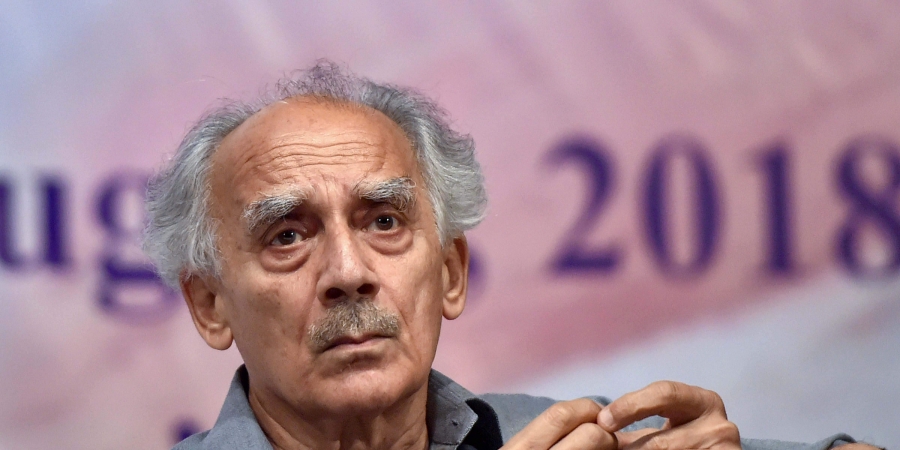
New Delhi, Jul 15: Former Union minister Arun Shourie on Thursday moved the Supreme Court to have the sedition law declared unconstitutional, arguing that it is "heavily abused" and cases are being filed against citizens for "exercising their freedom of speech and expression".
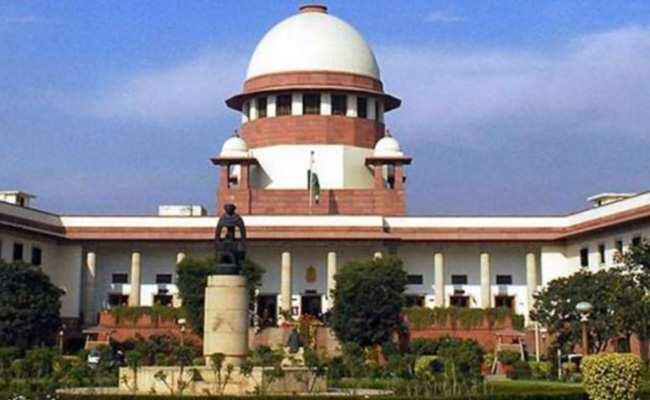
Significantly, the petition was filed the day a bench headed by Chief Justice N V Ramana expressed concern over the enormous misuse of the law and asked the Centre why it was not repealing the provision used by the British to silence people like Mahatma Gandhi to suppress the freedom movement.
The bench agreed to examine the pleas filed by the Editors Guild of India and a former major general challenging the constitutionality of the law, and said its main concern was the "misuse of law".
Section 124-A (sedition) under the IPC is a non-bailable provision. It makes any speech or expression that brings or attempts to bring into hatred or contempt or excites or attempts to excite disaffection towards the Government established by law in India a criminal offence punishable with a maximum punishment of life imprisonment.
According to Shourie's petition, the definition of sedition (Section 124-A) was vague and incapable of accurate appreciation by the common citizen and the law enforcement agencies/ police".
The petition, filed by advocate Prashant Bhushan on Shourie's behalf and the NGO Common Cause, claims that sedition is a colonial law used expressly to suppress dissent by the British in India.
Sedition has come to be heavily abused with cases being filed against citizens for exercising their freedom of speech and expression on the basis of the literal definition that is available to law enforcement authorities on the statute books, it said.
The petition said the interpretation accorded to Section 124-A by the Supreme Court in the 'Kedar Nath Singh vs State of Bihar' matter in 1962 was not understood or appreciated by the police which continues to register cases against citizens who are exercising their right to freedom of speech and expression".
By the time the courts step in to apply the interpretation of Kedar Nath to the facts of the cases, the citizens have already been deprived of their liberty, the petition said.
It added that after India became a democracy, the law was challenged as being violative of the fundamental right to freedom of speech and expression guaranteed by Article 19(1)(a) of the Constitution of India in the Kedar Nath matter.
Even though the provision was upheld by the Supreme Court in 1962, the position of the law has changed and the matter requires reconsideration, it said.
In such circumstances, it is submitted that this court needs to revisit the judgment of Kedar Nath Singh v State of Bihar, and strike down Section 124 A of Indian Penal Code, as being violative of Articles 14 (equality before the law), 19(1)(a) (freedom of speech and expression) and 21 (protection of life and personal liberty) of the Constitution of India, the petition said.
It sought a direction declaring Section 124-A of the Indian Penal Code as unconstitutional".
Alternatively, direct that strict action as per law be taken against concerned public servants and complainant/ informants in cases where the accused is discharged in a case of sedition and lay down guidelines for the same, it said.
Let the Truth be known. If you read VB and like VB, please be a VB Supporter and Help us deliver the Truth to one and all.
Karnataka to approach SC seeking permission to continue MGNREGA
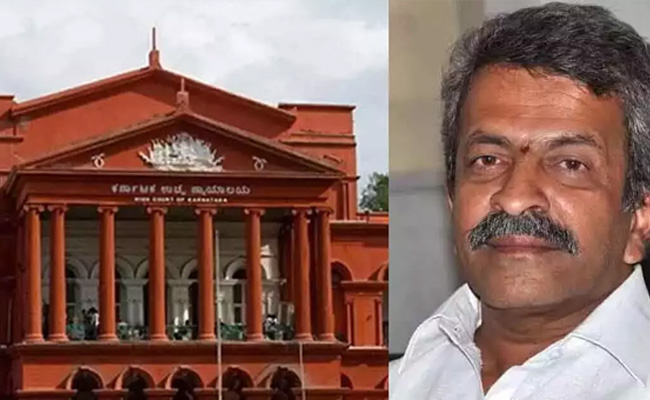
Bengaluru (PTI): The Karnataka Cabinet on Thursday decided to approach the Supreme Court seeking permission to continue implementation of MGNREGA in the state, contending that the Centre had repealed the rural employment guarantee law without consultation and failed to put in place any alternative mechanism under the VB-G RAM G Act.
Briefing reporters after the Cabinet meeting, Karnataka Law and Parliamentary Affairs Minister H K Patil said the state would immediately move the apex court seeking permission to prepare and implement the annual action plan for rural employment works, while also challenging what it described as an infringement on the constitutional rights of states.
The parliament passed VB-G RAM G in December that replaces MGNREGA.
Patil explained that the Cabinet decided to approach the court seeking permission for the State Government to prepare an action plan in this regard. Since the Centre’s stand interferes with the constitutional rights of state governments, the Cabinet has also decided to challenge this issue before the appropriate court
“There are two points here. One is that they have come in the way of our constitutional right of providing the right to work. That has been halted, and, therefore, the State Government has decided to approach the Supreme Court. The second point is that the Government of India has not provided any alternative,” the Minister said.
The Central Government has not yet issued a notification to implement the VB-G RAM G Act, nor has it made any alternative arrangements and hence continuing Mahatma Gandhi National Rural Employment Guarantee Act (MGNREGA) is unavoidable in the public interest, the Minister said.
“Therefore, in the interest of the public, farmers and agricultural labourers, we must continue MGNREGA. For that purpose, the Cabinet has decided to approach the court seeking permission for the State Government to prepare the action plan for this year,” he added.
The Minister also said the Centre had only permitted continuation of pending and spillover MGNREGA works without releasing grants or announcing a fresh action plan.
“The Centre itself has said that pending, spillover and half-done MGNREGA works can continue. That means MGNREGA is actually still functioning in practice. But there is no new action plan,” he said.
Patil said the state had already passed a resolution on the issue, while Chief Minister Siddaramaiah had written to the Prime Minister and the Rural Development Minister had held discussions with Union Ministers.
Replying to questions, the minister said the state would move court “as immediately as possible.”
He clarified that the state was seeking permission to formulate and implement this year’s action plan under the existing framework.
“What we are asking the Supreme Court is to allow us to have the action plan for this year and implement it,” he said.
The Cabinet also held detailed discussions on the final report submitted by the State Education Policy Commission headed by former UGC chairman Professor Sukhadeo Thorat.
Patil said a Cabinet sub-committee would be constituted to examine the report and recommend measures for implementation.
“No decision has been taken yet. The Cabinet sub-committee will recommend what should be accepted and what should be modified,” he said.
He said the report comprised around eight volumes and covered issues relating to financial implications, human resources, curriculum reforms, deemed universities, unitary universities and newly established universities. The Chief Minister has been authorised to constitute the sub-committee.
The Cabinet also approved the Karnataka Motor Transport and Other Related Workers’ Social Security and Welfare Amendment Bill, 2026, transferring welfare administration of transport-related workers from the Labour Department to the Transport Department.
The Cabinet further approved establishment of three new industrial estates in Kalaburagi, Yadgir and Surpur under the Karnataka State Small Industries Development Corporation and Kalyana Karnataka Region Development Board schemes at an estimated cost of Rs 200 crore.
The Cabinet also approved amendments to Karnataka Civil Services (General Recruitment) Rules, 2026, providing two per cent reservation in state civil services appointments for sportspersons.