Here’s how Muslim candidates fared in West Bengal Elections; Detailed report
41 of 42 Mamata’s Muslim candidates won, but overall Muslim numbers in state assembly declines
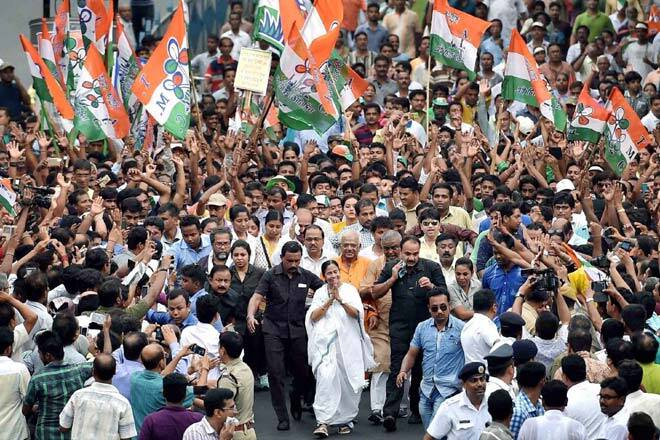
Kolkata: The number of Muslim MLAs in the newly-elected 292-member West Bengal assembly is on a constant decline since the 2011 state elections even as 41 of 42 Muslim candidates fielded by Mamata Banerjee’s TMC emerged victorious in the new assembly.
In the 2011 assembly election, 59 Muslim candidates marched into the state assembly while the numbers dipped down to 56 in 2016. In 2021, when 41 Muslim candidates of TMC alone emerged victorious in the polls, the overall numbers remained a meagre 42.
Rashtriya Secular Majlis Party (RSMP) candidate Md. Nawsad Siddique is the lone Muslim MLA to walk into the WB assembly who does not belong to Mamata Banerjee’s party.
TMC contested on all of 292 constituencies that went to the polls (Bypolls will be held on two constituencies later) and won 213 seats to retain the power for the third consecutive term of CM Mamata Banerjee. They had fielded Muslim candidates of 42 seats, all of them but one candidate made it to the assembly.
Among Mamata’s 41 Muslim MLAs is Humayun Kabir, the police commissioner Chandannagar near Kolkata who had quit the police force and joined the politics a few months before the election.
The BJP on the other hand won a total of 77 seats but none of them is a Muslim.
Congress and CPI-M, however, failed to register win on even one seat let alone Muslim candidate in the election, in what has been their worst electoral show in the state.
Asaduddin Owaisi’s AIMIM fielded 5 candidates in the election and none of them could win any seat for the party.
Indian Secular Front (ISF) of Abbas Siddiqui had fielded candidates in 26 seats but could not manage to win any seats.
The only positive for the Muslim community from the WB election is the winning percentage of TMC's Muslim candidates despite the communal politics triggered by the right-wing to steer elections into their favor, but the community will surely look for answers when it comes to the declining overall numbers of its candidates in the 294-member assembly of the state.
Let the Truth be known. If you read VB and like VB, please be a VB Supporter and Help us deliver the Truth to one and all.
Vijay calls on TN Governor, stakes claim to form govt
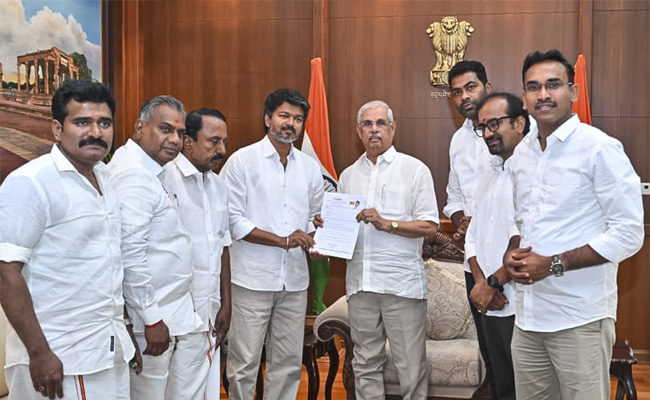
Chennai (PTI): TVK chief Vijay on Wednesday met Tamil Nadu Governor Rajendra Vishwanath Arlekar and staked claim to form the government in the state, two days after his party emerged as the single largest party but was short of a simple majority.
The TVK founder met the Governor at 3.15 pm following an invitation from the Lok Bhavan. He was accompanied by party leaders, including "Bussy" N Anand, Aadhav Arjuna, K A Sengottaiyan, C T Nirmal Kumar and others during the meeting.
Vijay met the Governor hours after the Congress party declared support and following a meeting between the TVK chief and Congress leaders here. While the TVK appears keen on securing support from the VCK and the two Left parties, who continue to be part of the DMK-led alliance, they have so far not given any positive signals.
The TVK won 108 seats in the 234-member strong Tamil Nadu Assembly in the recently held elections. 118 is the majority mark to form the government.
Vijay is likely to take oath as Chief Minister on May 7, according to party sources.
The DMK won 59, AIADMK 47, Congress 5, PMK 4, IUML 2, CPI 2, VCK 2, CPI-M 2. BJP, DMDK and AMMK won 1 seat each.
VIDEO | Chennai: TVK chief Vijay (@TVKVijayHQ) meets Tamil Nadu Governor Rajendra Vishwanath Arlekar, submits MLAs’ support letter to stake claim to form government in the state.
— Press Trust of India (@PTI_News) May 6, 2026
(Source: Third Party)
(Full video available on PTI Videos - https://t.co/n147TvrpG7) pic.twitter.com/XWAo9djkca