High time PM breaks 'silence' on 'proliferation' of Islamophobic incidents: Shashi Tharoor
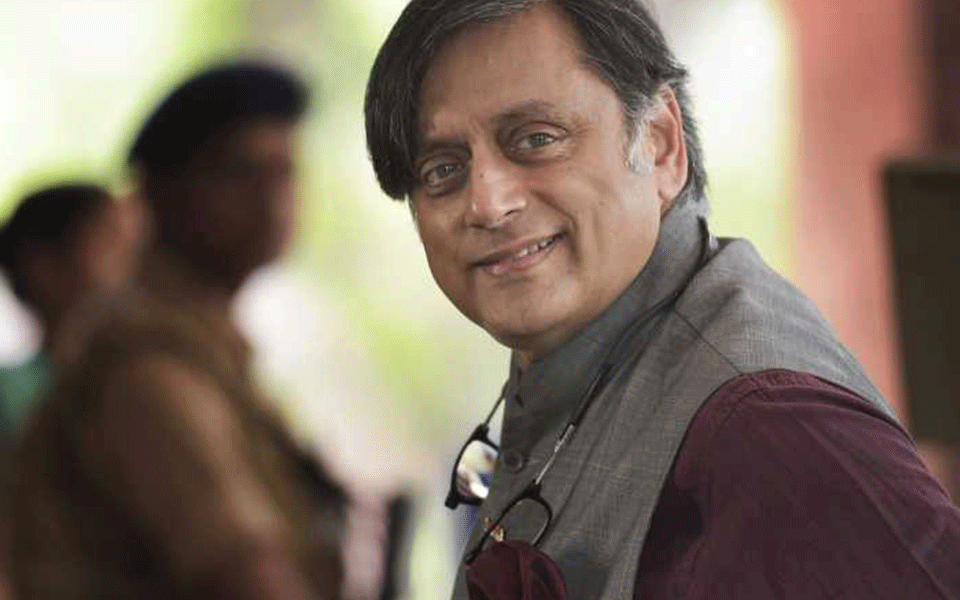
New Delhi(PTI): Amid outrage over the controversial remarks on Prophet Mohammad by the BJP's now-sacked two functionaries, Congress leader Shashi Tharoor on Sunday said it is high time Prime Minister Narendra Modi broke his silence on the "proliferation of hate speech and Islamophobic incidents" in the country, asserting that his silence is interpreted by some as condoning what has been happening.
In an interview with PTI, Tharoor said the irony is that in recent years the Indian government has taken "impressive steps" to strengthen relations with Islamic countries, but that risks being "seriously undermined".
The former Union minister also weighed in on the ongoing debate on the need for blasphemy laws in the country, and said he is not a fan of such laws because the history of such laws elsewhere is littered with their misuse and abuse.
"The existence of a blasphemy law tends to encourage both excessive frivolous litigation and mob misconduct by those who take the law into their own hands. I think our current hate speech laws and Section 295A are quite adequate to deal with such misbehaviour," Tharoor said.
The issue is of the willingness of the police and local authorities to enforce the law, without fear or favour, against whoever violates it, he said.
"Exemplary action against any and all offenders will have a salutary effect in reducing such cases in future," the Lok Sabha MP from Thiruvananthapuram said.
Asked about the outrage and condemnation from a number of Muslim-majority nations over the controversial remarks on Prophet Mohammad and calls that Prime Minister Modi should have intervened in the matter when the comments were made, Tharoor said, "I believe it is high time the PM broke his silence on the proliferation of hate speech and Islamophobic incidents in our country, because his silence is interpreted by some as condoning what has been happening."
"I am sure he (Modi) understands that this kind of divisive rhetoric is undermining his own vision for India's development and prosperity," he said.
Social cohesion and national harmony are a must for any nation to progress and grow, Tharoor asserted.
"That is why, in the name of 'sabka saath, sabka vikas, sabka vishwas', he must publicly call for a stop to such behaviour," he said.
Asked about the impact of the row over diplomacy and foreign policy, Tharoor said the irony is that in recent years the Indian government has taken impressive steps to strengthen relations with Islamic countries, especially in the Gulf.
"That risks being seriously undermined, as the media in these countries is replete with stories about the increasing 'demonisation' of Muslims in our country," the former minister of state for external affairs said.
The BJP had last Sunday suspended its national spokesperson Nupur Sharma and expelled its Delhi media head Naveen Kumar Jindal after their controversial remarks on Prophet Mohammad.
Two persons succumbed to gunshot wounds in Jharkhand capital Ranchi and fresh demonstrations were held in West Bengal's Howrah on Saturday as tension prevailed in several parts of the country, a day after the violent protests against the controversial remarks.
On the protests, Tharoor said section 295A of the Indian Penal Code clearly makes it a criminal offence to outrage the religious feelings of any class of citizens of India ; anyone who by 'words, either spoken or written, or by signs or by visible representations or otherwise, insults or attempts to insult the religion or religious beliefs' of Indians should have been prosecuted by the police.
"I am glad to see that action is being taken, even if belatedly, against those who injected such toxic elements into our national discourse," he said.
Asked about the Congress being accused of peddling in 'soft Hindutva' in the past and if the party needs to take an aggressive stance on issues of the minorities such as the row over the comments on the Prophet, Tharoor said he believes the Congress has been clear in its denunciation of this recent incident.
"We believe in an inclusive idea of India and should and must speak up whenever that idea is violated by word or deed -- whoever does it," he asserted.
Let the Truth be known. If you read VB and like VB, please be a VB Supporter and Help us deliver the Truth to one and all.
Real Madrid fines Valverde and Tchouaméni half a million euros each for altercation
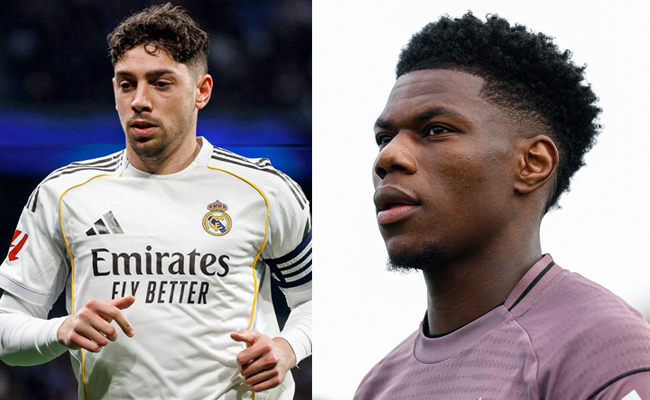
Barcelona (AP): Real Madrid slapped players Federico Valverde and Aurélien Tchouaméni with half-a-million-euro ($588,000) fines on Friday for their altercation during practice.
The massive fines came a day after the midfielders tussled when the team trained. Valverde said in a post on social media on Thursday that no punches were thrown. But Valverde knocked his head on a table and he suffered a small cut that required a brief hospital visit.
On social media, Valverde initially called it a “meaningless fight” with a teammate and said “everything has been blown out of proportion."
His employers, however, considered it a significant enough breach of team discipline to nail both Valverde and Tchouaméni with fines that bite even the bank account of a top soccer player. The half-a-million euro penalties reflect the reputational damage the club was enduring in a chaotic end to a disappointing season.
In a statement, the 15-time European champion said its disciplinary action was concluded after both players expressed to the club “their complete remorse for what happened and apologized to one another.”
Madrid added they also apologized to their teammates, the coaching staff and club supporters, as well as showing their willingness to accept whatever disciplinary action the club deemed “opportune.”
Tchouaméni was back training with Madrid on Friday, two days before they play at Barcelona in a clasico. Madrid has to win otherwise Barcelona will be crowned La Liga champion.
After being notified of the fine, he posted a public apology to the club and its fans on social media.
“What happened this week in training is unacceptable,” Tchouaméni wrote. "I say this while thinking about the example we are expected to set for young people, whether in football or at school.
“Above all, I am sorry for the image we projected of the club.”
Valverde was not at practice due to the head knock.
Both players are set to play in the World Cup next month, with Tchouaméni playing for France and Valverde for Uruguay.
Chaotic end to a poor season
===================
The run-in between the players, who for seasons have played side by side in Madrid's midfield, came after they argued this week in previous training sessions. But tempers boiled over on Thursday. Spanish media was rife with reports that the players previously disagreed over the club's decision to let coach Xabi Alonso go after just months on the job.
It was not the only altercation involving Madrid players during training this week. Álvaro Carreras confirmed he was in a “minor” incident with a teammate. Spanish media said he and fellow defender Antonio Rüdiger got into a scuffle.
Álvaro Arbeloa, the coach who was promoted from Madrid's reserve team when Alonso was fired in January, will face tough questions on what went wrong inside the changing room when he gives a press conference on Saturday ahead of the clasico at Camp Nou.
Madrid is facing a second consecutive campaign without a major trophy amid rumors in the Spanish media that club president Florentino Pérez is considering bringing back Jose Mourinho to straighten out his underperforming team.