Hindu Army chief Sushil Tiwari arrested for raising communal slogans
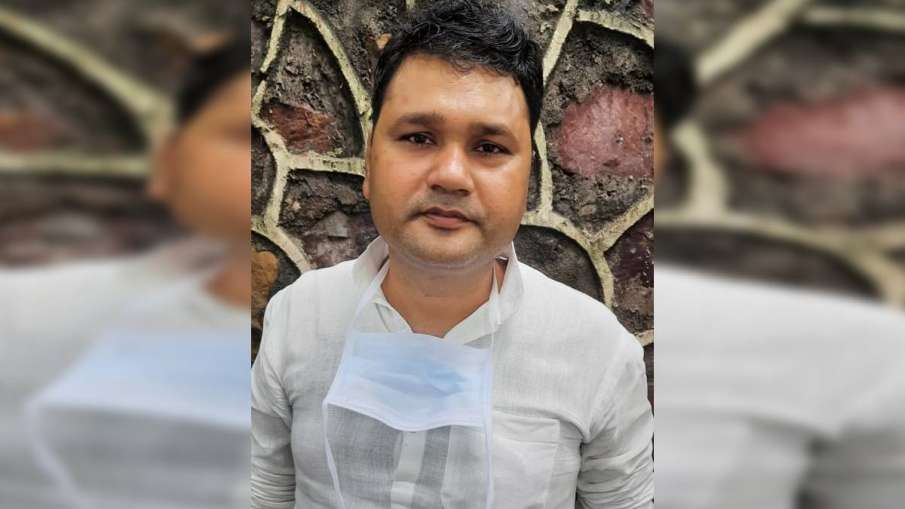
New Delhi, Aug 21: Hindu Army chief Sushil Tiwari has been arrested for allegedly raising slogans against a community during a protest near the Jantar Mantar here, police said on Saturday.
Tiwari, a native of Lucknow, was questioned on Friday night, following which he was arrested, a senior police officer said.
Two video clips had surfaced, and in one of them, Tiwari was seen using foul language and raising slogans against a community, police said.
Six people, including advocate and former BJP spokesperson Ashwini Upadhyay, have already been arrested in the case. The slogans, police said, were raised during the August 8 protest organised by the Bharat Jodo Andolan held near the Jantar Mantar.
The earlier arrests were made after an FIR was registered at the Connaught Place Police Station. It pertained to provocative sloganeering at the programme, they said. Besides Upadhyay, Preet Singh, Deepak Singh, Deepak Kumar, Vinod Sharma and Vinit Bajpai have been arrested, police said, adding that Tiwari is the sixth to be arrested in the case.
Preet Singh is the director of Save India Foundation' while Deepak Singh, Deepak Kumar and Vinod Sharma are associated with different right-wing organisations. The videos showing slogans being raised against a community during the protest was widely circulated on social media, following which the Delhi Police registered a case.
Hundreds of people had attended the protest organised by Bharat Jodo Andolan.
Shipra Srivastava, media in-charge of Bharat Jodo Aandolan, had said the protest was held under the leadership of Upadhyay.
However, she denied any links to those who raised anti-Muslim slogans.
The protest was held against colonial laws and demanding to abolish 222 British laws. We have seen the video, but have no idea who they are. The police should take strict action against those who raised the slogans, Srivastava had said.
Upadhyay has denied his involvement.
I have submitted a complaint to the Delhi Police to examine the video which went viral. If the video is authentic, strict action should be taken against the persons who were involved in it," he had said.
If the video is fake, then a propaganda is being circulated to defame Bharart Jodo Andolan, Upadhyay had said.
Let the Truth be known. If you read VB and like VB, please be a VB Supporter and Help us deliver the Truth to one and all.
Kharge speaks with CPI's D Raja, seeks support for TVK
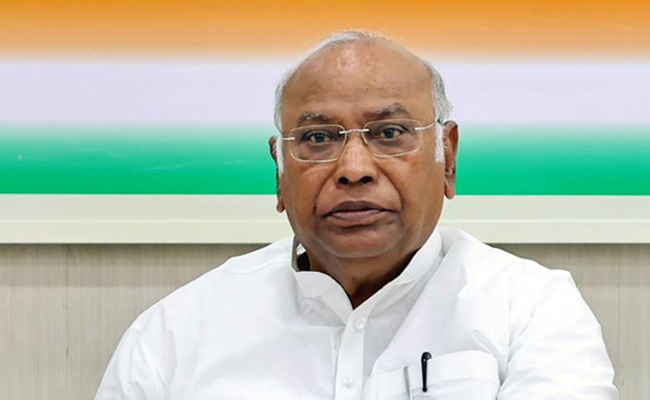
New Delhi (PTI): Congress president Mallikarjun Kharge has spoken with CPI general secretary D Raja and urged his party to support the TVK for the formation of a secular government in Tamil Nadu, sources said on Friday.
Sources said Kharge called Raja on Thursday to emphasise that the CPI should take an early decision so that the BJP does not get a chance to try and grab power through the backdoor.
Raja is understood to have said that CPI will consult its local allies, including the DMK, and decide on it soon.
The Congress, a long-time ally of the DMK, on Wednesday announced its support to actor-politician Vijay's TVK to form the government in Tamil Nadu and severed ties with the Dravidian major.
The DMK dubbed the act of Congress to snap ties with it and join forces with TVK as "backstabbing."
The TVK won 108 seats in the 234-member Assembly in the April 23 polls. Though the Congress, which has five MLAs, has extended support to the TVK, the actor-politician-led party is still short of as many seats to touch 118, the majority mark.
The CPI executive committee, which met here on Friday over support to the TVK, is involved in weighing the pros and cons, the party said.
The Communist Party of India is keen on safeguarding its ideology and ensuring that a common minimum programme is followed in case the party decides to back the TVK, a source in the party said.
The CPI won two seats in the April 23 Assembly election in alliance with the DMK.
Earlier, CPI general secretary D Raja told PTI Videos that the party was keen on keeping the right wing away from the state.
"We will come to some conclusion and we want a stable government that will work in the interest of the state, keep away communal right-wing forces and uphold secular democratic values," Raja said, adding, the party's position would be clear by the evening