Hope Bangladesh interim govt will take forceful steps to instill confidence in minorities: Cong
New Delhi, Aug 10: The Congress on Saturday expressed concern over reports of targeted attacks on minorities and their places of worship in Bangladesh and hoped the interim government there would take forceful steps to ensure that they continue to lead their lives in an atmosphere of security, dignity and harmony.
Bangladesh's interim leader Muhammad Yunus has condemned the attacks on the minority communities in the violence-hit nation, terming them as "heinous", and urged the youth to protect all Hindu, Christian, and Buddhist families from harm.
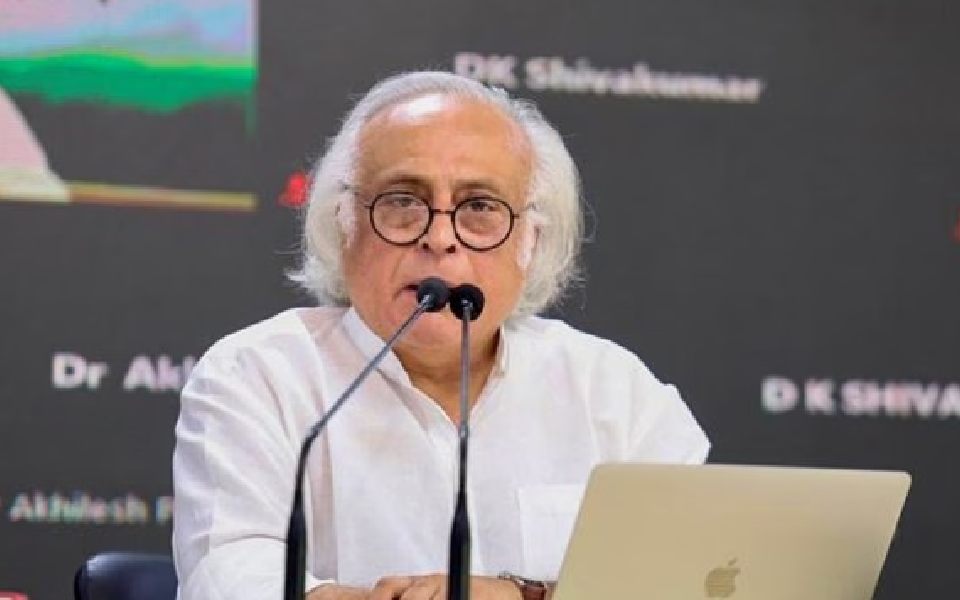
Congress general secretary in-charge communications Jairam Ramesh said, "While noting that there have been influential voices within Bangladesh calling for the preservation of the country's multi-religious heritage, the Indian National Congress expresses its concern at reports of targeted attacks on minorities there and their properties and places of worship."
"The Indian National Congress hopes that the Interim Government in Bangladesh will take forceful steps to instill confidence in minority communities and ensure that they continue to lead their lives in an atmosphere of security, dignity and harmony," Ramesh said in a post on X.
The BJP had on Friday criticised opposition parties, saying their "silence" on the condition of Hindus and other minority communities in Bangladesh is unfortunate.
While extending best wishes to Yunus on Thursday, Prime Minister Narendra Modi voiced hope of an early return to normalcy and stressed on ensuring the safety of Hindus and other minority communities in that country.
Members of minority communities in Bangladesh faced at least 205 incidents of attacks in 52 districts since the fall of the Sheikh Hasina-led government on August 5, according to two Hindu organisations -- Bangladesh Hindu Buddhist Christian Unity Council and the Bangladesh Puja Udjapan Parishad -- in the country.
Thousands of Bangladeshi Hindus have been trying to flee to neighbouring India to escape the violence.
Yunus unequivocally condemned the attacks on minority communities in the country and urged the students to protect all Hindu, Christian, and Buddhist families from harm.
"Are they not the people of this country? You have been able to save the country; can't you save some families?... You must say no one can harm them. They are my brothers; we fought together, and we will stay together," he asserted, underscoring the need for national unity.
While noting that there have been influential voices within Bangladesh calling for the preservation of the country’s multi-religious heritage, the Indian National Congress expresses its concern at reports of targeted attacks on minorities there and their properties and places of…
— Jairam Ramesh (@Jairam_Ramesh) August 10, 2024
Let the Truth be known. If you read VB and like VB, please be a VB Supporter and Help us deliver the Truth to one and all.
Ordinance issued to increase number of Supreme Court judges from 34 to 38
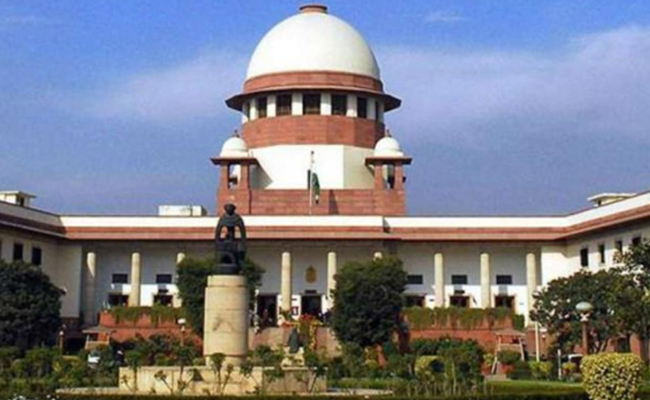
New Delhi (PTI): The government has promulgated an ordinance to increase the strength of the Supreme Court from the present 34 judges to 38, including the Chief Justice of India.
The law ministry notified the ordinance on Saturday, which amended the Supreme Court (Number of Judges) Act, 1956, to increase the sanctioned strength of the top court.
So far, the sanctioned strength of the top court was 34, including the Chief Justice of India (CJI). Now, the number of judges has been increased by four, taking the sanctioned strength to 38.
The top court will now have 37 judges, other than the CJI.
With the apex court having two vacancies at present, and the ordinance coming into force immediately, the Supreme Court Collegium will now have to recommend six names for appointment as judges in the top court.
A bill will be brought in the Monsoon Session of Parliament to convert the ordinance – an executive order – into a law passed by Parliament.
The Union Cabinet had cleared a draft bill on May 5 to increase the number of apex court judges.
The strength of the Supreme Court was last increased from 30 to 33 (excluding the CJI) in 2019.
The Supreme Court (Number of Judges) Act, as originally enacted in 1956, put the maximum number of judges (excluding the CJI) at 10.
This number was increased to 13 by the Supreme Court (Number of Judges), Amendment Act, 1960, and to 17 by another amendment to the law.
The Supreme Court (Number of Judges) Amendment Act, 1986, augmented the strength of judges from 17 to 25, excluding the CJI.
A fresh amendment in 2009 further increased the strength from 25 to 30.
Article 124(3) of the Constitution lists the qualifications required to become a Supreme Court judge.
An Indian citizen who has either served as a high court judge for at least five years, or as an advocate for 10 years, or is a distinguished jurist, can be appointed to the top court.
The strength of the Supreme Court is increased based on the recommendations of the CJI, who writes to the Union law minister. After consulting the finance ministry, the Department of Justice under the law ministry moves the Cabinet with a draft bill.