Hope to start supply of ZyCoV-D vaccine by mid to end Sept: Zydus Group MD
'More clarity on ZyCOV-D vaccine price by next week'
New Delhi, Aug 21: Drug firm Zydus Cadila on Saturday said it is looking to supply its COVID-19 vaccine ZyCoV-D by the middle to end of September, adding the pricing of the dose will be announced in the next one or two weeks.
The company's indigenously developed needle-free three-dose COVID-19 vaccine ZyCoV-D was granted emergency use authorisation (EUA) by the drug regulator on Friday, making it the first vaccine to be administered to beneficiaries in the age group of 12-18 years in the country.
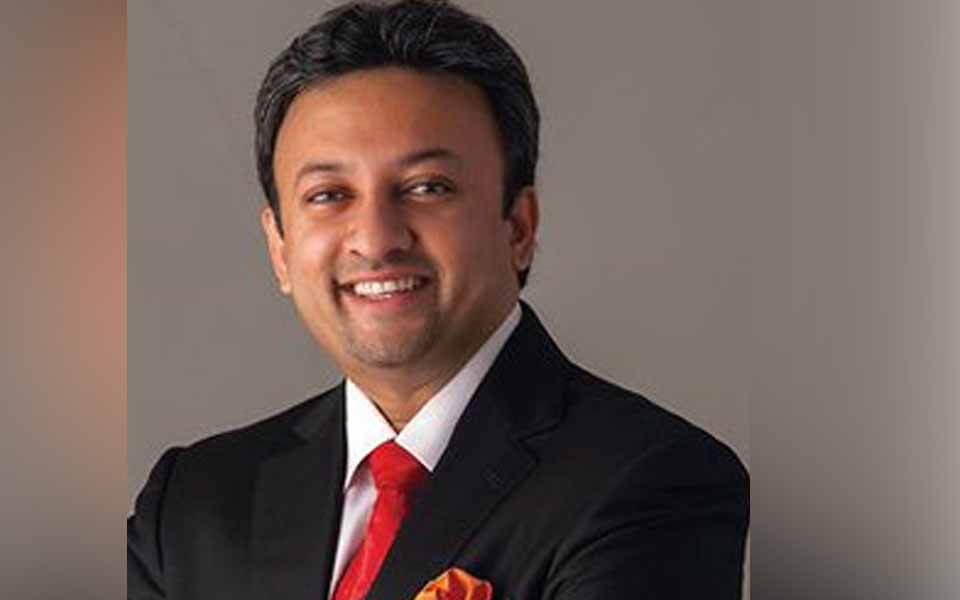
"Post the emergency use authorisation, now we will work closely with the regulatory authorities to work on the pricing and modality of delivery of the doses of our vaccine. In next one or two weeks we will have better clarity on the pricing," Zydus Group Managing Director Sharvil Patel said in a virtual press conference.
The company hopes that "by middle to end of September, we can start supplying the vaccines, and as I said we need to scale up to 1 crore doses and we believe by October we can achieve this. We believe by October we will start producing 1 crore doses and that would mean by end of Jan we can have 4 to 5 crore doses," he added.
Asked if the company was considering partnering with other firms to scale up production of its vaccine, Patel said Zydus Cadila is actively looking at ramping up manufacturing both domestically through partnerships and also outside of the country.
The company is also seeking approval for a two-dose regimen of the vaccine, he added.
Describing the approval for Zydus Cadila's vaccine as a momentous feat, Prime Minister Narendra Modi in a tweet on Friday had said, "India is fighting COVID-19 with full vigour. The approval for world's first DNA based ''ZyCov-D'' vaccine of @ZydusUniverse is a testimony to the innovative zeal of India's scientists. A momentous feat indeed."
ZyCoV-D is the sixth vaccine to get the emergency use authorisation in the country, after Serum Institute of India's Covishield, Bharat Biotech's Covaxin, Russian vaccine Sputnik V and the vaccines of Moderna and Johnson and Johnson.
Of these, Covishield, Covaxin and Sputnik V are currently in use in India.
These vaccines are being given to only those above 18 years of age and unlike ZyCoV-D, which has three doses, these are administered in two doses.
"This is a historic milestone with ZyCoV-D, a product of Indian innovation becoming the world's first DNA vaccine being offered for human use and supporting the world's largest immunization drive," Cadila Healthcare Chairman Pankaj R Patel had said on Friday.
The company plans to manufacture 10-12 crore doses of ZyCoV-D annually, Zydus Cadila had said in a statement.
"We are particularly happy that our vaccine will contribute to this fight against COVID-19 and enable the country to vaccinate a larger population especially in the age group of 12-18 years.
"I would like to thank all the researchers, clinical trial investigators, volunteers and the regulators who have supported this endeavour," the Cadila Healthcare chairman had added.
Let the Truth be known. If you read VB and like VB, please be a VB Supporter and Help us deliver the Truth to one and all.
Lakhimpur Kheri violence case: SC expresses disappointment over non-production of witnesses in trial
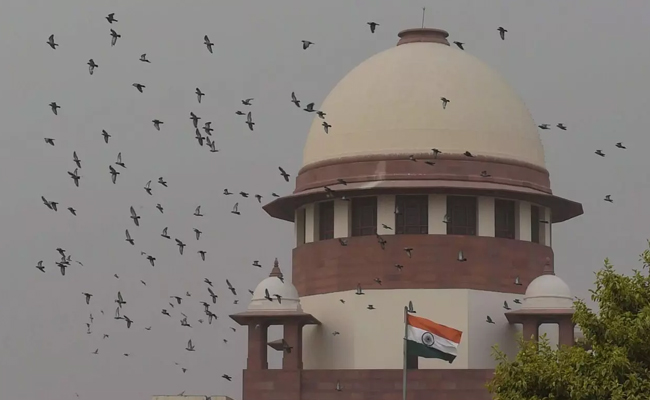
New Delhi (PTI): The Supreme Court on Friday expressed disappointment over the non-production of witnesses in the ongoing trial against Ashish Mishra, son of former Union minister Ajay Mishra, and others in the 2021 Lakhimpur Kheri violence case.
A bench of Chief Justice Surya Kant and Justice Joymalya Bagchi said the status report filed before it by the Uttar Pradesh government has not assigned any reason whatsoever for the non-production of witnesses.
It noted that no witnesses have been examined in the trial for the last two months.
"We direct the presiding judge to take lawful measures to secure the presence of witnesses," the bench said.
It asked the trial judge to make an endeavour to conclude the trial in a time-bound manner, and also to file a status report before it.
The trials in two cases related to the incident are going on before a court in Uttar Pradesh.
The bench noted that in the first case, out of 131 witnesses to be examined, 44 have been examined, 15 have been discharged and 72 are still to be produced.
In the second FIR, out of 35 witnesses, 26 have been examined and nine were left, it said.
Senior advocate Siddharth Dave, appearing for Ashish Mishra, said that as per the latest status report filed by Uttar Pradesh, 44 witnesses have been examined so far in the first FIR.
"No witnesses have been examined in the last two months," Dave said.
He argued that the last status report filed by the state in March also said that 44 witnesses had been examined.
"What have you done from March till today?" the bench asked the counsel appearing for Uttar Pradesh.
The state's counsel said that 3-4 witnesses were summoned for the recording of their deposition during the trial.
The bench said at least 7-8 witnesses should be summoned instead of three or four for a day, so that even if some of them do not turn up, the trial court could proceed with the recording of statements of those appearing before it.
The top court also wondered how official witnesses can remain absent during the trial.
"We are disappointed to note that the so-called status report does not assign any reason whatsoever for non-production of witnesses...," the bench said.
Advocate Prashant Bhushan, appearing for the relatives of the farmers who were allegedly mowed down in the incident, said the apex court will have to do something regarding the manner in which the trial was going on.
The bench noted that besides the two FIRs, another FIR was registered in October last year concerning alleged witness intimidation.
It said that, as per the state's status report, the chargesheet was filed against the main accused in that case.
The bench noted that the status report reveals that, as far as Ashish Mishra is concerned, his alleged role in the third case is still being investigated.
The top court directed the investigating officer of the third case to conclude the pending probe and ensure that the appropriate report is filed before the concerned court within four weeks.
The bench posted the next hearing in the Lakhimpur Kheri violence case for July.
On October 3, 2021, eight people, including four farmers, were killed in Tikunia in Lakhimpur Kheri district during a protest by farmers against Deputy Chief Minister Keshav Prasad Maurya's visit to the area.
Four farmers were mowed down by a sports utility vehicle. A driver and two BJP workers were then allegedly lynched by angry farmers. A journalist also died in the violence.
In one of the cases, the trial court in December 2023 framed charges against Mishra and 12 others for alleged murder, criminal conspiracy and under other penal laws in the case of the farmers' deaths, paving the way for the trial.