Hosabale dismisses ‘KKK’ label for RSS
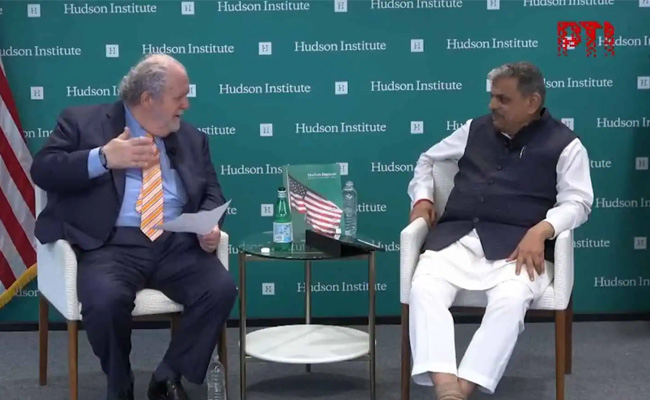
Washington (PTI): The RSS is not an Indian version of the Ku Klux Klan, the American white supremacist group, RSS General Secretary Dattatreya Hosabale said here, highlighting the organisation's work across different spheres of society.
Speaking at an interactive session at the New India Conference organised by the Hudson Institute, Hosabale said there are misconceptions about the Rashtriya Swayamsevak Sangh (RSS) similar to misunderstandings about India in the US.
"The narrative that has been built for decades, knowingly or unknowingly as part of an agenda or otherwise, is that RSS is a Hindu supremacist organisation or that it is anti-Christian, anti-minority, anti-development and anti-modernisation," he said during a discussion with author Walter Russell Mead on Thursday.
"So what is pro is not highlighted; instead, the anti has always been propagated... some Indian version of the Ku Klux Klan, which we are not," Hosabale said.
He said Hindu philosophy and culture view the whole world as one family and do not endorse supremacy.
"We see oneness in everything, living and non-living. When that is the basic philosophy of Hindus, the question of a supremacist nature does not arise. Also, in history, Hindus have never invaded any country," the RSS chief said.
Hosabale described RSS as a volunteer-driven movement rooted in India’s cultural and civilisational ethos.
"RSS is a people's voluntary movement inspired by cultural ethos and civilisation values of the ancient society of India, which is generally known as Hindu culture.
"To create volunteers with character, self-confidence, a sense of service to the community and for organising the society, the RSS organises daily assemblies and weekly assemblies for one hour. Through these one-hour gatherings, called shakhas, we inculcate values of life," he said.
Hosabale said that the RSS views Hindu identity as a civilisational, not religious, identity.
"Tensions with minority groups and neighbouring countries stem from political interests and wrong interpretations of history," he said, adding that ongoing dialogue with minority communities was key to resolving misunderstandings.
Hosabale said tensions between neighbouring countries were because of various factors, including the political leadership there.
"The problem is only with one neighbouring country, which was born out of the Indian womb. It has become a neighbouring country, but many people are behind that country to create problems," he said.
The Indian American diaspora also held a public reception in honour of Hosabale on Thursday evening in a Virginia suburb, which saw a good turnout from people in the greater Washington region.
Hosabale said the RSS holds about 83,000 shakhas (daily meetings) to instil a sense of service and inculcate life values aimed at promoting social harmony.
"People from every walk of life and all age groups have become volunteers of our organisation. RSS undertakes relief work during natural calamities and is also active in areas such as education, health, self-defence, rural development and environmental issues," he said.
The RSS leader said cultural values and modernisation are not necessarily contradictory and can coexist, though some tensions may arise.
"Both modernisation and cultural values require adaptation according to the times. While modernisation brings industrialisation, technology and individualistic trends, it can function alongside culture and cultural values," Hosabale said.
He added that the coexistence of culture and modernity has been visible in several societies in recent decades.
"Whether it is Hindu society, Indian society, Japan or China, all have modernised while keeping their cultural and civilisational values intact and drawing inspiration from them. That is why I don't think cultural values and modernisation pull in opposite directions," Hosabale said.
Let the Truth be known. If you read VB and like VB, please be a VB Supporter and Help us deliver the Truth to one and all.
Oppn parties move fresh notice in Rajya Sabha seeking removal of CEC Gyanesh Kumar
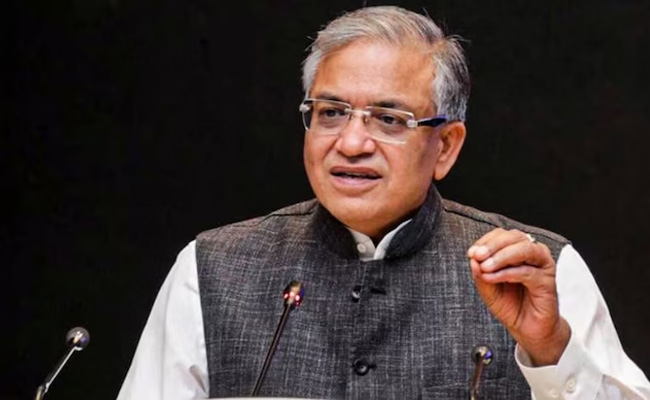
New Delhi (PTI): Opposition parties on Friday submitted a fresh notice in the Rajya Sabha seeking a motion for the removal of Chief Election Commissioner Gyanesh Kumar, sources said. The fresh charges against the CEC include "continued partisan asymmetry in the enforcement of Model Code of Conduct".
The opposition has accused the poll panel of not acting on complaints against Prime Minister Narendra Modi's "address to the nation" on April 18, ahead of assembly elections in West Bengal and Tamil Nadu.
Referring to concerns raised by various opposition parties, the notice said, "As on the date of this notice, Gyanesh Kumar has issued no show-cause notice, no advisory, and no public response to any of the said complaints."
According to sources, Congress leader Jairam Ramesh and TMC leader Sagarika Ghose submitted the notice to the Rajya Sabha Secretary General.
The notice was signed by 73 Rajya Sabha MPs, while the requirement is 50 signatures.
Members of opposition parties such as the Congress, TMC, SP, DMK, Left parties, Shiv Sena (UBT), NCP (SP), RJD, IUML and "like -minded" parties have signed the notice, sources said.
The move comes days after similar notices submitted by opposition MPs in both Lok Sabha and Rajya Sabha were rejected by the respective presiding officers. It was the first time that a notice seeking the removal of a CEC was submitted in Parliament.
In its earlier notices, the opposition had accused CEC Kumar of "failure to maintain independence and constitutional fidelity" and of acting under the "thumb of the executive".
However, in almost similar responses, Lok Sabha Speaker Om Birla and Rajya Sabha Chairman C P Radhakrishnan had rejected the notices, holding that even if the allegations were assumed to be true, they did not meet the high constitutional threshold of "misbehaviour" required for his removal.