I am not afraid, will continue speaking the truth: Tejashwi on FIR lodged in Maharashtra
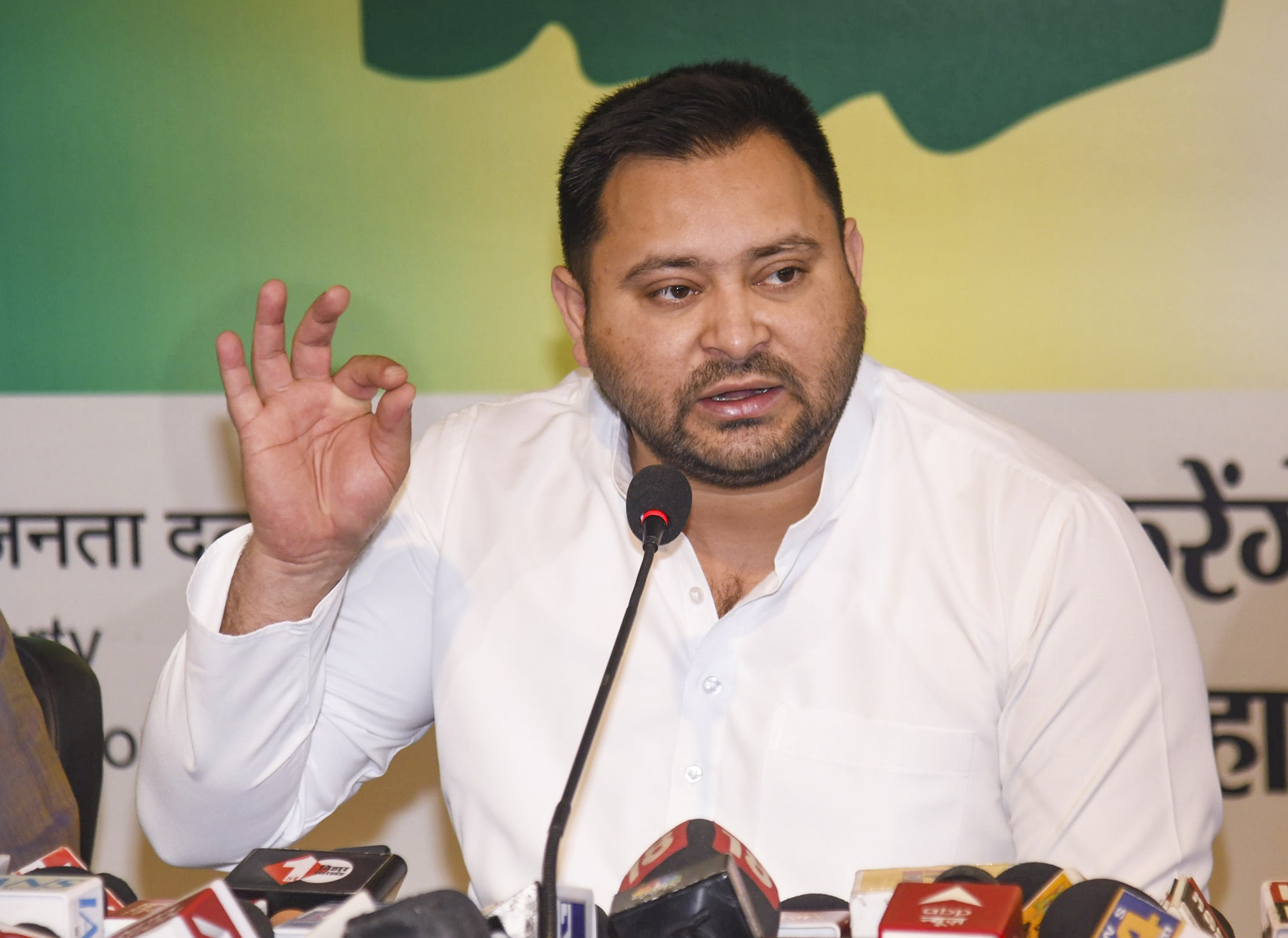
Katihar (PTI): RJD leader Tejashwi Yadav on Saturday asserted that he was "not afraid" of an FIR lodged in BJP-ruled Maharashtra, over his social media post about Prime Minister Narendra Modi, and he will "continue to speak the truth".
Yadav has been booked in Gadchiroli district for a post on his X handle, ahead of the PM's tour of Bihar on Friday, in which he had alleged that Modi's promises to the people were a "jumla" (rhetoric).
When approached by PTI video for comments, the young leader shot back, "Who is afraid of an FIR? Is jumla an objectionable word? I was simply telling the truth. And I will continue to do so. They may lodge as many cases against me as they please."
The former Bihar deputy CM spoke while touring fish markets and makhana fields in the north Bihar district of Katihar, along with Congress leader Rahul Gandhi, who is touring the state as part of the 'Voter Adhikar Yatra'.
Gandhi was seen chatting with fishermen and cultivators of makhana (fox nuts) and listening to their problems, in the presence of a number of leaders, including Independent MP Rajesh Ranjan alias Pappu Yadav, whose Purnea Lok Sabha constituency covers a part of Katihar.
A popular snack which is also used in religious functions and to prepare desserts, makhana has been in the spotlight ever since the Union budget presented earlier this year announced the setting up of a 'makhana board' to give a boost to its production.
The PM has also been giving a push to the north Bihar produce by claiming that he loves to snack on the "super food".
In his address during the inauguration function of the Khelo India tournament, held in Bihar earlier this year, Modi had asked athletes from across the country to make sure that they enjoyed makhana during their stay.
The day's Yatra is scheduled to conclude at Purnea town, around 30 km away.
Yadav's close aide and Rajya Sabha MP Sanjay Yadav fulminated against the BJP over the FIR against the leader of the opposition in the assembly.
He said, "What is the point in lodging FIRs in far-off states like Maharashtra, Uttar Pradesh and Assam? The BJP shares power in Bihar, too. If they have the guts, let them lodge an FIR here. I also challenge all BJP MLAs across the country to lodge FIRs against our leader."
Notably, the FIR at Gadchiroli is said to have been filed following a complaint by local BJP MLA Milind Narote.
Senior Congress leader and Rajya Sabha MP Akhilesh Yadav, who is also taking part in the Yatra, dubbed the FIR as an instance of "political vendetta".
The former Bihar Congress president added, "The BJP should know that we belong to a political lineage which fought the British without getting cowed down. We are not the ones to be intimidated by the likes of Modi and Amit Shah."
Let the Truth be known. If you read VB and like VB, please be a VB Supporter and Help us deliver the Truth to one and all.
Karnataka: College student dies by suicide in Dharwad, 3 policemen suspended
Dharwad (Karnataka) (PTI): A college student allegedly died by suicide here, following which three policemen were suspended over allegations of harassment linked to his death by the victim's family.
Aditya Myageri, a BSc student at a private college here, was among 18 students detained by the Vidyagiri police on April 25 during an anti-drug drive, police said on Wednesday.
He hailed from Belur village in Bagalkot district, but was staying with his friends at a rented accommodation in Girinagar area of Dharwad city, police said.
Among the 18 students tested, Aditya was among the 10 who had tested negative for ganja consumption and was subsequently released.
Some of his roommates, however, tested positive.
According to police, Aditya's family alleged that despite testing negative, he was harassed by police. They also claimed some policemen demanded Rs 2,000 to settle the matter and threatened legal action if he failed to pay.
He had called his mother asking for money, but she could not arrange it immediately, the family claimed.
On Monday night, Aditya allegedly died by suicide by hanging from a ceiling fan at his rented accommodation, with his family alleging police harassment and pressure over demand for money drove him to the extreme step, a senior police officer said.
Police Commissioner N Shashi Kumar told PTI that an unnatural death case has been registered at Vidyagiri police station. Three policemen have been suspended over the allegations, and further investigation is underway.