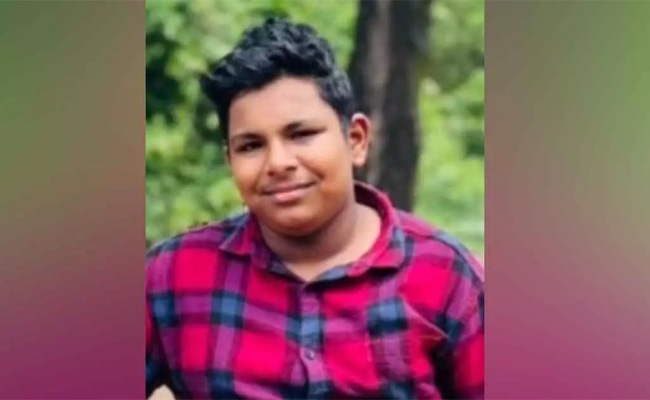
I saw one policeman shooting directly at Papa, says son of latest casualty of Haldwani violence
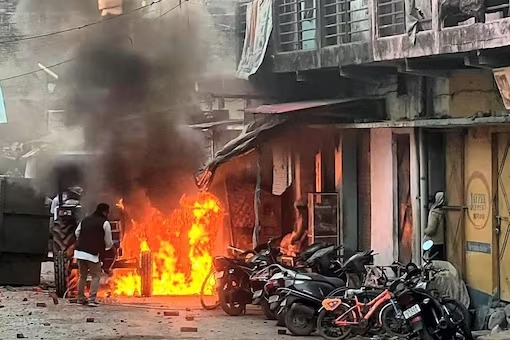
Haldwani: In the aftermath of the recent violence in Haldwani, Uttarakhand, the death toll has risen to six, with the latest victim being a Muslim man named Mohammad Israr. Israr, a 54-year-old resident of Ghafoor Basti, Ward number 24, Kidwai Nagar, succumbed to bullet injuries on Tuesday. He was shot in the head on February 8 while searching for his two sons amid the prevailing violence in the Banbhoolpura area.
Israr's sons, Suhail and Aman, had already returned home by the time he reached the spot. However, upon learning that Israr had gone out to find them, Aman went to locate his father. Aman recounted the tragic incident, stating, "I saw one policeman shooting directly at Papa; the bullet hit him at one side and came out from the other side, piercing his head. And he laid down on the street motionless."
The younger son, Aman, called his elder brother, and together, they rushed Israr to Krishna Hospital. He was later transferred to Sushila Tiwari Hospital, where he received treatment for six days until doctors declared him dead on Tuesday.
Despite the grief and shock, the family faced further challenges. Suhail, the elder son, shared that the police did not permit them to take Israr's body home for the last rites. The family was only able to see him outside the hospital before taking the body for burial. Police accompanied them to the graveyard, allowing only five family members to go with the body.
The family expressed reluctance to file a police complaint, asserting that all police actions witnessed thus far have been against them. Suhail stated, "We do not want to make any complaint; our papa is gone now. Those who killed him won’t bring justice to us or our family."
Chief Minister of Uttarakhand, Pushkar Singh Dhami, announced plans to construct a police station at the site of the demolished Madrasa and Masjid, despite a court order. Addressing a crowd in Haridwar, Dhami stated, "This is our government’s clear message to troublemakers and rioters: anyone who disrupts the peace of the land of the gods will not be spared. There is no place for such perpetrators in Uttarakhand."
The violence in Banbhoolpura, Haldwani, unfolded more than six days ago, resulting in at least six deaths. The victims include five Muslims and one non-Muslim, identified as Prakash, a 24-year-old agricultural studies graduate from Bihar. The police have arrested 90 individuals, including five Muslims, on charges related to the violence. However, the alleged "mastermind," Abdul Malik, remains at large.
Abdul Malik and his wife Safia Malik owned the now-demolished religious structure in Haldwani, which became a focal point of the unrest. The violence prompted the imposition of a curfew, which was lifted briefly before being reinstated on Monday. Entry and exit points were sealed, raising concerns about the flow of accurate information and the role of journalists.
Let the Truth be known. If you read VB and like VB, please be a VB Supporter and Help us deliver the Truth to one and all.
Chadha, others wouldn't have left AAP had it followed 'right' path: Anna Hazare
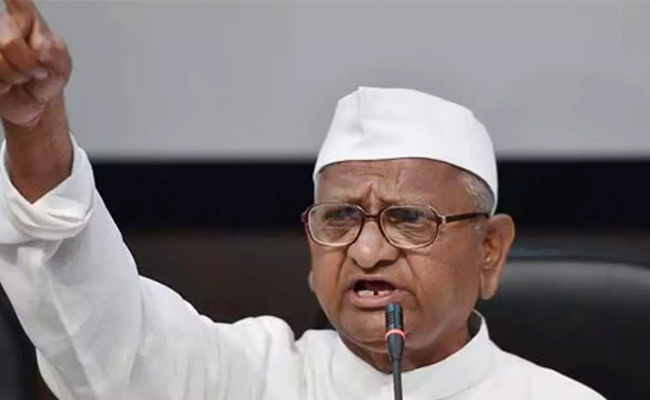
Mumbai (PTI): Social activist Anna Hazare has said Raghav Chadha and six other Aam Aadmi Party (AAP) Rajya Sabha members would not have quit the party had it followed the "right" path.
"Everyone has the right to hold an opinion in a democracy. They (Chadha and others) must have faced some trouble, which is why they left," Hazare told reporters on Friday in Ahilyanagar district of Maharashtra.
AAP Rajya Sabha members Raghav Chadha and Sandeep Pathak addressed a joint press conference in Delhi on Friday, announcing their exit from the Arvind Kejriwal-led party to join the BJP.
Chadha claimed that nearly two-thirds of AAP's Rajya Sabha members had quit the party and would function as a separate faction.
"It is their (AAP leadership’s) fault. Had that party followed the right way, they would not have left," Hazare said.
Hazare reiterated that Chadha and others must have faced difficulties within AAP, and that is why they left. "Had the party gone in the right direction, they would not have quit the party," he added.
"There must be some or the other reason (for their leaving AAP). In a democracy, every person has a view about where to stay and leave," Hazare said.
The Chadha-led exodus marks a significant setback for the Kejriwal-led party since its formation in 2012, which followed the momentum of Anna Hazare’s anti-corruption movement.