India a USD 4 trillion economy? Adani to Fadnavis hail, but no official word
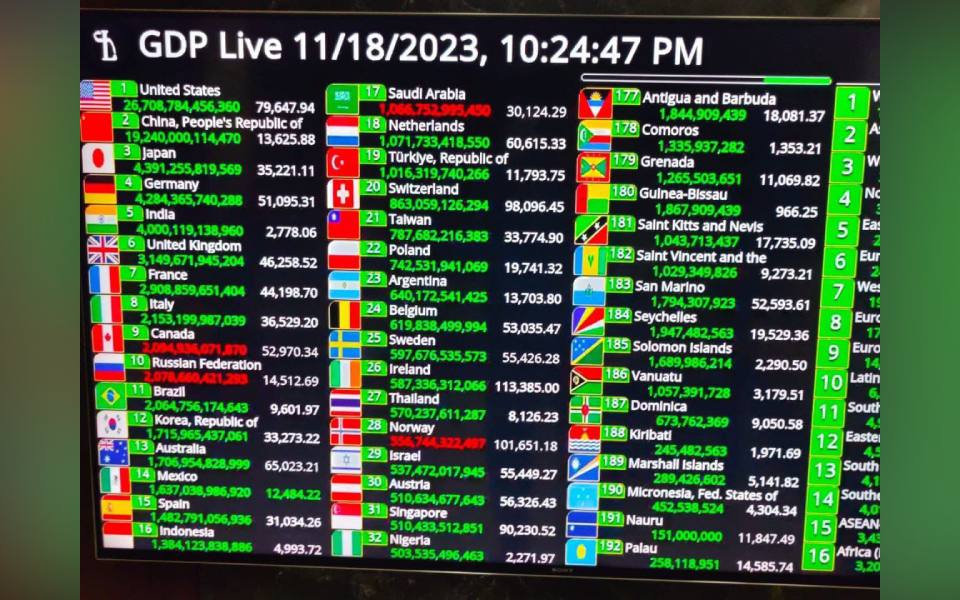
New Delhi, Nov 19: Billionaire Gautam Adani to two Union Ministers and Maharashtra Deputy Chief Minister Devendra Fadnavis among others on Sunday hailed India crossing USD 4 trillion mark though there was no official confirmation if the country has achieved the landmark.
The finance ministry and the National Statistical Office did not immediately comment on the viral social media post on India's GDP crossing USD 4 trillion.
Highly placed sources said that the viral news was incorrect and India was still shy of that landmark.
An unverified screengrab from the live tracking GDP feed for all countries based on International Monetary Fund data has been widely shared on social media, including by many including senior BJP leaders.
It is very difficult to have live tracking of GDP numbers of all countries as numbers of various sectors of the economy are available with a lag.
"Congratulations, India. Another two years to go before India becomes the 3rd largest nation in terms of Global GDP by overtaking Japan at $4.4 trillion and Germany at $4.3 trillion. The Tricolour surge continues! Jai Hind," Adani said on social media platform X.
Many political leaders, including Maharashtra Deputy CM Devendra Fadnavis hailed the achievement.
"India's moment of global glory as our GDP crosses $4 Trillion.The rise of #NewIndia under PM @narendramodi ji's leadership is truly unparalleled," Jal Shakti Minister Gajendra Singh Shekhawat said in a post on X.
Another Cabinet minister, G Kishan Reddy in a post said, "Congratulations As The GDP Touches $4 Trillion For The First Time and Marches Ahead. On the course towards $5 Trillion Economy - Modi Ki Guarantee."
Reddy is Union Minister for Culture, Tourism and Development of Northeast Region as well as Telangana BJP president.
Fadnavis also posted, "This is what dynamic, visionary leadership looks like ! That's what our #NewIndia progressing beautifully looks like ! Congratulations to my fellow Indians as our Nation crosses the $ 4 trillion GDP milestone! More power to you, more respect to you Hon PM @narendramodi ji!."
D Purandeswari, BJP's Andhra Pradesh president said, "Congratulations BHARAT on becoming a 4 Trillion Dollar Economy ! This phenomenal achievement has been made possible by the path breaking reforms introduced and implemented by Prime Minister Shri @narendramodi Ji Government in the last 9.5 years."
India recorded GDP growth of 7.8 per cent during the April-June period of 2023-24, the highest in the past four quarters, on the back of double-digit expansion in the services sector, retaining its position as the world's fastest-growing major economy.
The 7.8 per cent GDP growth in the June quarter is higher than the 6.3 per cent recorded by China during the same period.
According to the National Statistical Office (NSO) data released in August, the agriculture sector gross value added (GVA) recorded a growth of 3.5 per cent, up from 2.4 per cent in April-June 2022-23.
This is what dynamic, visionary leadership looks like !
— Devendra Fadnavis (@Dev_Fadnavis) November 19, 2023
That’s what our #NewIndia progressing beautifully looks like !
Congratulations to my fellow Indians as our Nation crosses the $ 4 trillion GDP milestone!
More power to you, more respect to you Hon PM @narendramodi ji !… pic.twitter.com/wMgv3xTJXa
Let the Truth be known. If you read VB and like VB, please be a VB Supporter and Help us deliver the Truth to one and all.
Three private doctors arrested in illegal scanning case involving 31 minor pregnant girls in KR Pet
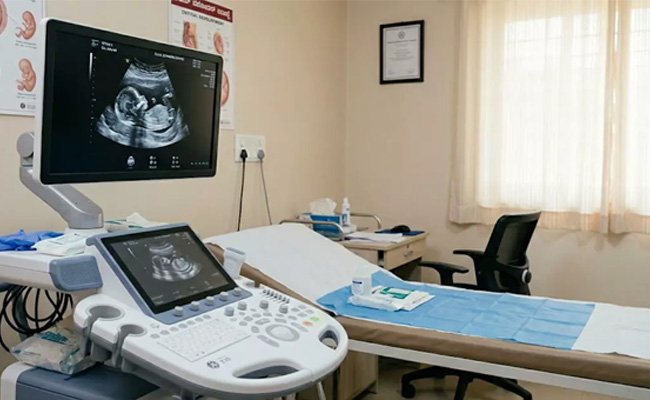
Mandya: Police on Tuesday arrested three private doctors in connection with a case involving alleged illegal scanning of 31 minor pregnant girls at a private diagnostic centre in KR Pet. The accused were later remanded to judicial custody.
The arrested doctors have been identified as Dr. Divyachetan of Chetana Maternity Centre, Dr. Harshit of Navi Diagnostic Centre, and Dr. Harish of Kushal Diagnostic Centre.
Police said Priyanka, a gynaecologist attached to a government hospital, is absconding and efforts are under way to trace her.
The case came to light after Karnataka Lokayukta Police recently conducted raids, during which illegal sex determination tests on minor pregnant girls were allegedly detected at two diagnostic centres in KR Pet town.
Following the raids, District Health and Family Welfare Officer Dr. Mohan, Deputy Director of the Women and Child Development Department P.S. Asha, and District Child Protection Officer Rashmi inspected several diagnostic centres and filed cases at KR Pet Town and Rural police stations.
According to the allegations, Navi Diagnostic Centre conducted scans on 24 minor pregnant girls, including 19 cases in 2024 and five in 2025. Kushal Diagnostic Centre is accused of conducting scans on seven minor pregnant girls.
Meanwhile, Deputy Commissioner Dr. Kumar has directed taluk vigilance committees to inspect all 63 ultrasound scanning centres in the district and submit reports within 10 days.
Officials said the Tahsildar of each taluk has been appointed chairperson of the respective committee.