India elected to UN Human Rights Council for 3 years, gets highest number of votes
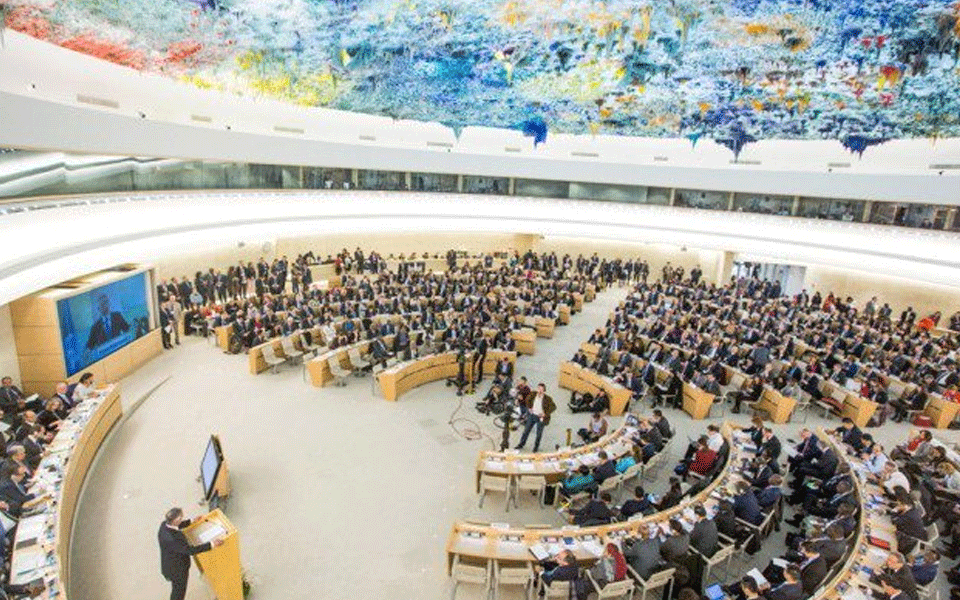
United Nations: India was elected with the highest number of votes by the General Assembly to the influential Human Rights Council on Friday with a pledge to combat intolerance.
India received 188 votes, the highest polled by any of the 18 countries elected in the voting.
This is the fifth time India is elected to the Geneva-based Council, the main body of the UN charged with promoting and monitoring human rights.
India’s presence on the Council will be important because the previous UN High Commissioner for Human Rights Zeid Raad Al Hussein asked the body to facilitate an international commission of inquiry into allegations of human rights violation in Kashmir.
His successor Michelle Bachelet and Secretary-General Antonio Guterres have backed Zeid’s recommendation, which Pakistan -- a member of the Council -- is campaigning for.
So far, no other country has backed Zeid’s call for the investigation.
Bangladesh, which is at the frontlines of dealing with the Rohingya crisis, was also elected with 178 votes to the Council to fill one of the five vacancies for three year terms from the Asia-Pacific region.
The regional group endorsed five countries, which matched the number of seats open for election this year, and they were the only countries on the ballot. The other regional candidates were Bahrain, Fiji and the Philippines.
Thirteen other countries representing the other four regions were also elected to the Council.
In January India will join China and Nepal, besides Pakistan, which were elected to the 47-member Council in previous years to serve three-year terms.
When it nominated itself for the Council, India showcased its position as “the world’s largest democracy (and) India’s secular polity.”
It pledged that it will continue to support international efforts to combat racism, racial discrimination, xenophobia and related intolerance.
In the nomination pledge, India also presented a broader approach to human rights, emphasising climate justice, health and poverty alleviation.
India was among the first batch of 47 countries elected to the Council in 2006 soon after it was set up and received an initial one-year term instead of three to facilitate a rotating roster of vacancies each year.
It was again elected in 2007, 2011 and 2014 to three-year-terms.
Countries can be elected for only two consecutive terms and India took a year’s break when its term ended in 2017.
Elections were held by secret ballot in the 193-member General Assembly on Friday, although the number of candidates for all the five regions matched the vacancies making it a formality.
On the 47-member Council the seats are allocated based on “equitable regional distribution” giving the Asia-Pacific region a total of 13 seats, with some coming up for election every year.
The African region also has 13 seats, while East European region has six, West European and others seven, and Latin American and Caribbean eight.
The United States withdrew from the Council earlier this year after its Permanent Representative Nikki Haley questioned its legitimacy because of the presence of several dictatorial regimes violating human rights on it.
Courtesy: www.hindustantimes.com
Let the Truth be known. If you read VB and like VB, please be a VB Supporter and Help us deliver the Truth to one and all.
Sujit Nair raises concerns over speculation of DMK-AIADMK understanding to block TVK
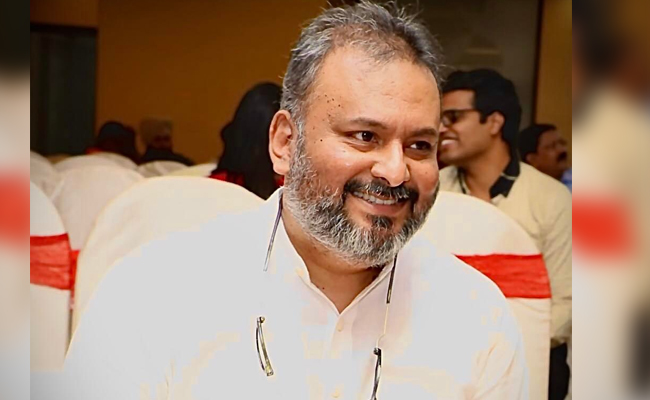
Chennai: Journalist and political commentator Sujit Nair has expressed concern over speculation that the Dravida Munnetra Kazhagam and the All India Anna Dravida Munnetra Kazhagam could explore a post-poll understanding to prevent Vijay-led Tamilaga Vettri Kazhagam from forming the government in Tamil Nadu.
In a social media post, Sujit Nair said the election verdict in Tamil Nadu reflected a clear public demand for political change and argued that the mandate should be respected irrespective of political preferences.
Referring to reports and political discussions surrounding a possible understanding between the DMK and AIADMK, he said he hoped such developments remained only speculative conversations and did not turn into reality.
Nair stated that if such an alliance were to take shape, it would raise serious questions about ideological politics in the country. He said TVK had emerged through a democratic electoral process and that the legitimacy to govern in a parliamentary democracy comes from the people’s verdict.
According to him, attempts to prevent an electoral winner from forming the government through unexpected political arrangements may be constitutionally valid, but many people could view them as politically opportunistic.
He further said that such a move could particularly affect the political image of the DMK, which has historically projected itself around ideology, social justice and opposition politics. Nair said that in ideological terms, the DMK appeared closer to TVK than to the AIADMK, and joining hands with its long-time political rival only to remain in power could weaken its broader political narrative.
He added that the same questions would apply to the AIADMK as well, as the party had spent decades positioning itself against the DMK and such an arrangement could create discomfort among its cadre and supporters.
Drawing a comparison with Maharashtra politics in 2019, Nair said he had expressed similar views when the Shiv Sena formed an alliance with the Indian National Congress and the Nationalist Congress Party after the Assembly elections.
He said post-poll alliances between long-standing political rivals often create a public perception that ideology and electoral mandates become secondary when political power equations come into play.
Nair also said such developments increase public cynicism towards politics and reinforce the belief among voters that ideology is often sidelined after elections.
He maintained that the Tamil Nadu verdict was emphatic and said respecting both the spirit and substance of the mandate was important for the credibility of democratic politics.