India eyes major oil discovery in Andaman Sea, says Union Minister Hardeep Singh Puri
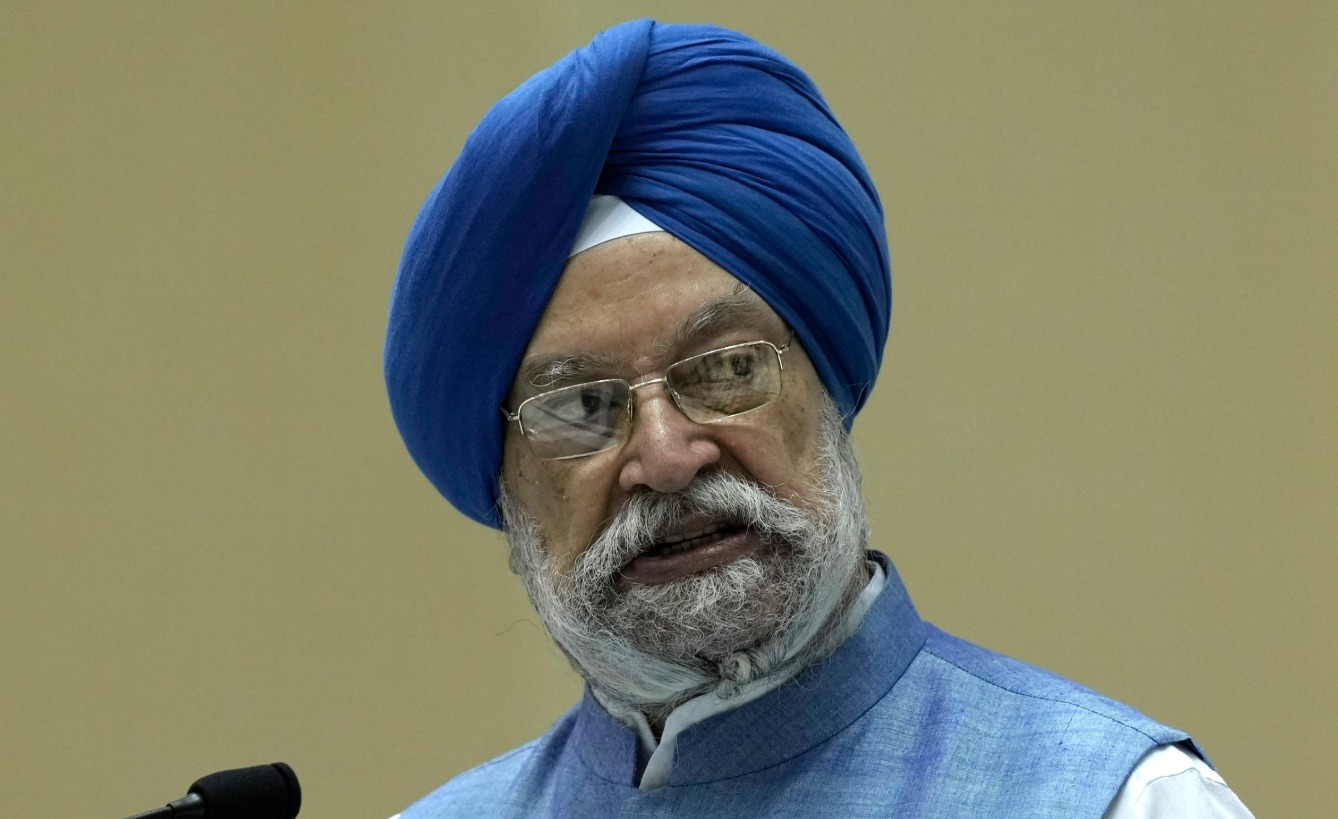
New Delhi: Union Minister for Petroleum and Natural Gas Hardeep Singh Puri has indicated that India could soon witness a significant oil discovery in the Andaman Sea. In an interview published by The New Indian, Puri informed about the government’s ongoing efforts to boost domestic oil and gas exploration which is backed by regulatory reforms and growing investment across India’s energy sector.
He traced this momentum to policy changes that began in 2016 and under the Open Acreage Licensing Policy (OALP), India has unlocked new sedimentary basins for exploration. Puri noted that out of India’s 3.5 million square kilometres of sedimentary basins, nearly 1 million square kilometres have been opened for bidding. In OALP Round 9, close to 38% of the bids targeted these newly opened areas and the minister expects that share to grow to 80% in the next round. The latest auction, covering 250,000 square kilometres, is India’s largest to date.
Puri cited Guyana’s experience where ExxonMobil struck oil after drilling over 40 wells, each costing around $100 million. He pointed to ONGC’s drilling activity in 2023-24 as a sign of India’s growing seriousness. “ONGC this year has dug the maximum number of wells. Highest in 37 years,” he said. In financial year 2024, ONGC drilled 541 wells, including 103 exploratory and 438 development wells and ₹37,000 crore was the capital expenditure.
The minister said “Now things are changing, and I’m very confident that we’ll find many more oil fields. Very very quickly,” he said.
Turning to recent legislative reforms, Puri discussed the Oil Fields Regulation and Development Amendment Bill introduced this year. The bill replaces outdated regulations dating back to 1948, which previously covered multiple resource sectors, including coal, minerals and petroleum, often causing regulatory ambiguity. He said “It(the bill) rectifies that. It helps to solve the problems and also achieves the goals for those private companies in terms of no objection certificates, which they could not earlier. The bill has been brought after large-scale interaction with industry players… The rules and regulations that we are implementing under that are also subject to public consultation.”
Puri expressed confidence that these policy changes, combined with potential discoveries, could fuel rapid economic growth. “Apart from these little discoveries which are coming, which could turn out to be very big also, that we find Guyana and then you will go from a $3.7 trillion economy to a $20 trillion economy straight away.”
Let the Truth be known. If you read VB and like VB, please be a VB Supporter and Help us deliver the Truth to one and all.
BJP workers protest Bengaluru event on Umar Khalid, taken into preventive custody
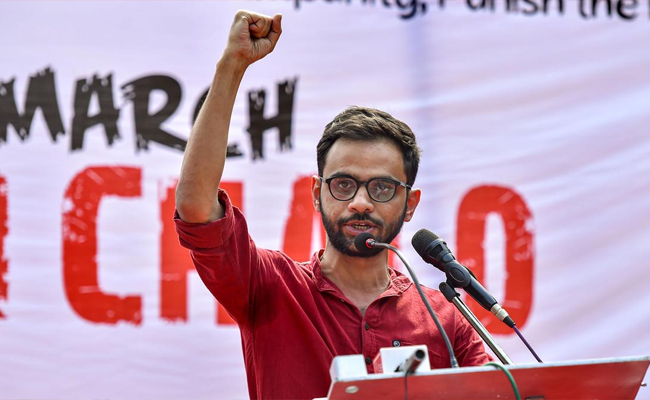
Bengaluru (PTI): BJP workers, led by former Bengaluru Mayor M Gautham Kumar, staged a protest outside the heavily fortified BIC in the city on Tuesday ahead of an event.
The editors of the book “Umar Khalid and His World” have planned a reading of excerpts from the book at the venue, followed by a discussion involving several “historians and intellectuals”.
The BJP activists raised slogans demanding the cancellation of the event. They attempted to enter the venue by breaking through the barricades put up by the police.
Police personnel deployed at the spot took the BJP workers into preventive custody.
ALSO READ: Nirmala Sitharaman inaugurates Gems and Jewellery Institute campus in Udupi
The party had on Monday petitioned Bengaluru Police Commissioner Seemant Kumar Singh seeking cancellation of the event organised in support of activist Umar Khalid.
A delegation of BJP leaders led by Bengaluru Central MP P C Mohan met the commissioner and submitted a memorandum in this regard.
Khalid is currently in jail in connection with allegations of conspiracy in the 2020 Delhi riots.
In a post on ‘X’ earlier in the day, the Karnataka BJP alleged that while courts are still hearing cases related to anti-national activities, the Congress-backed ecosystem is busy glorifying individuals who aim to divide Bharat.
“Why is Bengaluru being turned into a hub for celebrating such elements? Is this the ‘cultural contribution’ the Siddaramaiah government wants to promote? Our city is a land of innovators and patriots, not a playground for the ‘Tukde Tukde’ (divisive) narrative,” it alleged.
The Supreme Court on April 20 dismissed Khalid’s plea seeking review of a verdict denying him bail, observing that there are reasonable grounds to believe the allegations against him in connection with the conspiracy behind the 2020 Delhi riots.
The court had earlier said there was a prima facie case against Khalid and Sharjeel Imam (another accused) under the Unlawful Activities (Prevention) Act (UAPA), noting that prosecution material suggests their involvement in the “planning, mobilisation, and strategic direction” of the riots.
The February 2020 riots in northeast Delhi broke out during protests against the Citizenship (Amendment) Act (CAA) and the National Register of Citizens (NRC), leaving 53 people dead and more than 700 injured.