India records 34,457 fresh COVID-19 cases, 375 deaths
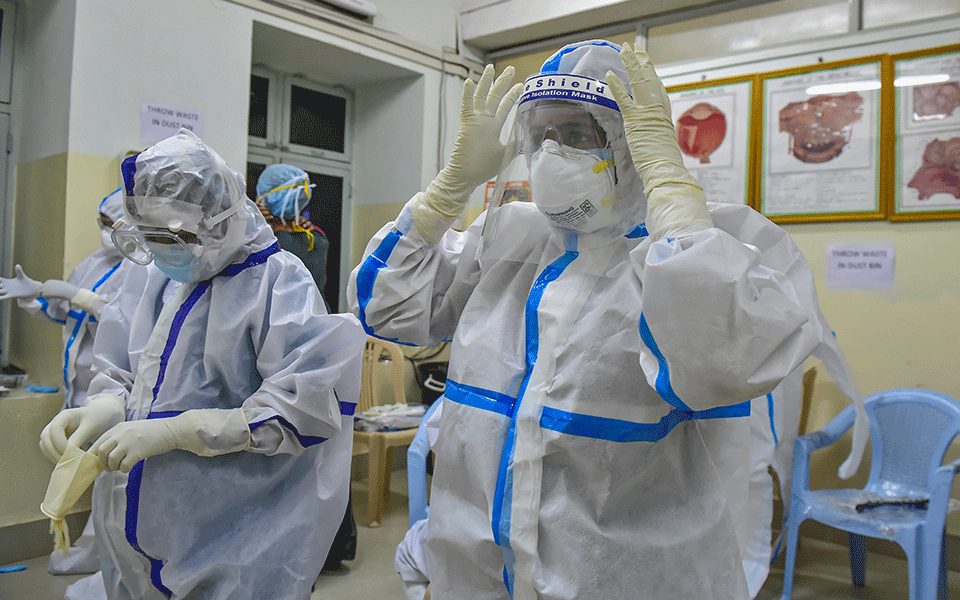
New Delhi: A single-day rise of 34,457 COVID-19 cases pushed India's tally to 3,23,93,286 on Saturday, while the number of active cases declined to 3,61,340, the lowest in 151 days, according to Union health ministry data.
India has reported less than 50,000 daily cases for 55 consecutive days.
The death toll climbed to 4,33,964 with 375 fresh fatalities, according to the data updated at 8 am.
The 3,61,340 active cases comprise 1.12 per cent of the total infections, the lowest since March last year. The national COVID-19 recovery rate stands at 97.54 per cent, the highest since March last year, the ministry said.
A reduction of 2,265 cases has been recorded in the active caseload in a span of 24 hours.
The daily positivity rate stands at 2 per cent. It has been less than 3 per cent for the last 26 days, according to the ministry.
The weekly positivity rate stands at 1.98 per cent. It has been below 3 per cent for the last 57 days, the ministry said.
As many as 17,21,205 COVID-19 tests were conducted on Friday, taking the total number of tests done so far in the country to 50,45,76,158.
The number of people who have recuperated from the disease has surged to 3,15,97,982, while the case fatality rate stands at 1.34 per cent, the data stated.
So far, 57.61 crore COVID-19 vaccine doses have been administered under the nationwide vaccination drive.
India's COVID-19 tally had crossed the 20-lakh mark on August 7 last year, 30 lakh on August 23, 40 lakh on September 5 and 50 lakh on September 16. It went past 60 lakh on September 28, 70 lakh on October 11, 80 lakh on October 29, 90 lakh on November 20 and surpassed the one-crore mark on December 19.
India's caseload crossed the grim milestone of two crore on May 4 and three crore on June 23.
The 375 new fatalities include 105 from Maharashtra and 99 from Kerala.
Of the 4,33,964 deaths reported so far in the country, 1,35,672 were from Maharashtra, 37,105 from Karnataka, 34,663 from Tamil Nadu, 25,079 from Delhi, 22,791 from Uttar Pradesh, 19,345 from Kerala and 18,346 from West Bengal.
The health ministry stressed that more than 70 per cent of the deaths occurred due to comorbidities.
"Our figures are being reconciled with the Indian Council of Medical Research," the ministry said on its website, adding that state-wise distribution of figures is subject to further verification and reconciliation.
Let the Truth be known. If you read VB and like VB, please be a VB Supporter and Help us deliver the Truth to one and all.
Lakhimpur Kheri violence case: SC expresses disappointment over non-production of witnesses in trial
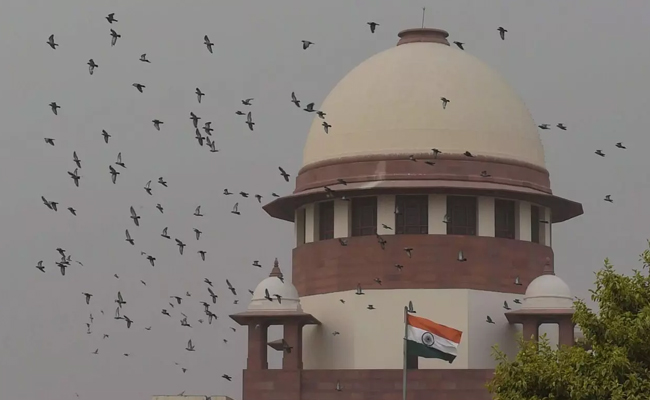
New Delhi (PTI): The Supreme Court on Friday expressed disappointment over the non-production of witnesses in the ongoing trial against Ashish Mishra, son of former Union minister Ajay Mishra, and others in the 2021 Lakhimpur Kheri violence case.
A bench of Chief Justice Surya Kant and Justice Joymalya Bagchi said the status report filed before it by the Uttar Pradesh government has not assigned any reason whatsoever for the non-production of witnesses.
It noted that no witnesses have been examined in the trial for the last two months.
"We direct the presiding judge to take lawful measures to secure the presence of witnesses," the bench said.
It asked the trial judge to make an endeavour to conclude the trial in a time-bound manner, and also to file a status report before it.
The trials in two cases related to the incident are going on before a court in Uttar Pradesh.
The bench noted that in the first case, out of 131 witnesses to be examined, 44 have been examined, 15 have been discharged and 72 are still to be produced.
In the second FIR, out of 35 witnesses, 26 have been examined and nine were left, it said.
Senior advocate Siddharth Dave, appearing for Ashish Mishra, said that as per the latest status report filed by Uttar Pradesh, 44 witnesses have been examined so far in the first FIR.
"No witnesses have been examined in the last two months," Dave said.
He argued that the last status report filed by the state in March also said that 44 witnesses had been examined.
"What have you done from March till today?" the bench asked the counsel appearing for Uttar Pradesh.
The state's counsel said that 3-4 witnesses were summoned for the recording of their deposition during the trial.
The bench said at least 7-8 witnesses should be summoned instead of three or four for a day, so that even if some of them do not turn up, the trial court could proceed with the recording of statements of those appearing before it.
The top court also wondered how official witnesses can remain absent during the trial.
"We are disappointed to note that the so-called status report does not assign any reason whatsoever for non-production of witnesses...," the bench said.
Advocate Prashant Bhushan, appearing for the relatives of the farmers who were allegedly mowed down in the incident, said the apex court will have to do something regarding the manner in which the trial was going on.
The bench noted that besides the two FIRs, another FIR was registered in October last year concerning alleged witness intimidation.
It said that, as per the state's status report, the chargesheet was filed against the main accused in that case.
The bench noted that the status report reveals that, as far as Ashish Mishra is concerned, his alleged role in the third case is still being investigated.
The top court directed the investigating officer of the third case to conclude the pending probe and ensure that the appropriate report is filed before the concerned court within four weeks.
The bench posted the next hearing in the Lakhimpur Kheri violence case for July.
On October 3, 2021, eight people, including four farmers, were killed in Tikunia in Lakhimpur Kheri district during a protest by farmers against Deputy Chief Minister Keshav Prasad Maurya's visit to the area.
Four farmers were mowed down by a sports utility vehicle. A driver and two BJP workers were then allegedly lynched by angry farmers. A journalist also died in the violence.
In one of the cases, the trial court in December 2023 framed charges against Mishra and 12 others for alleged murder, criminal conspiracy and under other penal laws in the case of the farmers' deaths, paving the way for the trial.