India, Rwanda review bilateral ties, sign 8 MoUs
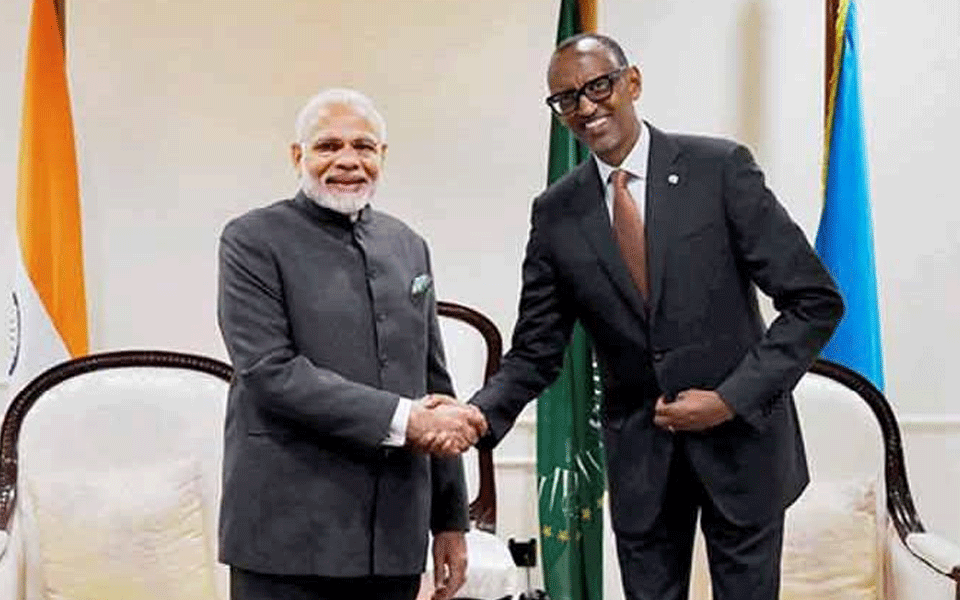
New Delhi, July 24 : India and Rwanda reviewed their entire gamut of bilateral ties and signed eight agreements across different sectors during the course of Prime Minister Narendra Modi's two-day visit to the East African nation, the External Affairs Ministry said on Tuesday.
"During the talks, both leaders reviewed the entire gamut of bilateral cooperation and expressed satisfaction at the excellent relations between Rwanda and India in the overall context of Strategic Partnership," the ministry said in a statement following delegation-level talks chaired by Modi and Rwandan President Paul Kagame in Kigali on Monday.
Ties between India and Rwanda were elevated to that of a Strategic Partnerhsip in January last year.
According to the statement, Modi highlighted the fact that Rwanda would house the first of the 18 new resident Indian missions to be opened in Africa in 2018 and this underlined the importance attached by India to its relations with Rwanda.
Stating that India and Rwanda were looking forward to further elevate their ties, Modi, while addressing the media with Kagame following Monday's talks, said: "This (opening the new mission) will not only facilitate close communication among our governments, it will also help in consular, passport, visa and other facilities."
Agreements in the area of trade, defence, dairy cooperation, agriculture, culture, leather and allied sectors and two lines of credit worth $200 million for expansion of the special economic zone and irrigation scheme were signed.
"Prime Minister appreciated the effective utilisation of $400 million lines of credit extended to Rwanda in the last few years," the ministry statement said.
In his address, Modi appreciated the steps for peace that have been adopted in Rwanda following the mass genocide in that country in 1994.
Around 500,000 to one million people were killed in the mass genocide against the Tutsi people by the majority Hutu government of that time.
"For us, it is a matter pride that India is a trusted development partner of Rwanda," Modi said.
"We have been helping Rwanda in capacity building, infrastructure development and ICT," he said.
According to the ministry statement, Modi complemented President Kagame for the important role played by him as African Union Chair in finalising the African Continental Free Trade Area Agreement that has been signed by 44 countries as of March 21, 2018.
"He expressed hope that his leadership will guide the African Union in furthering economic integration of the continent," it stated.
"He indicated India's willingness to continue to strengthen relations with African Union."
Following the talks, Modi also interacted with the Indian community in Rwanda and invited them to visit India for the Pravasi Bhartiya Divas to be held in January 2019.
Members of the Indian community of neighbouring states had also travelled for this interaction with the Prime Minister.
On Tuesday, the second and concluding day of his visit, Modi visited the Kigali Genocide Memorial honouring the memory of the 1994 genocide victims and laid a wreath there.
Thereafter, he visited the Rwera model village and gifted 200 diary cows to the villagers as part of the Rwandan government's Girinka programme for economic development.
Girinka was initiated by President Kagame in response to the alarmingly high rate of childhood malnutrition and as a way to accelerate poverty reduction and integrate livestock and crop farming.
Speaking on the occasion, Modi appreciated the Girinka programme, and Kagame's initiative in this regard.
According to the External Affairs Ministry, he said people in India too would be pleasantly surprised to see the cow being given such importance as a means of economic empowerment in villages, in faraway Rwanda.
The Prime Minister also announced gifting of 100,000 books of the National Council of Education Research and Training (NCERT) books, setting up of the Entrepreneurship Development Centre in Kigali which would provide training to youth of Rwanda for enhancing their skills in a variety of sectors, fully funded 25 slots for short-term training in the field of dairy production and processing, contribution of $10,000 each to the Kigali Genocide Memorial and the Imbuto Foundation run by the First Lady of Rwanda towards the education of the girl child.
Modi later addressed the India-Rwanda Business and called for boosting economic ties between the two countries.
"Our nations can do a lot together," he said. "There are several opportunities in rural development and small scale industries."
He said that though India is growing exponentially, "our mantra is 'sabka saath sabka vikas'".
"We will grow but we will also help those grow, who are with us," the Prime Minister said. "We will walk together."
Modi reached Rwanda on Monday in the first leg of his five-day, three-nation tour of Africa that will also take him to Uganda and South Africa.
This was the first ever Prime Ministrial visit from India to Rwanda.
This is also Modi's second visit to mainland Africa after he visited Mozambique, South Africa, Tanzania and Kenya in 2016.
Let the Truth be known. If you read VB and like VB, please be a VB Supporter and Help us deliver the Truth to one and all.
4 workers die after being buried under coal slurry in Jharkhand's Dhanbad
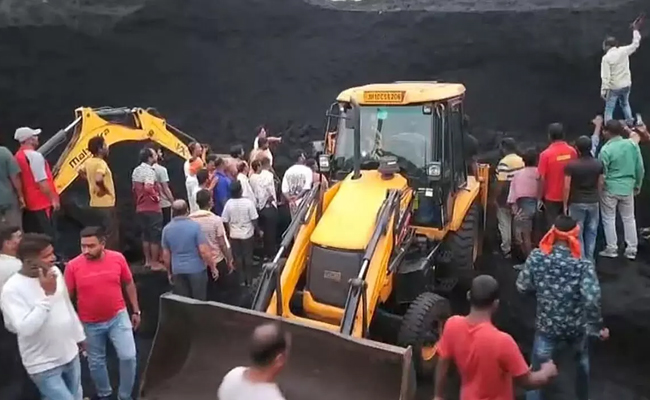
Dhanbad (Jharkhand) (PTI): At least four workers died after being buried under coal slurry in Jharkhand's Dhanbad district on Saturday, a police official said.
The incident took place at Moonidih coal washery in the command area of Bharat Coking Coal Limited (BCCL).
"Bodies of all four workers were dug out of debris during a rescue operation," Putki police station in-charge Waqar Hussain told PTI.
The incident took place when coal slurry was being loaded into trucks by workers, during which a large chunk of slurry fell and trapped several workers underneath, officials said.
The deceased have been identified as Manik Bauri, Dinesh Bauri, Deepak Bauri, and Hemlal Gope.
Meanwhile, the family members of the deceased and local villagers placed the bodies in front of the washery gate and began a protest.
They demanded compensation, jobs for dependents and action against those responsible for the incident.
Police and administration officials are trying to pacify the protesters, an official said.