India summons Pakistani diplomat, lodges strong protest
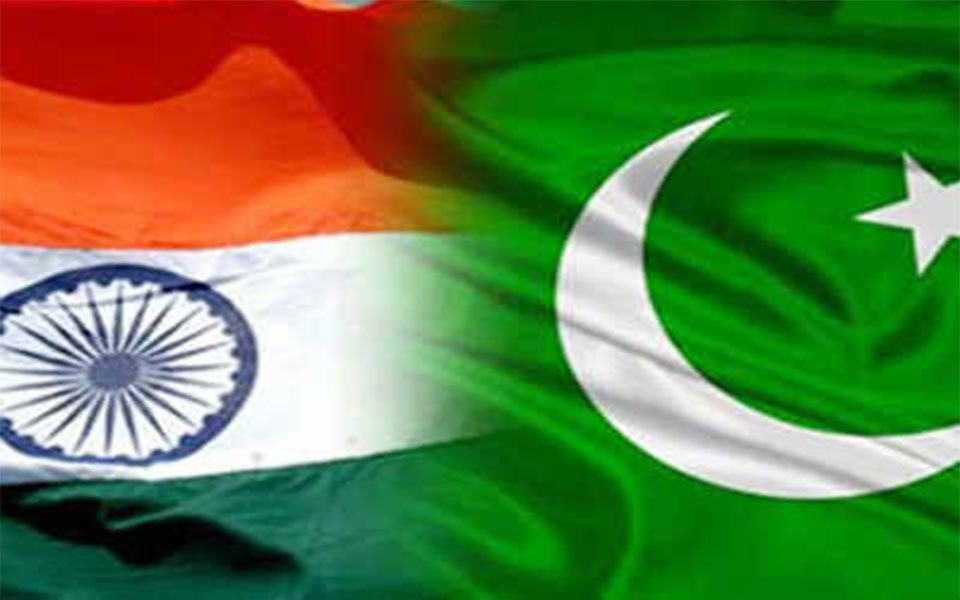
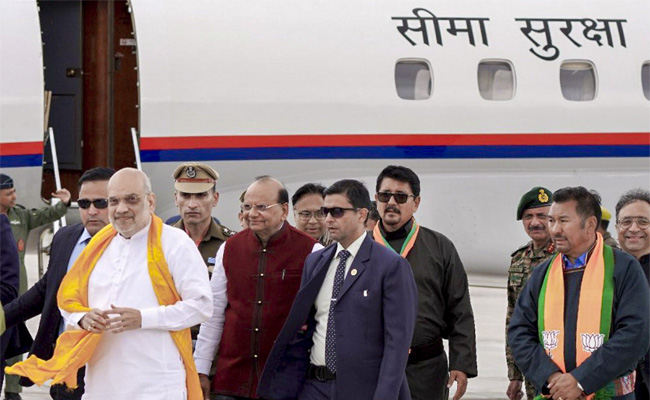
New Delhi, June 23: The government on Saturday summoned the Deputy High Commissioner of Pakistan and lodged a strong protest after Indian High Commissioner to Pakistan Ajay Bisaria and other consular officials were stopped from visiting a gurdwara to meet Indian pilgrims despite having necessary permission.
"The Deputy High Commissioner of Pakistan was summoned today (Saturday) and a strong protest was lodged at the denial of access to the Indian High Commissioner and consular officials of the Indian High Commission to visit Gurdwara Panja Sahib and meet the Indian pilgrims despite a travel permission having been granted by the Ministry of Foreign Affairs of Pakistan," the External Affairs Ministry said in a statement.
"A strong protest was also registered by the Indian High Commission in Islamabad at the incident," it stated.
"This is the second consecutive time, Pakistan has denied access to Indian High Commissioner to meet the visiting pilgrims who are Indian nationals."
In April too, India had lodged a strong protest after Bisaria and other consular officials were stopped from visiting the same gurdwara to meet Indian pilgrims.
India and Pakistan have a bilateral agreement that facilitates visits to religious shrines.
A standard practice has been that the Indian High Commission's consular team is attached with visiting pilgrims, to perform consular and protocol duties, like helping out in medical or family emergencies.
According to Saturday's ministry statement, the Indian organisers, Shiromani Gurdwara Prabandhak Committee (SGPC), when contacted, have expressed grave concern and dismay at the incident despite the visiting pilgrims from India having asked Pakistan organisers to facilitate a meeting with the Indian High Commissioner and High Commission officials.
"It has been conveyed to Pakistan side that preventing the Indian High Commission officials from discharging their consular responsibilities is in violation of the Vienna Convention on Diplomatic Relations of 1961, and the 1974 bilateral protocol on visits to religious shrines," it stated.
"Concerns have also been conveyed at repeated attempts by entities in Pakistan to extend support to secessionist movements in India and incite the Indian pilgrims, and Pakistan authorities asked to ensure that no such activity is carried out from Pakistan soil."
Let the Truth be known. If you read VB and like VB, please be a VB Supporter and Help us deliver the Truth to one and all.
AIITA welcomes Karnataka’s ban on obscene songs in school events
Bhatkal: The Karnataka unit of the All India Ideal Teachers Association (AIITA) has welcomed the Karnataka government’s decision to strictly ban school children from dancing to obscene songs during educational and cultural programmes in government, aided, and private schools across the state.
AIITA Karnataka State President M. R. Manvi congratulated the government for taking what he termed an important step to preserve the sanctity of education.
“Such decisions to safeguard the dignity of school children and uphold the values of education are the need of the hour. This rule should not be limited to government schools alone but must be strictly implemented in all private educational institutions as well,” he said.
He further urged the government to address other concerns within school programmes.
“The government should not only prohibit obscene dances in the name of school anniversaries, but also ensure that plays and dialogues that incite religious hatred are avoided. Schools should be centres of harmony, not platforms for spreading hatred,” he added.
According to a recent circular issued by the Department of School Education and Literacy, obscene dances are adversely affecting the mental health and moral values of students.
In this regard, schools have been advised to use songs that promote nationalism, positive thinking, the greatness of Kannada culture, and value-based traditions instead of inappropriate content during programmes.
The circular also emphasises that students should be dressed in decent attire.
AIITA also backed the department’s warning that disciplinary action would be taken against head teachers if such guidelines are violated. The association has further demanded that district Deputy Directors of Public Instruction strictly monitor the implementation of these rules.