Indian Army allows Instagram viewing for soldiers, keeps ban on posting, interaction
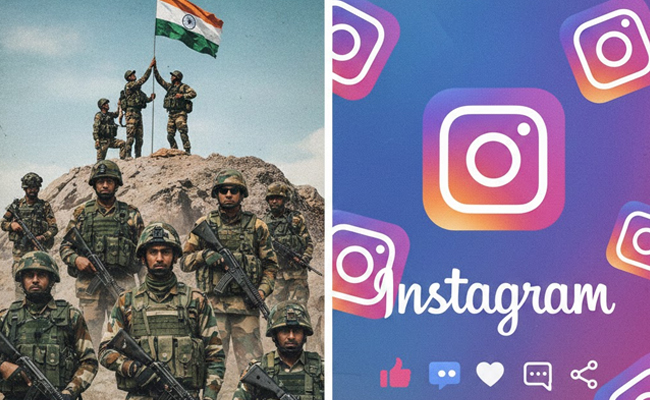
New Delhi: The Indian Army has quietly updated its social media policy, allowing soldiers and officers to access Instagram, but strictly as silent viewers. According to sources, personnel can use the platform only to watch and monitor content. Posting, liking or commenting remains prohibited, and all existing rules governing digital behaviour continue to apply.
The revised instructions have been circulated across army units and departments. The objective, sources said, is to let soldiers stay informed, track developments online and build awareness, without compromising operational security. Personnel are also permitted to flag fake, misleading or suspicious posts to senior officers.
ALSO READ: Bengaluru woman groped, beaten, dragged on road after rejecting man’s advances
The Army has, over the years, repeatedly tightened and revised its social media guidelines, especially for platforms such as Facebook, X (formerly Twitter) and Instagram. The restrictions stem from security concerns, particularly instances where soldiers were targeted through “honey traps” by hostile foreign agencies, resulting in the inadvertent sharing of sensitive information.
Responding to a question on how the forces balance discipline with the digital habits of Generation Z, Army Chief General Upendra Dwivedi recently addressed the issue at the Chanakya Defence Dialogue.
Acknowledging the challenge, General Dwivedi said young cadets arriving at the National Defence Academy often struggle to part with their phones. “It takes three to six months to convince them that there is life without a phone,” he remarked, while adding that smartphones today are also a necessity.
The Army chief stressed how important smartphones are for preserving family ties, while noting that phones are useful tools for reading, learning, and handling personal obligations. He also mentioned that soldiers deployed in remote areas rely on their phones to view photos of their newborn children, check on ageing parents, or maintain contact with their wives.
However, General Dwivedi drew a firm line when it comes to engaging on social media. He emphasised the difference between “reacting” and “responding,” cautioning soldiers against impulsive online responses. “Reacting is immediate. Responding involves thought and analysis,” he said, adding that army personnel are currently permitted to use platforms like X only for viewing, not replying. “Reply after you retire,” he remarked, describing this restraint as a strategic message to adversaries: the Army does not react, it responds.
Army personnel were barred from joining any social media groups until 2019. Following repeated cases of misuse, the rules were further tightened in 2020, with soldiers instructed to delete 89 mobile applications. Minister of State for Defence Subhash Bhamre told Parliament in 2017, that social media guidelines were framed to safeguard information and prevent misuse.
Over time, limited access has been restored under strict supervision. Platforms such as Facebook, YouTube, X, LinkedIn, Quora, Telegram and WhatsApp are now permitted, but only within clearly defined boundaries. The Army also runs its own official social media handles, which serve as authorised sources of information.
Under the updated framework, soldiers may use social media to gather general information, upload resumes or explore professional opportunities, provided all security protocols are strictly followed and no instructions are violated.
Let the Truth be known. If you read VB and like VB, please be a VB Supporter and Help us deliver the Truth to one and all.
Karnataka MLA Vinay Kulkarni disqualified after conviction in Goudar murder case
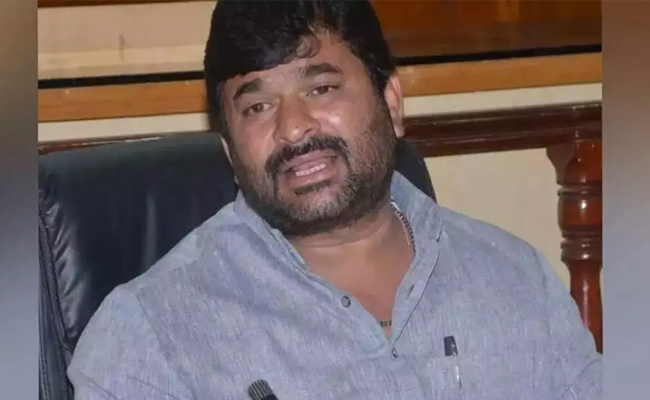
Bengaluru (PTI): The Karnataka Legislative Assembly on Saturday issued an official notification regarding the disqualification of Congress MLA Vinay Kulkarni following his conviction in the murder case of BJP leader Yogeshgouda Goudar.
The former minister is currently in prison, serving life imprisonment in the case.
“Consequent upon the conviction of Vinay Kulkarni, Member of the Karnataka Legislative Assembly representing the Dharwad constituency, by the LXXXI Additional City Civil & Sessions Judge, Bengaluru City (CCH-82), in Spl CC No. 565/2021, he stands disqualified from the membership of the Karnataka Legislative Assembly from the date of conviction, i.e, April 15, 2026,” the notification read.
“He stands disqualified in terms of the provisions of Article 191(1)(e) of the Constitution of India, read with Section 8 of the Representation of the People Act, 1951, and such disqualification shall continue for a further period of six years after his release, unless the conviction is stayed by a competent court,” it added.
Hence, one seat in the Karnataka Legislative Assembly has fallen vacant, the notification said.
Bypolls were held on April 9 to fill two other seats in the 224-member Assembly that fell vacant due to the death of sitting MLAs. The results will be declared on May 4.
On April 15, Judge Santhosh Gajanan Bhat convicted Kulkarni and others under various IPC sections, including criminal conspiracy and murder. Subsequently, on April 17, the court sentenced Kulkarni and 15 others convicted in the case to life imprisonment.
The case pertains to the killing of Goudar, a BJP Zilla Panchayat member, in Dharwad on June 15, 2016. Kulkarni was a minister at that time. Hired assailants attacked and hacked Goudar to death in his gym at Saptapur in Dharwad.
Following demands from Goudar’s family and others, the then-BJP government transferred the case to the CBI in 2019.
The CBI filed a supplementary chargesheet in 2020, naming Vinay Kulkarni as the “main conspirator.” It alleged that he perceived Yogeshgouda Goudar as a growing political rival in Dharwad and hired contract killers to eliminate him.
Kulkarni was arrested by the CBI in 2020. He was granted bail by the Supreme Court in August 2021 under certain conditions, including a ban on entering Dharwad district. However, in June 2025, the apex court cancelled his bail following allegations of witness tampering and attempts to influence prosecution witnesses.
Kulkarni again sought bail in January 2026, but the High Court rejected it, citing judicial propriety.
However, the Supreme Court granted him bail on February 27 after noting that all witnesses had been examined.