IOA Impasse: Usha, EC members clash on CEO appointment; deadlock persists
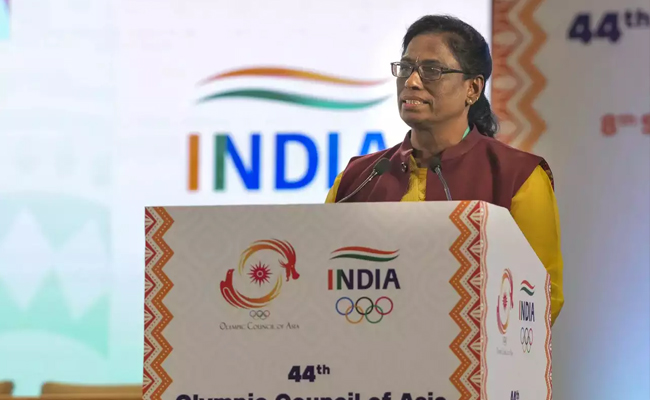
New Delhi (PTI): Indian Olympic Association President PT Usha had another heated confrontation with the body's Executive Council on Thursday after a majority of its members reiterated their opposition to Raghuram Iyer's appointment as CEO but the embattled track-and-field great refused to back down and rejected their demand for his removal.
The main agenda of the meeting called by Usha was ratification of Iyer's appointment as CEO on January 5 but it ended in a deadlock. With both sides sticking to their earlier stands, the bitter feud is expected to worsen in the coming days.
"They want to re-initiate the whole process, they want to re-advertise afresh. It's like saying we don't want this person and let us start the process from the scratch," a furious Usha said after the meeting.
"This process (of appointment of CEO) took two years and now they want to start all over again. This is going to have repercussions (from the IOC). It can jeopardise India's chances of bidding for and hosting the 2036 Olympics," she warned.
"I am not going to accept this. I have told this to the IOC (International Olympic Committee). I am not a quitter, I am not going anywhere without cleaning the IOA," she asserted.
Interestingly, IOC Director Jerome Poivy joined the meeting online and watched the confrontation unfold.
Undeterred by Usha's warnings, 10 members of the EC, who attended the meeting in person, issued a statement, saying that they have decided to re-initiate the process of appointment of the CEO.
"The ratification of Mr lyer as the CEO was not approved. Further it was decided that process of the appointment of the CEO be re-initiated with new terms of reference," the statement said.
They stated that IOC representative called the entire fiasco "an internal matter of the IOA" and had "no specific views or interference" on the subject.
Before joining the IOA, Iyer had worked as EO of IPL sides Rajasthan Royals and Lucknow Super Giants. He had also held administrative roles in football's Indian Super League and Ultimate Table Tennis.
"The Members further, in the presence of the IOC Director, stated that the process for the advertisement of the CEO should be initiated at the earliest where it was anticipated that the appointment can be concluded in the next two months," the statement from the revolting EC members read..
Senior vice president Ajay H Patel, vice presidents RajLaxmi Deo and Gagan Narang, Treasurer Sahdev Yadav, Joint Secretary Alaknanda Ashok, other Executive Council members Amitabh Sharma, Bhupender Singh Bajwa, Rohit Rajpal, Dola Banerjee, and Yogeshwar Dutt were present in person.
Joint Secretary Kalyan Chaubey and Executive Council member Harpal Singh joined online.
The members felt that while a "CEO is a must and should be appointed", but voted against the nomination of lyer for the position.
"...the agenda was to put to vote where the 10 physical members and 2 members who joined online expressed their dissent on the agenda and the vote was 12 against the ratification of the CEO."
"...the acting CEO Kalyan Chaubey, who is the Joint Secretary of the IOA, shall continue to discharge the duties as per the provisions laid out in the Constitution," the statement of the majority EC members said.
Usha, on her part, said that the EC members have gone back on their word as they had agreed to the appointment of the CEO in the January meeting.
"The EC meeting held in January was video-recorded. I asked each one of them whether they agree to the appointment of Iyer as the CEO or not. All of them said Iyer is good and everything about him is all right. Only his salary will have to be negotiated," she stated.
"I asked them what is the lower rate (limit) and what is the higher limit of his salary. That (salary) they did not mention.
"Then his (Iyer's) appointment was done and I communicated it to IOC and OCA and everybody accepted it."
The bone of contention is the Rs 20 lakh per month salary for Iyer, along with other perks.
Usha said she offered to renegotiate Iyer's salary in Thursday's meeting but the 12 EC members were adamant about starting the process afresh.
She said the latest development could jeopardise India's chances of bidding for the 2036 Olympics.
"Only after the appointment (of the CEO) was done, the Future Host Commission agreed to have a dialogue with us, otherwise they would not agree to it. The CEO will have to lead the negotiations, we have to show professionalism, otherwise how would we got to present our bid?" she asked.
She said the IOC could have taken a drastic step even before the Paris Olympics but desisted from that.
"I was there, that is why IOC was waiting for two years. It (IOC action) could have happened before Paris Olympics but they waited.
"Iyer was in the Co-ordination Committee and not the IOA president, that was why we could compete under Indian flag and not under the IOC flag."
She said Iyer and her personal assistant Ajay Narang, whose appointment was "cancelled" by the majority EC members, have not got salary since their appointment.
Let the Truth be known. If you read VB and like VB, please be a VB Supporter and Help us deliver the Truth to one and all.
Bhojshala case: Disputed structure built from remains of pre-existing temples, claims ASI
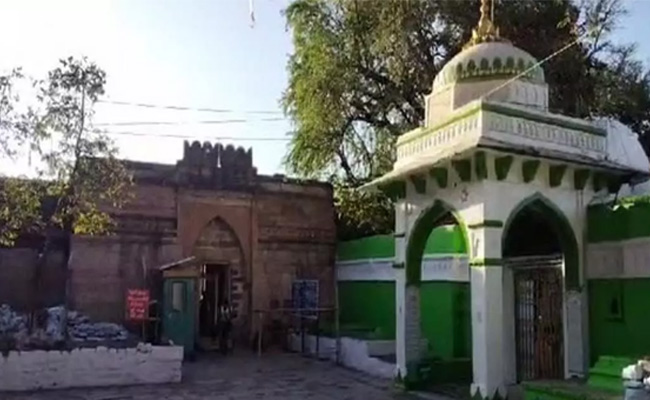
Indore (PTI): The ASI has told the Madhya Pradesh High Court that a massive structure dating back to the Paramara kings' rule existed at the disputed Bhojshala temple-Kamal Maula mosque complex, and the current structure was built from the remains of temples.
The Archaeological Survey of India (ASI) made the claim on Tuesday based on its 98-day scientific survey and over 2,000-page report.
The Hindu community considers Bhojshala a temple dedicated to Vagdevi (Goddess Saraswati), while the Muslim side claims the monument as the Kamal Maula Mosque. The disputed complex is protected by the ASI.
During the hearing before Justices Vijay Kumar Shukla and Alok Awasthi of the HC's Indore bench, Additional Solicitor General Sunil Kumar Jain, representing the ASI, presented a detailed account of the scientific survey conducted two years ago at the complex.
Referring to the ASI's survey report, he said, "Retrieved architectural remains, sculptural fragments, large slabs of inscriptions with literary texts, Nagakarnika inscriptions on pillars, etc, suggest that a large structure associated with literary and educational activities existed at the site. Based on scientific investigations and archaeological remains recovered during the investigations, this pre-existing structure can be dated to the Paramara period."
It can be said that the existing structure was made from the parts of earlier temples, based on scientific investigations, survey and archaeological excavations conducted, study and analysis of retrieved finds, study of architectural remains, sculptures, and inscriptions, art and sculptures, Jain said quoting the report.
Summarising the report, he also drew the court's attention to the fact that the archaeological study identifies that many architectural components, such as pillars and beams, were originally part of temple structures before being repurposed for a mosque.
"The evidence of this transition includes Sanskrit and Prakrit inscriptions that were damaged or hidden, alongside sculptures of deities and animals that were often mutilated or defaced," Jain contended.
The report also states that "all Sanskrit and Prakrit inscriptions are older than the Arabic and Persian inscriptions, indicating that users or engravers of the Sanskrit and Prakrit inscriptions occupied the place earlier".
In light of the Muslim side's earlier objections, the bench wanted to know why there were some discrepancies in the ASI's responses regarding the status of the disputed complex in the cases filed over the years.
The Additional Solicitor General argued that earlier studies of the complex involved only officials, while the current survey involved scientists and the use of advanced technologies such as Ground Penetrating Radar (GPR).
The hearing in the Bhojshala case will continue on Wednesday.
The high court has been regularly hearing four petitions and one writ appeal regarding the religious nature of the Bhojshala temple-Kamal Maula mosque complex since April 6.