Iran crisis: 225 flights cancelled at Mumbai, Delhi airports
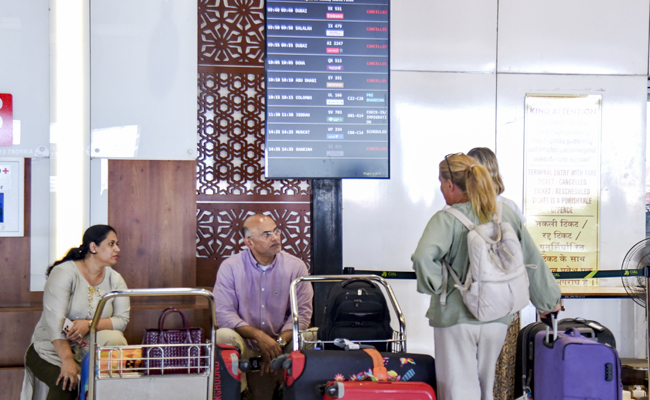
New Delhi (PTI): As many as 225 international flights were cancelled at Mumbai and Delhi airports on Sunday due to operational disruptions in the wake of the US and Israel attacks on Iran and the subsequent closure of airspaces in the Gulf region.
Of the 225 flights, 125 flights were cancelled at Mumbai airport and at least 100 flights at Delhi Airport, sources say.
A source said 60 international departures and 40 arrivals have been cancelled at Delhi Airport.
"Due to the evolving political situation in the Middle East, west-bound international flights may experience disruptions or schedule changes," DIAL said in a post on X.
Delhi International Airport Ltd (DIAL) operates the Indira Gandhi International Airport (IGIA) in the national capital.
"A total of 125 flights have been cancelled at Mumbai Airport up till 2.30 pm on Sunday. These include 67 departures and 58 arrivals," said another source.
It may be mentioned here that due to the paucity of parking space, authorities at Mumbai Airport had taken NOTAM for not accepting any flight on account of diversion at 9 pm on Saturday until 8 am on March 1 amid the developments in West Asia.
The decision was taken due to the paucity of parking space at the airport with a number of flights returning to their origin or diverting to nearby airports, a source had said.
Mumbai International Airport Ltd, the private airport operator, issued a NOTAM (Notice to Airmen) "for not accepting any more diversions" at 9 pm, the source added.
Earlier, the Civil Aviation Ministry said 444 international flights are expected to be cancelled by domestic carriers on Sunday.
Let the Truth be known. If you read VB and like VB, please be a VB Supporter and Help us deliver the Truth to one and all.
What is Iran’s 10-point plan? Key demands ahead of US talks in Islamabad
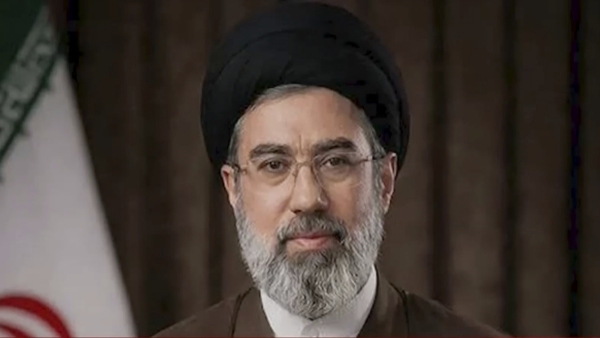
Tehran/Islamabad: Iran has outlined a 10-point plan as the basis for upcoming talks with the United States, expected to begin in Islamabad on April 11, according to a statement from the Iranian Supreme National Security Council.
The plan lays out Tehran’s key political, military and economic demands, and is being seen as a framework for negotiations following the recent escalation in the region.
Strait of Hormuz at the centre
A major focus of the plan is the Strait of Hormuz, a critical global shipping route. Iran has proposed “controlled passage through the Strait of Hormuz in coordination with the Iranian armed forces,” which it says would give the country a unique economic and geopolitical position.
The plan also calls for the “establishment of a safe transit protocol” in the Strait that would guarantee Iran’s dominance under an agreed mechanism.
Call to end conflict
Iran has demanded “the necessity of ending the war against all elements of the axis of resistance,” signalling its expectation that hostilities should stop not only in Iran but also involving allied groups in the region.
US troop withdrawal
Another key demand is the “withdrawal of US combat forces from all bases and deployment points in the region,” indicating Tehran’s long-standing position against American military presence in West Asia.
Sanctions relief and compensation
The plan places strong emphasis on economic measures. It calls for “full payment of Iran’s damages according to estimates,” along with “the lifting of all primary and secondary sanctions and resolutions of the Board of Governors and the Security Council.”
It also seeks “the release of all Iranian assets and properties frozen abroad,” which have been a major point of contention for years.
Binding global guarantee
Finally, Iran has demanded that all these terms be formally recognised through “a binding Security Council resolution,” suggesting it wants international legal backing to ensure enforcement.
What this means
The 10-point plan reflects Iran’s broader push for security guarantees, economic relief and regional influence. The upcoming talks in Islamabad are expected to test how far both sides are willing to negotiate on these demands.