Jharkhand: Three policemen suspended for lapse in PM's security
Ranchi (PTI): Three policemen were suspended for security lapse during Prime Minister Narendra Modi's visit to Ranchi, a police officer said on Thursday.
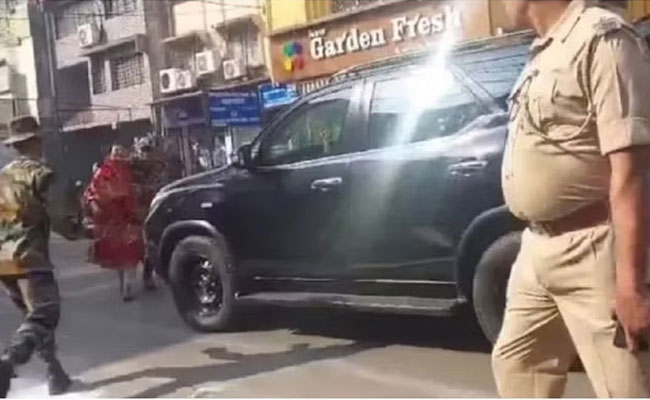
The action was taken after a woman unexpectedly ran and came in front of PM's convoy while it was on its way to Bhagwan Birsa Munda Memorial Park-cum-Freedom Fighter Museum on Wednesday morning, the officer said.
The woman, however, was immediately caught by security forces deployed for PM's security and taken into custody.
Modi was on a two-day visit to Jharkhand on the occasion of the birth anniversary of tribal icon Birsa Munda.
"An ASI and two constables have been suspended for dereliction of duty during the prime minister's visit," a police statement said.
The policemen, who were suspended include ASI Abu Zafar, constable Chotelal Tudu and constable Ranjan Kumar.
The woman, who was caught while breaching PM's security, was identified as Sangita Jha, who was reportedly upset with her husband and wanted to lodge a complaint against him, police said.
Ranchi Senior Superintendent of Police (SSP) Chandan Kumar Sinha told PTI, "During interrogation, the woman said that she was married to a man at Jamuni village in Jharkhand's Deoghar district in 2012. But, a dispute between them started in 2016."
There was a regular scuffle between them. "The woman wants the salary of her husband to be credited in her bank account. In this regard, she also went to Delhi in October this year to meet the prime minister and stayed there for 10 days. After failing, she also tried to meet the President. When all efforts went in vain, she returned to her in-laws' house in Deoghar," the SSP said.
Jha told police that she came to Ranchi after getting information that the PM was coming to the state capital.
As per the police, the woman tried to meet him during the roadshow on Tuesday night but failed and even made an effort to visit Raj Bhavan on Wednesday.
"She was returning disappointed from Raj Bhavan. But, she suddenly heard the siren of PM's convoy at Radium road and came suddenly in front of the convoy," Sinha said.
The prime minister on Tuesday held a 10-km roadshow and the next morning he paid floral tribute at the statue of Birsa Munda at Bhagwan Birsa Munda Memorial Park-cum-Freedom Fighter Museum, near Jail Chowk in Ranchi.
Later, he visited Birsa Munda's birthplace Ulihatu village in Khunti district on Wednesday on the occasion of the third Janjatiya Gaurav Diwas and paid tribute to the tribal hero.
He also launched a Rs 24,000-crore project aimed at the development of the Particularly Vulnerable Tribal Groups (PVTGs).
The PM also flagged off the 'Viksit Bharat Sankalp Yatra', released the 15th instalment of Rs 18,000 crore under the PM-KISAN scheme, and inaugurated and laid the foundation of projects worth Rs 7,200 crore in the state.
Let the Truth be known. If you read VB and like VB, please be a VB Supporter and Help us deliver the Truth to one and all.
Karnataka: College student dies by suicide in Dharwad, 3 policemen suspended
Dharwad (Karnataka) (PTI): A college student allegedly died by suicide here, following which three policemen were suspended over allegations of harassment linked to his death by the victim's family.
Aditya Myageri, a BSc student at a private college here, was among 18 students detained by the Vidyagiri police on April 25 during an anti-drug drive, police said on Wednesday.
He hailed from Belur village in Bagalkot district, but was staying with his friends at a rented accommodation in Girinagar area of Dharwad city, police said.
Among the 18 students tested, Aditya was among the 10 who had tested negative for ganja consumption and was subsequently released.
Some of his roommates, however, tested positive.
According to police, Aditya's family alleged that despite testing negative, he was harassed by police. They also claimed some policemen demanded Rs 2,000 to settle the matter and threatened legal action if he failed to pay.
He had called his mother asking for money, but she could not arrange it immediately, the family claimed.
On Monday night, Aditya allegedly died by suicide by hanging from a ceiling fan at his rented accommodation, with his family alleging police harassment and pressure over demand for money drove him to the extreme step, a senior police officer said.
Police Commissioner N Shashi Kumar told PTI that an unnatural death case has been registered at Vidyagiri police station. Three policemen have been suspended over the allegations, and further investigation is underway.