JMI suspends social work professor over exam question on atrocities against Muslims, orders inquiry

New Delhi: Jamia Millia Islamia has suspended a faculty member from its Department of Social Work after objections were raised to a question in an end-of-semester examination paper that asked students to discuss atrocities against Muslim minorities in India.
The suspended teacher is identified as Prof. Virendra Balaji Shahare, who had set the BA (Hons) Social Work Semester-I examination paper for the course Social Problems in India for the 2025-26 academic session. University officials said multiple complaints were received from various quarters regarding the content of the question paper, prompting administrative action.
According to a Maktoob Media report, the university said, in an order issued on December 23, the competent authority had taken a serious view of what it described as negligence and carelessness on the part of the paper setter. Acting on the Vice-Chancellor’s directions and invoking Statute 37(1) of the university statutes, Prof. Shahare was placed under suspension with immediate effect, pending the outcome of a formal inquiry, stating that a police complaint would be filed in accordance with rules.
ALSO READ: BJP wins Kinnigoli, Bajpe, Manki Town Panchayat elections
During the period of suspension, Prof. Shahare has been directed to remain headquartered in New Delhi and has been barred from leaving without prior permission. Copies of the order have been sent to senior officials, including the dean of the Faculty of Social Sciences, the head of the Department of Social Work and the Controller of Examinations.
While the university has not publicly clarified the precise nature of the objections to the examination question, it has triggered strong reactions on campus and beyond, with students, teachers and rights groups questioning the move.
Describing Professor Shahare as a committed teacher, Humaira Aftab, a former student of the department, said that the question was directly linked to the subject being taught and she further argued that examining the condition of minorities was central to understanding social problems. She also warned that the suspension could set a troubling precedent for academic discourse.
A faculty member from Jamia, speaking on condition of anonymity, said the action reflected a broader climate in which universities were under pressure to avoid questions that could lead to scrutiny of state policies or social realities, adding that institutional leaderships were increasingly constrained in defending academic autonomy.
Calling it an attack on academic freedom, the Jamia unit of the Fraternity Movement has also demanded the immediate revocation of the suspension. Cautioning that continued inaction could lead to collective protests by students, the group said in a statement, the examination question fell squarely within the scope of the course.
The inquiry against Prof. Shahare is yet to begin, while the suspension will remain in force until its completion.
Let the Truth be known. If you read VB and like VB, please be a VB Supporter and Help us deliver the Truth to one and all.
Kerala polls: ‘People rejected 10 years of misrule’, says AICC gen secy
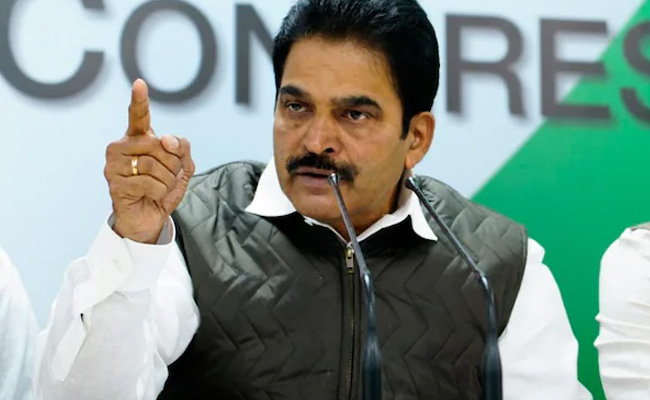
Thiruvananthapuram (PTI): AICC General Secretary K C Venugopal on Monday said the Congress-led UDF’s sweeping victory in the Kerala Assembly polls was a clear verdict against the “arrogance”, corruption, and nepotism of the CPI(M)-led LDF government headed by CM Pinarayi Vijayan.
Addressing a press conference as counting of votes for all 140 Assembly constituencies neared completion, Venugopal said the outcome reflected public anger against what he termed “10 years of misrule” by the Left government.
He claimed that Vijayan’s victory in his home constituency, Dharmadam, was “only technical”, alleging that the CM trailed the UDF candidate in the initial rounds of counting and failed to secure a majority in his own village.
“He just escaped. He suffered a setback even in his home turf. He was the only person who did not realise the people’s mood in this election,” Venugopal said.
Alleging that the CPI(M) and the LDF had resorted to “communal and opportunistic politics”, he further claimed that the ruling front had entered into a “secret understanding” with the BJP in a bid to retain power for a third consecutive term.
He said that when a government driven by power and arrogance attempts to align with anyone to stay in office, even its own cadre turns against it.
Referring to the results, Venugopal said that while the UDF expected rebel CPI(M) leaders, including K Kunhikrishnan in Payyannur, to impact the vote share, their victories came as a surprise.
Describing the UDF’s performance as a “historic victory”, he attributed it to coordinated teamwork, grassroots mobilisation, and the dedication of party workers, adding that the alliance accepted the mandate “with humility”.
Venugopal also credited Rahul Gandhi’s campaign guarantees, calling them a “trump card” that helped voters focus on real issues and reject what he described as the LDF’s “false narratives”.
He claimed that the Congress witnessed one of its lowest levels of rebellion in this election, which contributed to the alliance’s strong performance.
The senior Congress leader further alleged that the BJP managed to win two seats with the help of the CPI(M), and asserted that forces attempting to divide society on communal lines should “learn a lesson” from Kerala’s verdict.
“This is the real Kerala story,” he said.
On the question of the next Chief Minister, Venugopal said the party leadership would decide at the earliest after due consultations.
The counting of votes began on Monday morning for all 140 Assembly constituencies in Kerala, where the Congress-led UDF secured a decisive majority, defeating the CPI(M)-led LDF, which was seeking an unprecedented third consecutive term in office.
Congress MP Rahul Gandhi (@RahulGandhi) posts, "Thank you to my brothers and sisters in Keralam for a truly decisive mandate. Congratulations to every UDF leader and worker for a hard-fought, well-run campaign. As I said before, Keralam has the talent, Keralam has the potential… pic.twitter.com/6T4IZbEmp4
— Press Trust of India (@PTI_News) May 4, 2026