JNU bans protests within 100 m of academic buildings; students may face expulsion if rules flouted
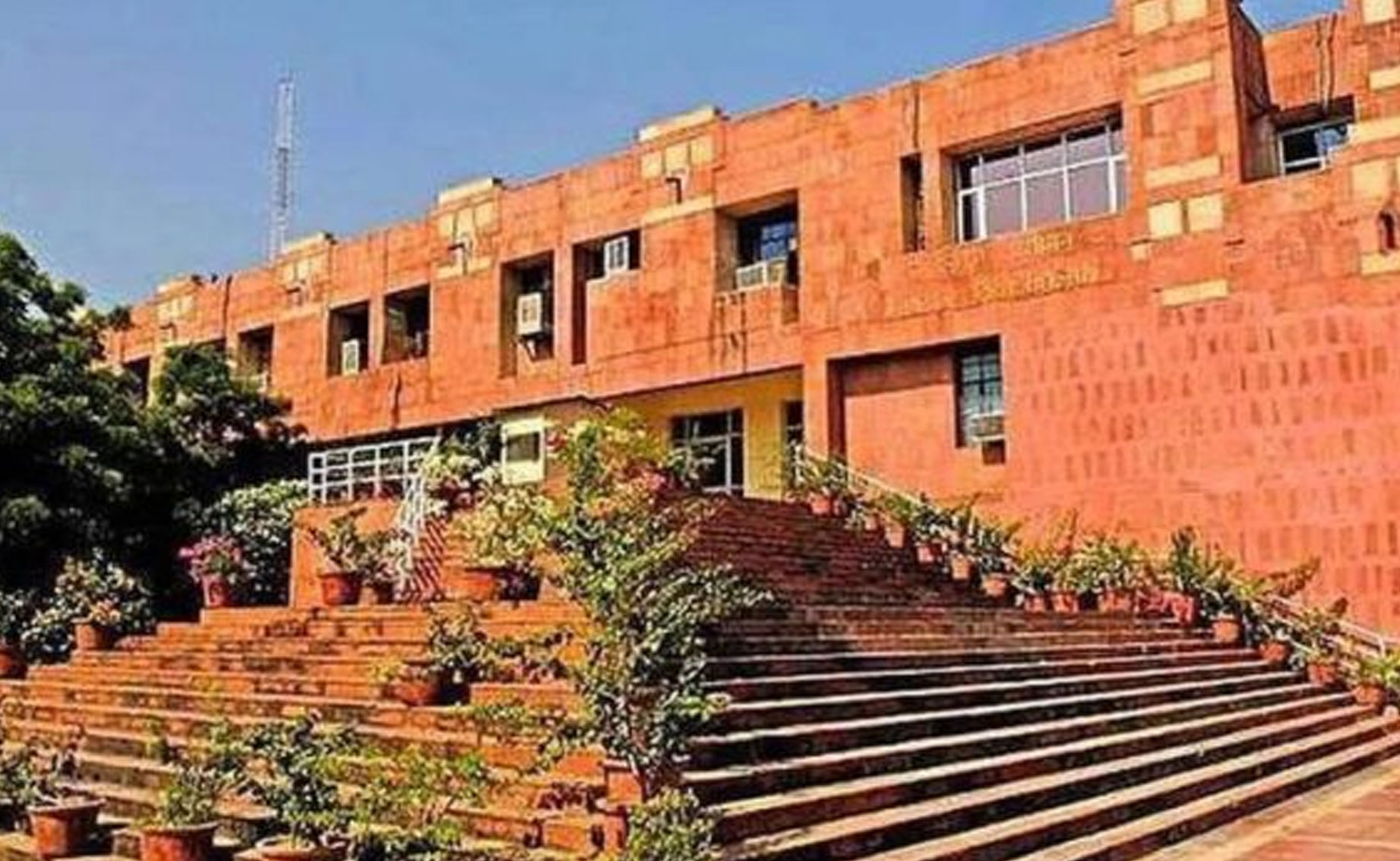
New Delhi, Dec 11: Putting up wall posters and staging dharnas within 100 metres of the academic buildings at the Jawaharlal Nehru University can lead to a fine of up to Rs 20,000 or expulsion while any "anti-national" act will attract a Rs 10,000 fine, according to a new manual.
The academic buildings of different schools house offices of chairpersons, deans, and other important office-bearers, apart from classrooms and labs.
Earlier, protests within 100 metres of the administrative blocks, which house the offices of the Vice-Chancellor, registrar, and proctors, among others, was prohibited as per a High Court order.
However, according to the revised Chief Proctor Office (CPO) manual, the university has now barred protests within 100 metres of academic buildings as well where classes are conducted.
Any act to incite intolerance towards a religion, caste, or community or an activity which is deemed "anti-national" will be imposed with a fine of Rs 10,000.
This development comes after the JNU in October witnessed an incident where an "anti-national" slogan was scribbled on the School of Languages building wall and the administration announced to set up a committee to look into the repeated nature of such incidents on the campus.
The JNU Students' Union (JNUSU) has opposed the new rules saying that it is an attempt to stifle dissent on campus and demanded its withdrawal.
"The stringent measures outlined in the manual are aimed at stifling the vibrant campus culture that has defined JNU for decades. The JNUSU demands that the university administration immediately revoke the new manual of the office of the Chief Proctor Manual," the students' union said.
Calls and texts to JNU registrar Ravikesh did not elicit a response.
Under the new rules, approved by the Executive Council in a meeting on November 24, the Vice-Chancellor Santishree Dhulipudi Pandit or the competent authority will have the power to deem an act punishable if they find it in violation of the disciple and conduct in the university.
They also have the power to waive, change or uphold the punishment if deemed fit.
The university has prohibited printing, circulating or pasting posters or pamphlets carrying any kind of derogatory religious, communal, casteist or anti-national remarks.
If a student is found involved in a hunger strike, dharna, 'group bargaining' and any other form of protest within 100-metre radius of any academic and administrative complex or is found blocking entrance or exit of any of these complexes, he or she will be either imposed a fine of Rs 20,000, evicted from hostel for two months or be rusticated and declared out of bounds for up to two months, the CPO manual said.
All forms of coercion such as gheraos, sit-ins or any variation of the same which disrupt the normal academic and administrative functioning of the university or any act inciting violence will be punished as well, it added.
A student who has received five or more punishments during the duration of their study shall be expelled from the university, the manual noted. In case a student is found guilty of being involved in any of the prohibited activities and is given a punishment, he or she will not be allowed to register for the semester and they would not be given a 'no-dues' certificate until the imposed fine is cleared.
The administration will also send a copy of the punishment to the parents or guardian of the student besides uploading it on the official website.
If a student fails to appear before the proctorial enquiry, the committee will assume that the complaint was filed with a malafide intention and the student may be asked to perform community service in JNU.
Any false allegation against any student by the complainant can also lead to rustication from the university.
Furthermore, the university now will not allow cross-examination between defendant and complainant or the witness, which use to be an important rule of the proctorial enquiry earlier.
The Vice-Chancellor's decision will be the final call, in case any dispute arises with regard to the interpretation of any of these rules, the manual said.
Let the Truth be known. If you read VB and like VB, please be a VB Supporter and Help us deliver the Truth to one and all.
Nirmala Sitharaman inaugurates Gems and Jewellery Institute campus in Udupi
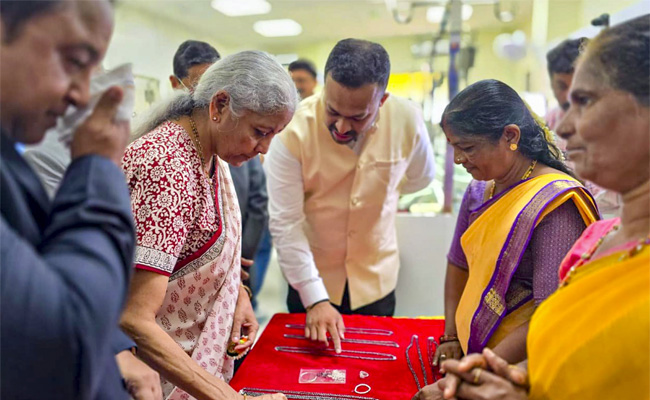
Udupi (Karnataka) (PTI): Union Finance Minister Nirmala Sitharaman on Tuesday inaugurated the premises of the Indian Institute of Gems and Jewellery here, praising the centre for providing professional training and promoting entrepreneurship among youth.
Speaking at the event, Sitharaman said the centre, established in 2016 with support from the Gems and Jewellery Export Promotion Council and the district administration, has grown steadily despite disruptions during the Covid-19 pandemic.
“We started in a very small place, unsure of the response. Today, advanced facilities including CAD and 3D printing are available, enabling students to gain industry-relevant skills,” she said.
Sitharaman highlighted the centre’s reach across Karnataka and beyond.
“Students have come from Karwar, Chitradurga, Raichur, and Tamil Nadu. Some had no prior experience but are now running successful jewellery businesses,” she said, citing examples of trainees who returned to their hometowns to start enterprises.
Emphasising affordability, she noted, “Training abroad is expensive, but here the Indian Institute of Gems and Jewellery offers professional courses at accessible costs, making skill development widely available.”
The minister also underlined the centre’s contribution to India’s jewellery export sector.
“This region, from Ratnagiri to Kerala, has a rich jewellery tradition serving the Indian diaspora. Skilled manpower from such centres strengthens our exports and creates livelihood opportunities,” she said.
Sitharaman commended the collaboration between the government, GJEPC, and local jewellers, noting that around 600 students were trained last year.
She urged greater awareness to attract more youth to the institute, describing it as a model public-private partnership that fosters entrepreneurship and skill development.
The minister also witnessed the signing of an MoU between the Indian Institute of Gems & Jewellery and IIT Madras under the InCent LGD platform for a specialised, industry-oriented certification programme in lab-grown diamond technologies.
The office of the minister said in a post on X that the programme will help bridge critical skill gaps, create job-ready professionals, boost value-added manufacturing, and strengthen India’s position in the global LGD (lab-grown diamond) value chain, aligned with Make in India, Skill India, and the goal of a self-reliant, globally competitive LGD ecosystem.
It further said that the Rs 242 crore grant announced in the Union Budget 2023–24 for lab-grown diamond research at IIT Madras is helping build a world-class ecosystem.
Under the InCent initiative, India’s first indigenously designed scaled prototype of a High Pressure High Temperature (HPHT) LGD machine has been developed and installed at IIT Madras, while imported commercial HPHT machines have also been installed for benchmarking.
Sitharaman also witnessed a demonstration of the ‘Design to Manufacturing’ process by students at IIGJ Udupi and interacted with trainees of the institute and entrepreneurs from the gems and jewellery industry, the minister’s office said in another post.