Journalist Mehdi Hasan announces new media venture Zeteo, says "Ready to Make Some Noise"
Urges people to become paid members because 'freedom isn't free'
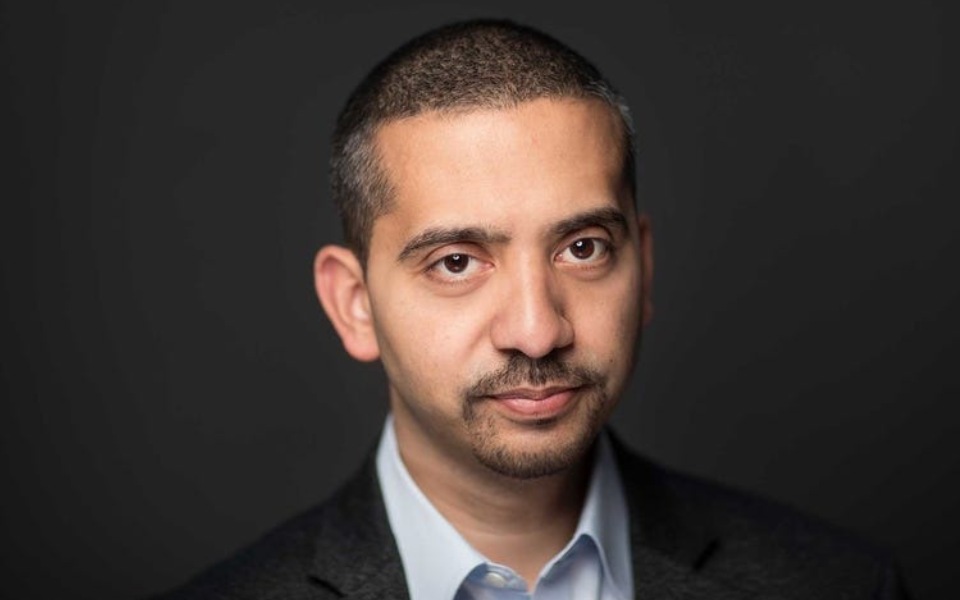
Journalist Mehdi Hasan, known for his work with Al Jazeera English and MSNBC, announced the launch of his new media venture, Zeteo. The unveiling follows his departure from MSNBC, as his show was canceled in a network reshuffle in November 2023. The final episode of his Sunday night show aired on January 7, where Hasan expressed gratitude for his tenure on MSNBC and disclosed his decision to seek new challenges.
“I’m so excited about the launch of this new media company of mine, Zeteo,” Hasan wrote in his official post.
Zeteo, derived from ancient Greek, meaning 'seeking out,' aims to confront the prevalence of "alternative facts," "fake news," and "gaslighting" in the current media landscape. Hasan emphasized the need for truth-seeking and sharing amid the challenges posed by misinformation.
“In this dystopian age of ‘alternative facts,’ ‘fake news,’ and constant ‘gaslighting,’ seeking out the truth and sharing it with others is more important than ever before. And so it is the primary goal of this new media venture of mine,” Hassan added in his statement.
In response to what he views as the mainstream media's reluctance to address critical issues directly, Hasan outlined Zeteo's mission to prioritize truth-telling over maintaining connections to those in power. He asserted that in an era of widespread deceit, speaking the truth becomes a revolutionary act.
“I hope that Zeteo will be revolutionary in that sense, a vanguard of a new media movement. One which prioritizes speaking truth to power over securing access to power.
“Don’t get me wrong. I have spent more than two decades working at some of the biggest media organizations in the West - the BBC, Sky News, and NBC, among them - and I will forever be grateful for the opportunities, and the platforms that they gave me. There are hundreds of outstanding journalists still employed at those corporations.
“But the corporate media itself is in crisis. The business models are failing, audiences are declining, and public trust is in freefall. Countless crimes and abuses are being committed in plain sight, both at home and abroad, while countless news outlets distract us with fluff, gossip, and nonsense,” his statement added.
Hasan acknowledged the challenges facing traditional media, citing failing business models, declining audiences, and dwindling public trust. He positioned Zeteo as an alternative platform for robust interviews, deep-dive monologues, podcasts, newsletters, and social videos. Hasan emphasized the platform's commitment to transparency about its opinions and biases while delivering truthful content.
Zeteo's business model revolves around a subscription-based model where users pay a nominal fee for exclusive content and to support independent journalism. Hasan encouraged his audience to become paid subscribers, highlighting the opportunity to contribute to building an alternative media outlet.
The journalist outlined three primary reasons for subscribing to Zeteo. Firstly, it provides an opportunity for individuals critical of mainstream media to actively participate in building an alternative. Second, subscribers can support Mehdi Hasan's journalistic endeavors directly. Lastly, subscription fees will contribute to assembling a diverse team of contributors, ensuring Zeteo's content goes beyond a one-person operation.
Zeteo's content, including newsletters, clips, and more, will be freely accessible in the initial weeks leading up to the official launch in April. Hasan concluded by emphasizing the importance of supporting independent media and urged those advocating for a free press to contribute financially to ensure the platform's sustainability.
It's worth noting that Mehdi Hasan's departure from MSNBC drew attention and garnered support, with many praising his coverage of critical issues and criticizing the network for removing one of the few Muslim hosts from its lineup.
“We will be rolling out my new video and audio shows in April, both on Substack and on YouTube, plus Spotify and the rest, as well as all the names on our roster of American and international contributors. Over the next few weeks, as we prepare for the big launch, all of the content you get from Zeteo - newsletters, clips, etc. - will be free.
“But not forever. Because, to put it bluntly, freedom isn’t free. If we keep saying we want a free press, and an alternative to corporate media, then we have to be willing to put our money where our mouths are,” Hasan’s statement added.
“Zeteo is all about looking out of that window. Over and over again. To seek out the facts, to tell the truth, to ask the tough questions. We are clear-eyed about our role and our mission: to be journalists and not stenographers; truth-tellers and not gaslighters. So… are you with us?” it added.
To subscribe to Zeteo News, CLICK HERE.
Let the Truth be known. If you read VB and like VB, please be a VB Supporter and Help us deliver the Truth to one and all.
UP: Three shot dead following dispute at gym

Bulandshahr (UP) (PTI): Three persons were shot dead after a dispute broke at a gym in Khurja Nagar area of Bulandshahr district, police said on Sunday.
The incident took place on Saturday night and the deceased have been identified as Amardeep (30), Manish (28) and Akash (18), officials said, adding two of the accused have been arrested while a hunt is on for the others.
Preliminary investigation has found that the dispute at the gym stemmed from an argument that broke out during a birthday party among acquaintances.
Deputy Inspector General of Police, Meerut Range, Kalanidhi Naithani said, "Based on complaints and preliminary accounts, a quarrel had taken place among some youths at a gym. Police teams have reached the spot and are conducting checks in the vicinity".
Police have formed six teams to trace the accused and have so far arrested two persons, while efforts are underway to apprehend the remaining suspects, officials said.
The identities of the arrested accused have not been revealed by the police yet. Officials said some other individuals have also been detained for questioning and strict action has been ordered against all those involved.