Karnataka faces discrimination in distribution of resources from Centre: CM Siddaramaiah
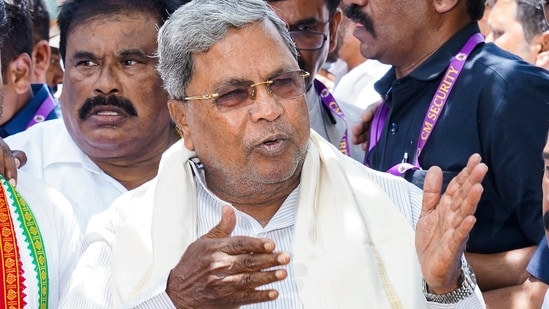
Bengaluru (PTI): Karnataka Chief Minister Siddaramaiah on Friday said that the state is facing discrimination in the distribution of resources from the Centre.
He also said that there is growing concern that Constitutional bodies like the Income Tax Department, Enforcement Directorate, CBI, and others are not working to uphold the true values of democracy and cooperative federalism as enshrined in the Constitution.
He said, every responsible citizen must raise their voice in this regard.
The Chief Minister made these observations while delivering his address at the 79th Independence Day celebrations here.
Siddaramaiah said his government has built its own development model, which is widely recognised as the "Karnataka Model of Development", and that its 'guarantee schemes' have got global recognition.
"The Basavadi Sharanas of the 12th century firmly believed that one must live by one's word. Guided by this principle, our government has built its own development model, now widely recognised as the Karnataka Model of Development," he said.
"It is a matter of pride that even Philemon Yang, the President of the United Nations General Assembly, visited Karnataka and wholeheartedly praised our Guarantee Schemes, giving them global recognition," he added.
Noting that surveys by leading national institutions have revealed a stark truth that the wealthiest 10 per cent of our population hold 80 per cent of the nation's wealth, yet they contribute only about 3 per cent of the GST collected, he said, the remaining 90 per cent ordinary people who work daily for food and clothing shoulder nearly 97 per cent of GST payments.
"How can any economy sustain itself under such circumstances? How can we fulfil the spirit of our Constitution? How can we reduce this growing inequality? These questions troubled us deeply. It is with the intention of finding answers to these questions that we launched the Guarantee Schemes and other welfare programmes," he added.
Highlighting that the guarantee schemes are transforming the trajectory of Karnataka's development, the CM said, soon after assuming office in May 2023, we began implementing these schemes in the form of Anna Bhagya, Shakti, Gruha Lakshmi, Gruha Jyothi, and Yuva Nidhi.
"So far, we have allocated more than Rs 96,000 crore for their implementation. Recently, we celebrated a milestone in the Shakti scheme with 500 crore free trips taken by women using government buses. These schemes, free from the exploitation of middlemen and delivered directly to the people, have not only raised per capita income but, according to several studies, have increased women's participation in the workforce by 23 per cent," he said.
In a major boost to public transport, the implementation of the Shakti scheme has been complemented by the Transport Department's induction of 5,049 new buses of various models and the recruitment of 8,473 personnel, significantly enhancing service capacity and reach across the state, he added.
Highlighting that Karnataka now ranks first in the country in per capita income, Siddaramaiah said, over the past decade, the state has achieved a growth of 101 per cent in this indicator from Rs 1,01,858 at constant prices in 2013-14 to Rs 2,04,605 in 2024-25.
"Our government is spending more than Rs 1.12 lakh crore on welfare measures including Guarantee Schemes, subsidies, incentives, scholarships, social security pensions, and other social programmes," he said.
Noting that to truly understand people's living conditions, the government decided to conduct a social and educational survey of the backward classes through the Backward Classes Commission, the CM said, only accurate data can shape policies that transform lives and future schemes which can provide special representation and targeted justice.
"To ignore this would be to betray both our Constitution and our freedom struggle. Hence our government is serious about internal reservation within the Scheduled Castes and conducting a socio-educational survey of the backward classes," he added.
Siddaramaiah during his speech said, the nation will forever remember, with indebtedness, those who were martyred in the recent terrorist attack in Pahalgam and in the subsequent conflict between India and Pakistan.
"We bow our heads in humble respect to their indomitable courage and supreme sacrifice," he said.
Bengaluru, Aug 15 (PTI) Karnataka Chief Minister on Friday said that the state is facing discrimination in the distribution of resources from the Centre.
He also said that there is growing concern that Constitutional bodies like the Income Tax Department, Enforcement Directorate, CBI, and others are not working to uphold the true values of democracy and cooperative federalism as enshrined in the Constitution.
He said, every responsible citizen must raise their voice in this regard.
The Chief Minister made these observations while delivering his address at the 79th Independence Day celebrations here.
Siddaramaiah said his government has built its own development model, which is widely recognised as the "Karnataka Model of Development", and that its 'guarantee schemes' have got global recognition.
"The Basavadi Sharanas of the 12th century firmly believed that one must live by one's word. Guided by this principle, our government has built its own development model, now widely recognised as the Karnataka Model of Development," he said.
"It is a matter of pride that even Philemon Yang, the President of the United Nations General Assembly, visited Karnataka and wholeheartedly praised our Guarantee Schemes, giving them global recognition," he added.
Noting that surveys by leading national institutions have revealed a stark truth that the wealthiest 10 per cent of our population hold 80 per cent of the nation's wealth, yet they contribute only about 3 per cent of the GST collected, he said, the remaining 90 per cent ordinary people who work daily for food and clothing shoulder nearly 97 per cent of GST payments.
"How can any economy sustain itself under such circumstances? How can we fulfil the spirit of our Constitution? How can we reduce this growing inequality? These questions troubled us deeply. It is with the intention of finding answers to these questions that we launched the Guarantee Schemes and other welfare programmes," he added.
Highlighting that the guarantee schemes are transforming the trajectory of Karnataka's development, the CM said, soon after assuming office in May 2023, we began implementing these schemes in the form of Anna Bhagya, Shakti, Gruha Lakshmi, Gruha Jyothi, and Yuva Nidhi.
"So far, we have allocated more than Rs 96,000 crore for their implementation. Recently, we celebrated a milestone in the Shakti scheme with 500 crore free trips taken by women using government buses. These schemes, free from the exploitation of middlemen and delivered directly to the people, have not only raised per capita income but, according to several studies, have increased women's participation in the workforce by 23 per cent," he said.
In a major boost to public transport, the implementation of the Shakti scheme has been complemented by the Transport Department's induction of 5,049 new buses of various models and the recruitment of 8,473 personnel, significantly enhancing service capacity and reach across the state, he added.
Highlighting that Karnataka now ranks first in the country in per capita income, Siddaramaiah said, over the past decade, the state has achieved a growth of 101 per cent in this indicator from Rs 1,01,858 at constant prices in 2013-14 to Rs 2,04,605 in 2024-25.
"Our government is spending more than Rs 1.12 lakh crore on welfare measures including Guarantee Schemes, subsidies, incentives, scholarships, social security pensions, and other social programmes," he said.
Noting that to truly understand people's living conditions, the government decided to conduct a social and educational survey of the backward classes through the Backward Classes Commission, the CM said, only accurate data can shape policies that transform lives and future schemes which can provide special representation and targeted justice.
"To ignore this would be to betray both our Constitution and our freedom struggle. Hence our government is serious about internal reservation within the Scheduled Castes and conducting a socio-educational survey of the backward classes," he added.
Siddaramaiah during his speech said, the nation will forever remember, with indebtedness, those who were martyred in the recent terrorist attack in Pahalgam and in the subsequent conflict between India and Pakistan.
"We bow our heads in humble respect to their indomitable courage and supreme sacrifice," he said.
Let the Truth be known. If you read VB and like VB, please be a VB Supporter and Help us deliver the Truth to one and all.
Rickelton's ton in vain as SRH beat MI by 6 wickets
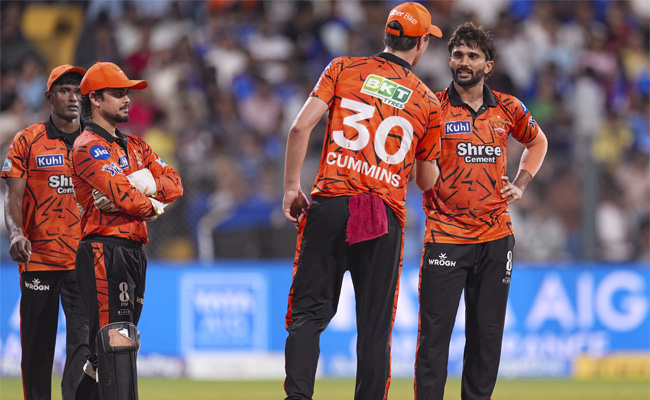
Mumbai (PTI): Ryan Rickelton's whirlwind unbeaten ton was overshadowed by Heinrich Klaasen's unbeaten 65 as Sunrisers Hyderabad defeated Mumbai Indians by six wickets in an IPL match here on Wednesday.
Chasing an imposing 244-run target, Travis Head (76 off 30) and Abhishek Sharma (45 off 24) shared 129 runs for the opening wicket to set the platform for SRH.
Klaasen (65 not out off 30 balls) then displayed his all-round hitting abilities to guide SRH home with the help of Nitish Kumar Reddy (21) and Salil Arora (30 not out off 10) in 18.4 overs.
Earlier, Rickelton's knock powered MI to 243 for five.
MI rode on a 93-run stand between Rickelton (123 not out off 55 balls) and Will Jacks (46 off 22) in 7.1 overs for the opening stand to power the side.
MI skipper Hardik Pandya scored a valuable 31 off 15 balls before being dismissed.
Praful Hinge (2/54), Eshan Malinga (1/29), Sakib Hasan (1/39) and Nitish Kumar Reddy (1/31) were the wicket-takers for SRH.
Brief Scores:
Mumbai Indian: 243 for 5 in 20 overs (Ryan Rickelton 123 not out; Praful Hinge 2/54).
Sunrisers Hyderabad: 249 for 4 in 18.4 overs (Travis Head 76, Heinrich Klaasen 65 not out; AM Ghazanfar 2/51).