Kejriwal moves SC challenging arrest by CBI in excise policy scam, seeks bail
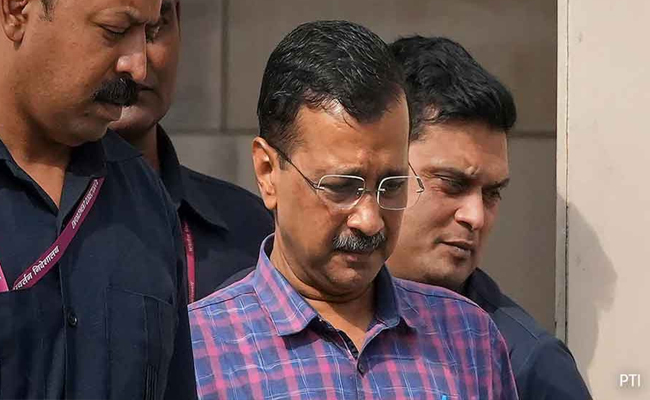
New Delhi (PTI): Chief Minister Arvind Kejriwal has moved the Supreme Court against the Delhi High Court order upholding his arrest by the CBI in a corruption case stemming from the alleged excise policy scam.
The Delhi High Court had on August 5 upheld the arrest of the chief minister as legal, and said there was no malice in the acts of the Central Bureau of Investigation (CBI) which demonstrated how the AAP supremo could influence witnesses who could muster the courage to depose only after his arrest.
The appeal has been filed by the chief minister in the top court, a lawyer associated with the case said on Monday.
The high court, while upholding his arrest, had asked Kejriwal to move the trial court first for seeking regular bail.
The chief minister, who was arrested by the ED on March 21, was granted bail by the trial court in the money laundering case on June 20. However, the trial court's order was stayed by the high court.
On July 12, the Supreme Court granted him interim bail in the money laundering case.
The excise policy was scrapped in 2022 after the Delhi lieutenant governor ordered a CBI probe into alleged irregularities and corruption involving the formulation and execution of the excise policy.
According to the CBI and the ED, irregularities were committed while modifying the excise policy and undue favours extended to licence holders.
Let the Truth be known. If you read VB and like VB, please be a VB Supporter and Help us deliver the Truth to one and all.
Ordinance issued to increase number of Supreme Court judges from 34 to 38
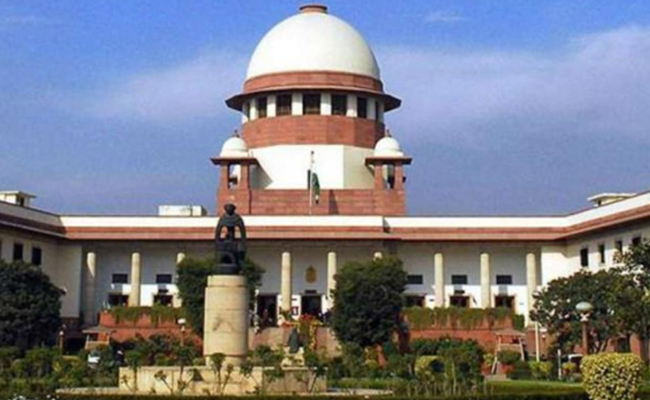
New Delhi (PTI): The government has promulgated an ordinance to increase the strength of the Supreme Court from the present 34 judges to 38, including the Chief Justice of India.
The law ministry notified the ordinance on Saturday, which amended the Supreme Court (Number of Judges) Act, 1956, to increase the sanctioned strength of the top court.
So far, the sanctioned strength of the top court was 34, including the Chief Justice of India (CJI). Now, the number of judges has been increased by four, taking the sanctioned strength to 38.
The top court will now have 37 judges, other than the CJI.
With the apex court having two vacancies at present, and the ordinance coming into force immediately, the Supreme Court Collegium will now have to recommend six names for appointment as judges in the top court.
A bill will be brought in the Monsoon Session of Parliament to convert the ordinance – an executive order – into a law passed by Parliament.
The Union Cabinet had cleared a draft bill on May 5 to increase the number of apex court judges.
The strength of the Supreme Court was last increased from 30 to 33 (excluding the CJI) in 2019.
The Supreme Court (Number of Judges) Act, as originally enacted in 1956, put the maximum number of judges (excluding the CJI) at 10.
This number was increased to 13 by the Supreme Court (Number of Judges), Amendment Act, 1960, and to 17 by another amendment to the law.
The Supreme Court (Number of Judges) Amendment Act, 1986, augmented the strength of judges from 17 to 25, excluding the CJI.
A fresh amendment in 2009 further increased the strength from 25 to 30.
Article 124(3) of the Constitution lists the qualifications required to become a Supreme Court judge.
An Indian citizen who has either served as a high court judge for at least five years, or as an advocate for 10 years, or is a distinguished jurist, can be appointed to the top court.
The strength of the Supreme Court is increased based on the recommendations of the CJI, who writes to the Union law minister. After consulting the finance ministry, the Department of Justice under the law ministry moves the Cabinet with a draft bill.