Kerala CM rejects Governor's allegations of interference in Kannur University VC reappointment
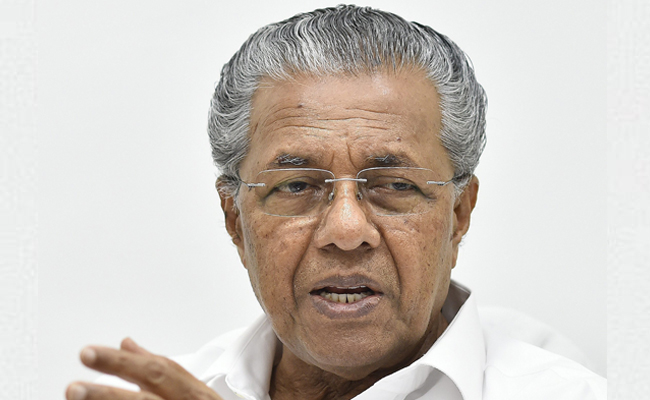
Palakkad (Ker) (PTI): Kerala Chief Minister Pinarayi Vijayan on Friday rejected Governor Arif Mohammed Khan's claims that the government interfered with the re-appointment of Kannur University's Vice Chancellor.
On Thursday, the Supreme Court criticised Khan's order reappointing Gopinath Ravindran, stating that the Governor had previously "abdicated or surrendered" his statutory powers for reappointing the VC.
The court, while quashing the reappointment, also criticised the Left government for its "unwarranted intervention" in the matter.
Talking to media in Shoranur in this north Kerala district, Vijayan dismissed news reports suggesting that the Supreme Court's verdict was a setback for the Kerala government, and termed them baseless.
He clarified that the apex court had affirmed that due process was followed in the reappointment. Despite this, the governor continued to claim in the media that there was external pressure, Vijayan added.
"The letter written by the ex-officio pro-chancellor -- the higher education minister -- was considered as unwarranted intervention of the state government. How can a correspondence between two authorities under the same law be considered external pressure," Vijayan asked, rejecting the governor's claim.
He said the apex court dealt with three legal issues, the first being whether re-appointment is permissible in a "tenure post", to which the court said yes.
"It held that the outer age limit of 60 years, provided for under the 1996 Act of the University, will not apply in case of the reappointment of a VC.
The apex court also said it was not necessary to follow the procedure of appointment as laid down in Section 10 of the 1996 Act for the purpose of reappointment," Vijayan said.
The Chief Minister claimed that the legal advice from the Advocate General was received by the higher education minister's office and handed over to Raj Bhavan.
"The chancellor sought clarification, and the CM's office gave it to the governor. He considers it external interference," Vijayan said.
He reiterated that the state government has not interfered in the authority of the Governor as Chancellor in any way.
Soon after the verdict was pronounced on Thursday, Khan had blamed Chief Minister Vijayan for having pressured him to reappoint the VC.
Speaking to reporters in Thiruvananthapuram, Khan also said that Minister R Bindu was not to be blamed, as the CM had used her to seek the reappointment of Ravindran.
The apex court had also said it is the Chancellor who is conferred with competence under law to appoint or reappoint VCs. "No other person, even the pro-chancellor or any superior authority can interfere with the functioning of the statutory authority," it had held.
Following the verdict, Khan said that a person claiming to be the personal law advisor of the CM had visited him along with Vijayan's OSD (Officer on Special Duty) and urged him not to follow the normal process of appointing the VC of Kannur University at the time.
He had further claimed that the two had later come with a letter from Higher Education Minister Bindu and a legal opinion of the Advocate General of Kerala for "scuttling" the regular appointment process and reappointing Ravindran as VC.
A division bench of the Kerala High Court had on February 23 last year dismissed an appeal against a single-judge order upholding the reappointment of Ravindran, saying it was done in accordance with the law and that he was not "a usurper of the post".
The top court set aside the impugned judgment and the order passed by the high court dated February 23, 2022 and, as a consequence, the notification dated November 23, 2021 reappointing Ravindran as vice chancellor of Kannur University was also set aside.
Let the Truth be known. If you read VB and like VB, please be a VB Supporter and Help us deliver the Truth to one and all.
4 held for sexually assaulting woman, girl on moving bus after social media alert in UP's Agra

Agra (UP) (PTI): Four people were arrested, after a prompt response by police following a social media alert, for allegedly sexually assaulting a woman and a girl inside a moving bus here, officials said on Tuesday.
According to an official police statement, at 12:27 am on April 27, information was received on the social media platform X about an incident of sexual assault on a bus travelling from Kanpur to Ahmedabad, which was approaching Namner crossing in Agra.
Acting under the direction of Police Commissioner Deepak Kumar, the Agra Police social media team immediately alerted the Rakabganj police station within minutes and coordinated with the victims to confirm the incident and obtain the exact location, it stated.
Police teams launched intensive checking at Namner crossing and intercepted the bus as it reached the spot. The four accused involved in the incident were apprehended on the spot, and legal action was initiated against them, the statement said.
The police said the swift response and coordination between the social media team and field units ensured timely action, bringing relief to the victims and other passengers, who expressed gratitude towards the police, it added.