Lawyer files plea in Bombay HC against Eknath Shinde, Nitesh Rane over alleged Islamophobic remarks
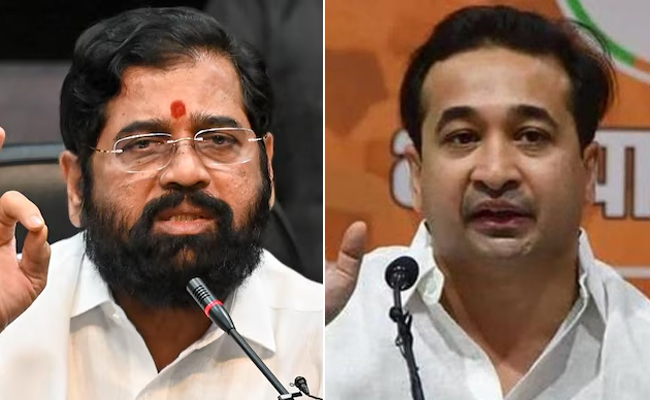
Mumbai: A petition has been filed in the Bombay High Court seeking registration of an FIR against Maharashtra Chief Minister Eknath Shinde and BJP MLA Nitesh Rane for allegedly making Islamophobic remarks that hurt the religious sentiments of the Muslim community.
The petitioner, advocate Mohammed Wasi Sayed, filed the plea after coming across a video featuring self-proclaimed saint Mahant Ramgiri Maharaj, who is accused of making derogatory statements about Prophet Mohammed. The video shows Chief Minister Shinde expressing support for Mahant Ramgiri and warning the police against taking action against him as long as he remains in office. The advocate contends that this undermines the ongoing investigation against the Mahant.
The petition further notes that Nitesh Rane escalated tensions by allegedly threatening, “If anybody says anything against Ramgiri Maharaj, we will enter your mosque and hit you one by one.” Rane is also accused of making derogatory remarks against Muslims, referring to them as “homosexuals.”
According to Sayed, these comments should be viewed as part of a wider pattern of rising Islamophobia in the country. The plea asserts that such statements are intended to polarise voters along communal lines, particularly with the State Assembly elections approaching.
“They started Islamophobic campaigns to divert public attention from routine problems to hypothetical issues," Sayed argued, stressing that such tactics could deepen social divisions.
The petition also raises concerns over a growing trend of online hate speech targeting Muslims, highlighting data that indicates an increase in Islamophobic posts on social media platforms like Twitter/X. Sayed argued that most of this content goes undetected due to being shared in regional languages, which are underrepresented in calculations and sampling.
The advocate emphasised that certain social media users are leveraging Islamophobic content for political and economic gain, leading to dangerous real-world consequences.
Sayed has sought action under various provisions of the Bharatiya Nyay Sanhita and the Information Technology Act against Shinde and Rane, along with an order to halt live broadcasts of Rane’s speeches targeting the Muslim community.
The Bombay High Court is expected to hear the petition soon.
Let the Truth be known. If you read VB and like VB, please be a VB Supporter and Help us deliver the Truth to one and all.
Bhojshala case: Disputed structure built from remains of pre-existing temples, claims ASI
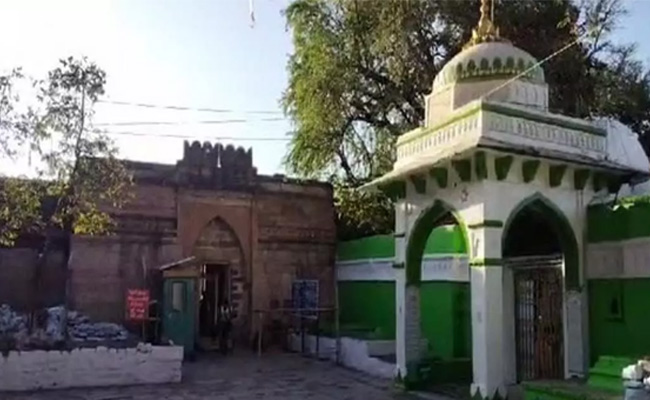
Indore (PTI): The ASI has told the Madhya Pradesh High Court that a massive structure dating back to the Paramara kings' rule existed at the disputed Bhojshala temple-Kamal Maula mosque complex, and the current structure was built from the remains of temples.
The Archaeological Survey of India (ASI) made the claim on Tuesday based on its 98-day scientific survey and over 2,000-page report.
The Hindu community considers Bhojshala a temple dedicated to Vagdevi (Goddess Saraswati), while the Muslim side claims the monument as the Kamal Maula Mosque. The disputed complex is protected by the ASI.
During the hearing before Justices Vijay Kumar Shukla and Alok Awasthi of the HC's Indore bench, Additional Solicitor General Sunil Kumar Jain, representing the ASI, presented a detailed account of the scientific survey conducted two years ago at the complex.
Referring to the ASI's survey report, he said, "Retrieved architectural remains, sculptural fragments, large slabs of inscriptions with literary texts, Nagakarnika inscriptions on pillars, etc, suggest that a large structure associated with literary and educational activities existed at the site. Based on scientific investigations and archaeological remains recovered during the investigations, this pre-existing structure can be dated to the Paramara period."
It can be said that the existing structure was made from the parts of earlier temples, based on scientific investigations, survey and archaeological excavations conducted, study and analysis of retrieved finds, study of architectural remains, sculptures, and inscriptions, art and sculptures, Jain said quoting the report.
Summarising the report, he also drew the court's attention to the fact that the archaeological study identifies that many architectural components, such as pillars and beams, were originally part of temple structures before being repurposed for a mosque.
"The evidence of this transition includes Sanskrit and Prakrit inscriptions that were damaged or hidden, alongside sculptures of deities and animals that were often mutilated or defaced," Jain contended.
The report also states that "all Sanskrit and Prakrit inscriptions are older than the Arabic and Persian inscriptions, indicating that users or engravers of the Sanskrit and Prakrit inscriptions occupied the place earlier".
In light of the Muslim side's earlier objections, the bench wanted to know why there were some discrepancies in the ASI's responses regarding the status of the disputed complex in the cases filed over the years.
The Additional Solicitor General argued that earlier studies of the complex involved only officials, while the current survey involved scientists and the use of advanced technologies such as Ground Penetrating Radar (GPR).
The hearing in the Bhojshala case will continue on Wednesday.
The high court has been regularly hearing four petitions and one writ appeal regarding the religious nature of the Bhojshala temple-Kamal Maula mosque complex since April 6.