Leh violence: Demand for judicial inquiry grows louder, 26 detainees release
_vb_66.jpeg)
Leh (PTI): The clamour for a judicial inquiry into the recent violence here, which left four people dead and scores injured, grew louder on Thursday, with two powerful Buddhist religious bodies and the Kargil Bar Association pressing the demand.
Life seemed to be returning to normal in Leh, which was under a curfew for a week, with authorities relaxing curbs for the whole day on Thursday and releasing 26 detained youths.
The Ladakh Buddhist Association (LBA) and the All Ladakh Gonpa Association held a joint prayer meeting here and paid tributes to the four youths who were killed in the September 24 police firing here. They also paid tributes to Mahatma Gandhi on his birth anniversary.
After the prayers, the members of the two Buddhist bodies unanimously passed a resolution demanding an impartial judicial inquiry into the alleged excessive use of force and indiscriminate firing by police and paramilitary forces on protesters, adequate compensation for the dependents of those killed and critically injured, and the immediate release of activist Sonam Wangchuk, the groups said in a joint statement.
They also demanded the immediate release of all others detained by police on "flimsy grounds" following the violence and an end to "witch-hunting and harassment" of the local youths in order to restore normalcy in the region.
Talking to reporters after the meeting, LBA president Chering Dorjay said the body's legal advisor, Haji Ghulam Mustafa, has been granted permission to meet Wangchuk, who has been lodged in a Rajasthan prison after his detention under the National Security Act on September 26.
Mustafa has left for Delhi, from where he will proceed to Rajasthan. Some of Wangchuk's family members were also allowed to meet him, said Dorjay, who is also co-chairman of the apex body.
He said 26 people who were detained in the aftermath of the violence have been granted bail by a local court while around 30 remain in custody.
The Leh Apex Body, along with the Kargil Democratic Alliance, has been agitating in support of four demands, including statehood and safeguards for Ladakh under Sixth Schedule of the Constitution, and has held several rounds of talks with the central government.
Both the groups have decided to stay away from talks scheduled for October 6 with the Centre, demanding that a conducive atmosphere be created before the resumption of dialogue by ordering a judicial inquiry and releasing all those detained.
The Kargil Bar Association is on a week-long strike in solidarity with the people of Leh, especially the families of those who lost their loved ones in the violence.
The bar will stay away from all judicial work till October 6, a spokesperson of the association said, adding that the association stands committed to providing free legal assistance to any victim of the unfortunate incident of September 24.
The association urged the Ladakh administration to ensure a free, fair and impartial judicial inquiry into the matter so that justice is served and accountability is fixed, the spokesperson said.
Officials said markets in Leh opened early this morning as police extended the curfew relaxation to full day.
The curfew was imposed on the evening of September 24 and relaxation periods were gradually extended over the days as the situation in the town has remained by and large peaceful, they said.
Mobile internet services, however, remain suspended across the district and prohibitory orders banning assembly of five or more persons remain in force across Ladakh.
Let the Truth be known. If you read VB and like VB, please be a VB Supporter and Help us deliver the Truth to one and all.
Nashik court sends ‘godman’ Kharat to 3-day police custody in 7th sexual exploitation case
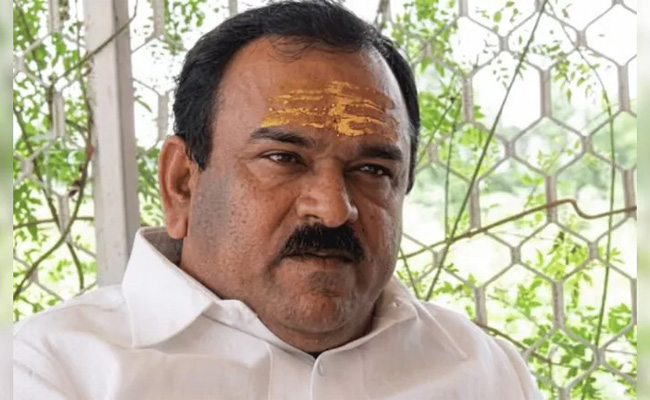
Nashik (PTI): A court in Maharashtra's Nashik has remanded self-styled astrologer-cum-godman Ashok Kharat to police custody till April 29 in the seventh case of sexual exploitation registered against him.
Kharat, a former Merchant Navy officer arrested on March 18, is accused of sexually exploiting several women and indulging in large-scale financial fraud by claiming to have divine powers and knowledge of black magic.
In the seventh case, Kharat sexually exploited a married woman who had approached him in search of solutions to her family problems.
ALSO READ: ED cracks down on suspected interstate liquor racket, raids 9 sites in Arunachal
The accused allegedly gave the woman something to drink, sexually assaulted her while her husband sat outside his office and threatened to kill her if she told anyone about it.
The Special Investigation Team (SIT), which is probing into 12 cases of sexual exploitation and financial fraud registered against Kharat in Nashik and Ahilyanagar districts, on Sunday filed a request application in the court demanding his custody in the seventh case.
Kharat was produced in court for a virtual hearing in the seventh case on Monday.
The prosecution demanded six-day police custody for Kharat, citing the discovery of a locker in Kharat's house during the investigation, from which the police recovered two blank cheques and other documents, all of which have to be probed.
The court agreed to the prosecution's demand and remanded Kharat to three-day police custody till April 29 in the case.
Kharat has been at the centre of a political firestorm, as he was well-connected, and photographs of him with political leaders and other important members of society have been surfacing in mainstream and social media since his arrest.