Liberal approach must be adopted while considering disability pension to army men: SC
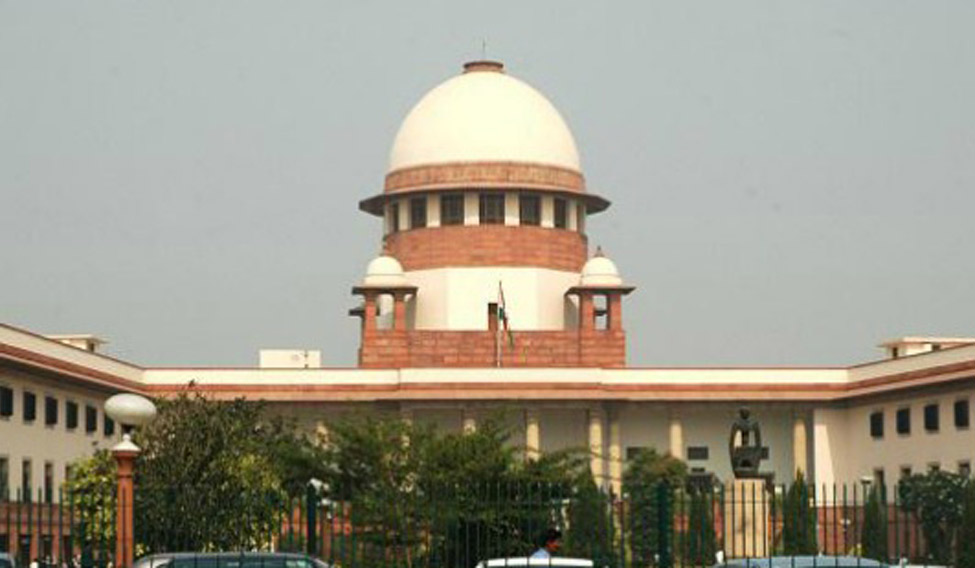
New Delhi (PTI): Observing that a liberal approach must be adopted while construing beneficial provisions, the Supreme Court has granted disability pension to an army man who was relieved from the service as he was suffering from "Schizophrenia."
The top court noted that the decision of the authority to discharge a serviceman is based on a medical report which is devoid of reasons.
A bench of Justices Abhay S Oka and N Kotiswar Singh said the requirement to give reasons by the Medical Board is crucial, critical, decisive and necessary for granting or denying disability pension.
The apex court said it is not a mere formality, but a necessary material based on which the pension sanctioning authority has to decide about the grant or refusal of disability pension.
"Accordingly, in our opinion, if the serviceman is discharged from service or denied the disability pension on the basis of a medical opinion which is devoid of reasons, it would strike at the root of the action taken by the authority, and such action cannot be sustained in law.
"We, therefore, hold that if any action is taken by the authority for the discharge of a serviceman and the serviceman is denied disability pension on the basis of a report of the Medical Board wherein no reasons have been disclosed for the opinion so given, such an action of the authority will be unsustainable in law," the bench said in its judgement dated May 7 which was uploaded today.
The top court was hearing a plea filed by an army man challenging an order passed by the Armed Forces Tribunal, Regional Bench, Kochi, by which the appellant's claim for grant of disability pension was denied.
The petitioner was enrolled in the Indian Army on November 17, 1988, as a sepoy, and after serving more than nine years, he was discharged from service on being diagnosed with Schizophrenia.
His discharge on medical invalidation was based on the opinion of the Invalidating Medical Board held on March 30, 1998, at the Command Hospital, Western Command, Chandimandir which found that the onset of the invalidating disease was in August 1993 during which period the appellant had served in a peace station and that the disability was neither attributable to nor aggravated by military service and the said disease of the appellant was constitutional in nature and not connected with the service.
In its judgement, the top court said a much more liberal view needs to be adopted while dealing with the cases of discharge of servicemen from service on account of suffering from Schizophrenia as they may face several impediments and difficulties in proving the causal connection of the said disease with the military service.
"We must appreciate the fact that the provisions for grant of disability pension are in the nature of a beneficial scheme intended to provide succour to servicemen in hard times who have been discharged from service after having served the nation with dedication. Accordingly, a liberal approach must be adopted while construing such beneficial provisions," the bench said.
The apex court said in cases where the serviceman himself has not applied for discharge but has been discharged by the authority, the onus of proving the disability and grounds for denying the disability pension would lie heavily on the authority.
"Since it is the statutory requirement that the opinion of the Medical Board is to be the basis of the discharge, in our view, if the opinion of Medical Board is devoid of reasons, the act of the authority based on mere opinion sans reasons can certainly be questioned.
"According to us, if the decision of the authority to discharge a serviceman is based on a medical report which is devoid of reasons, which are required to be given as also mandated by rules as discussed above, such an act of the authority specially when it denies any post discharge benefit will be rendered invalid in the eyes of law," the bench said.
The court said it has noted that in the entire original record produced, there is no material for concluding that the appellant was suffering from Schizophrenia, which is in the nature of a constitutional personal disorder.
"Accordingly, we hold that the order of discharge of the appellant and denial of disability pension to him based on a medical opinion without providing full reasons to support the opinion cannot be said to be valid.
"The question which would arise for consideration now is whether we should remit the matter to the Medical Board at this stage for reconsideration in the light of our observations made above. We, however, feel that adopting the aforesaid course of action at this stage after about 27 years of the appellant being invalided from service on May 18, 1998, would not be in the interest of justice," the bench said.
The top court refused to disturb the order of discharge of the army man on the ground of medical invalidity due to Schizophrenia, but directed the authorities that he be granted disability pension with immediate effect with all attending benefits, as per rules.
However, the appellant will not be entitled to any arrears of invalid pension, except for the last three years, it said.
Let the Truth be known. If you read VB and like VB, please be a VB Supporter and Help us deliver the Truth to one and all.
EAM Jaishankar meets Jamaican PM, gifts over 10 BHISHM Cubes
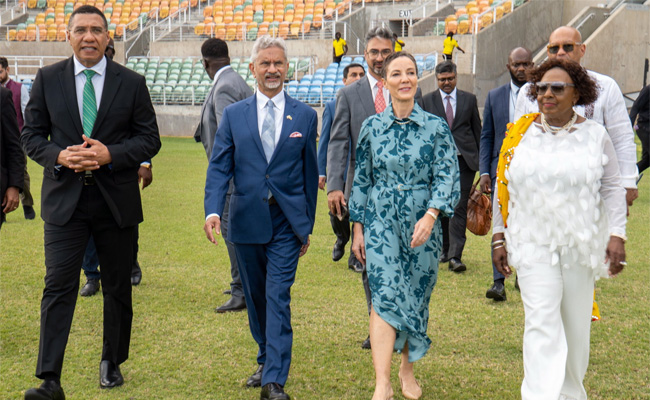
Kingston (PTI): External Affairs Minister S Jaishankar on Monday met Jamaican Prime Minister Andrew Holness and discussed ways to further deepen "political, economic and people-to-people cooperation."
Jaishankar also conveyed greetings from Prime Minister Narendra Modi to Holness.
"Pleased to call on Prime Minister @AndrewHolnessJM in Kingston. Conveyed the greetings of PM @narendramodi," Jaishankar posted on X.
"Discussed deepening our political, economic and people-to-people cooperation. Value his commitment towards further strengthening India-Jamaica relations," the post further read.
Also, the external affairs minister handed over 10 BHISHM (Bharat Health Initiative for Sahyog Hita & Maitri) Cubes as a gift to Jamaica.
"Formally handed over 10 BHISHM Cubes as a gift from India to Jamaica, in the presence of PM @AndrewHolnessJM, Health Minister @christufton and FM @kaminajsmith," Jaishankar posted on X.
"The BHISHM Cube mobile hospital system, designed for rapid deployment, will help Jamaica during disasters and emergencies. The gift of these cubes is a statement of friendship, a commitment to disaster preparedness, and an outcome of innovation," the post said.
Jaishankar arrived in Kingston on Saturday evening, marking the first leg of his nine-day tour of Jamaica, Suriname, and Trinidad and Tobago, aimed at further strengthening India's strategic and cultural ties with the Caribbean nations.
Earlier in the day, he interacted with the Indian diaspora and discussed India's ongoing transformation in infrastructure, human development and technology-driven governance and entrepreneurship with them.
He also highlighted the cricket bond between both countries as India gifted a scoreboard to Jamaica.
A scoreboard was dedicated at Sabina Park in Kingston. It is the home of the Jamaica cricket team and is the only Test cricket ground in the Caribbean island nation.
The minister expressed hope that the new scoreboard would witness many memorable innings, including those symbolising the enduring friendship between the two countries.
Cricket has long been a strong cultural bridge between India and Jamaica, which is part of the West Indies cricket team.
Jamaican players, including Chris Gayle, Courtney Walsh and Michael Holding, have played a major role in shaping the legacy of West Indies cricket in the international arena, contributing to its dominance in earlier decades and its continued global appeal.