Maha to make voter registration mandatory for students above 18 years seeking admission to colleges
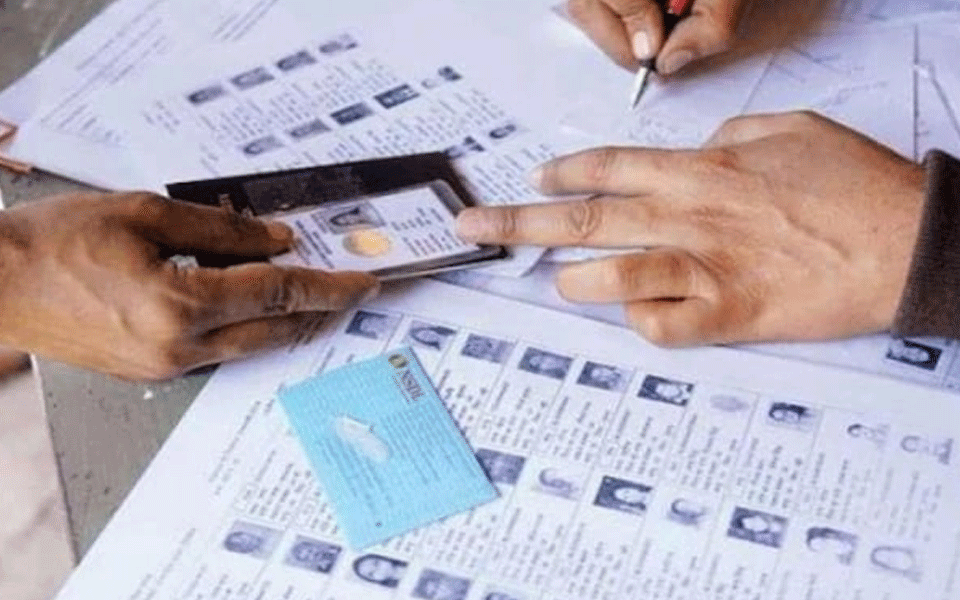
Mumbai (PTI): The Maharashtra government will make it mandatory for students above 18 years of age to get their voter registration done for getting admission to colleges, a state minister has said.
Speaking at a meeting of vice chancellors of non-agriculture universities at the Raj Bhavan here on Thursday, state Higher and Technical Education Minister Chandrakant Patil also said that the government will introduce four-year degree courses from June 2023 as mandated under the National Education Policy (NEP) and the universities will have to implement the decision.
"There is no option for universities as they will have to implement the four-year degree courses from June as mandated under the NEP," he said, warning that action will be taken against those failing to do so.
The government will soon constitute a committee of retired vice-chancellors to address the concerns of vice chancellors over the implementation of the NEP, Patil said.
Taking note of the dismal percentage of voter registration by students of universities and colleges, he said "The government will issue a resolution mandating students to get their voter registration done for getting admission to colleges."
As against the goal of attaining the enrolment of 50 lakhs students in the higher education system, Maharashtra has enrolment of only 32 lakh students, Patil said.
The minister called upon universities to run a campaign to improve the enrolment percentage.
He also said there was a need to take into cognisance the recommendations of NEP regarding providing education in mother tongue and skill development.
State Governor Bhagat Singh Koshyari called upon vice chancellors of public universities in Maharashtra to turn universities 'aatmanirbhar' (self-reliant) to attain the goal of 'Aatmanirbhar Bharat'.
"Many private universities are doing well through self finance and distance education programmes," he said, while urging the universities to take steps for effective implementation of the NEP.
The governor, who is also the chancellor of public universities in the state, said the NEP lays thrust on culture and the Indian knowledge system.
He asked vice chancellors to create small advisory committees comprising dedicated officers, professors, young people and resource persons to advise them on the effective implementation of the policy in universities.
The governor said he would hold a follow-up meeting of vice chancellors within six months to discuss what steps were taken on the issues agreed upon in the meeting.
Chief Minister Eknath Shinde, who was present on the occasion, asserted that the state will implement the NEP in the best possible manner.
"The state government has decided to make suitable amendments in the Maharashtra Public Universities Act, 2016 to make the selection process of vice chancellors and pro-vice chancellors in sync with the guidelines of the University Grants Commission (UGC)," he said.
Stating that the process of selection of vice chancellors will be expedited, he said new search committees for the selection of vice chancellors will be constituted soon.
Expressing strong displeasure over the poor performance of some of the universities in key result areas, such as declaration of results of various examinations on time, Deputy Chief Minister Devendra Fadnavis asked the vice chancellors to take note of the lacunae and take corrective steps quickly.
Expressing the need for bringing a robust digital system to make the implementation of NEP effective, Fadnavis called for creating a live dashboard to report the 17 key result areas of the vice chancellors to monitor the situation from time to time.
Laying thrust on greater transparency by educational institutions, Fadnavis said the findings of the college inspection teams should be made available on the websites of the colleges.
He said while good progress is being made in achieving higher gross enrolment in the state, the universities must focus on bringing excellence in education. Fadnavis expressed concern over the low percentage of voter registration among college students.
Let the Truth be known. If you read VB and like VB, please be a VB Supporter and Help us deliver the Truth to one and all.
Two injuries, one DNF, a DQ as India end messy World Relays campaign
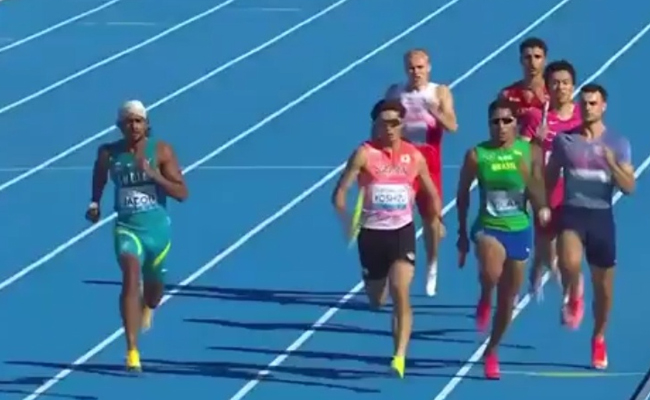
Gaborone (Botswana) (PTI): Amoj Jacob and Ragul Kumar got injured during the men's 4x400m and 4x100 races respectively as India ended their World Athletics Relays campaign in disappointment on the second day of competitions here on Sunday.
The Indian camp had high hopes of making the 2027 World Championships in the men's 4x400m relay but the team did not finish (DNF) the race as Jacob suffered cramps and pulled out of the race after taking the baton from the first leg runner Dharamveer Choudhary. Rajesh Ramesh and Vishal TK were to run in the third and fourth legs.
Those teams which could not qualify for the 2027 Beijing World Championships by reaching the final round of each of the six relay events on Saturday were given another chance in the second qualification round on Sunday.
The top two teams in each of the two heats (in all six relay events) booked the Beijing ticket on Sunday.
India will now have to try and qualify for the World Championships through the Top Lists of the World Athletics, which is a long and tedious process.
In the men's 4x100m race, third leg runner Ragul Kumar fell down the track after failing to hand over the baton inside the exchange zone to fourth leg runner Gurindervir Singh, which clearly showed the lack of coordination among the runners.
Harsh Santosh Raut and Animesh Kujur ran the first two legs.
The Indian quartet was disqualified and Kumar was seen being taken away from the Field of Play with the help of the volunteers.
It was a comedy of errors in the case of the women's 4x100m race, which saw the baton being dropped during an exchange between first leg runner Tamanna and second runner Nithya Gandhe, though the Indians finished the race in 53.09 seconds.
Gandhe started running quite a distance, but after realising that the baton was not in her hand, she turned and ran back to pick it up.
The only silver-lining for the Indian contingent was the national record time in the mixed 4x100m relay race, though the quartet of Ragul Kumar, Nithya Gandhe, Animesh Kujur and Sneha SS finished sixth in heat number two with a time of 41.35 seconds, bettering the previous national mark of 42.30 seconds set in March in Chandigarh.
The mixed 4x400m relay quartet of Theerthesh P Shetty, Kumari Saloni, Nihal William and Rashdeep Kaur ended at fifth in heat number one with a time of 3 minutes and 19.40 seconds.
On Saturday, all the five Indian relay teams had failed to make it to the respective final rounds and thus missed out on the 2027 World Championships berths.