Malegaon case: Pragya Thakur skips court date for 2nd time this month
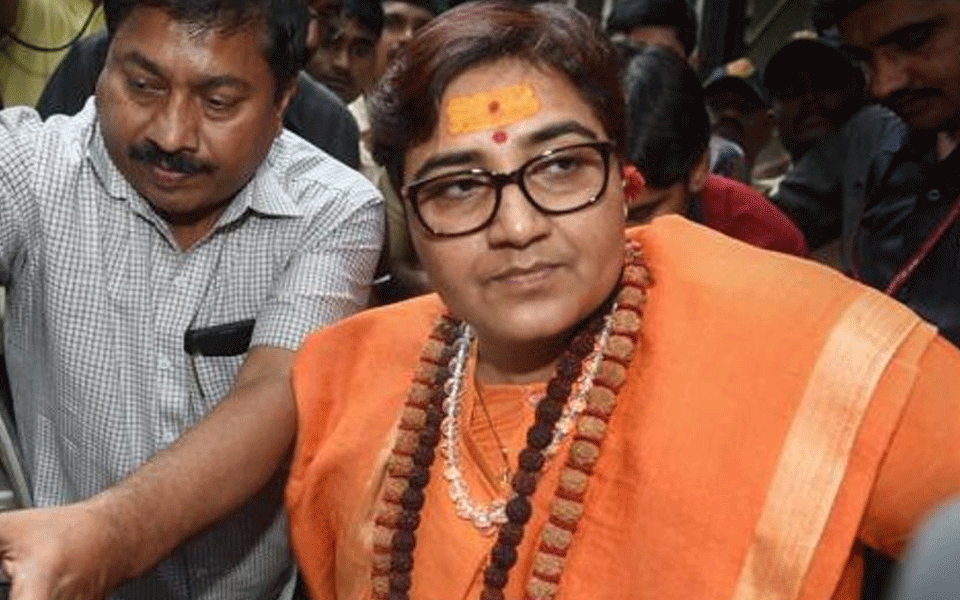
Mumbai: BJP's Bhopal MP Pragya Singh Thakur, an accused in the 2008 Malegaon blast case, failed to appear before a special NIA court here on Saturday for the second time this month.
Thakur's lawyer said that she was admitted to a hospital in Delhi on Friday, due to which she could not make it to the court.
While five accused remained present in the court, judge P R Sitre expressed displeasure over the absence of two others. The court then directed all the seven accused to appear before it on January 4.
"Thakur has been undergoing treatment at AIIMS Delhi since April. She had gone there for a check-up and had to be admitted there on Friday on the advice of doctors following her medical reports," her lawyer J P Mishra said.
Besides Thakur, another accused Sudhakar Chaturvedi did not appear in court, citing personal reasons.
As the regular functioning of the court resumed last month after the coronavirus-induced lockdown, the court had directed all the seven accused in the case to remain present before it on December 3. However, most of the accused, including Thakur, skipped the court that day, citing the pandemic situation.
The court then asked them to appear before it on December 19.
As per the directions, five other accused- Lt Col Prasad Purohit, Ramesh Upadhyay, Sameer Kulkarni, Ajay Rahikar and Sudhakar Dwiwedi- appeared before it on Saturday.
Thakur had appeared before the court in June last year after it ordered the seven accused to remain present once a week. However, she had sought exemption from appearance on various occasions since then.
Six people were killed and over 100 others injured when an explosive device strapped on a motorcycle went off near a mosque in Malegaon, a town about 200 km from Mumbai in north Maharashtra, on September 29, 2008.
The court had framed terror charges against Purohit, Thakur and five other accused in October 2018.
The accused in the case have been charged under Sections 16 (committing terrorist act) and 18 (conspiring to commit terrorist act) of the Unlawful Activities (Prevention) Act (UAPA).
They have also been charged under Indian Penal Code (IPC) Sections 120 (b) (criminal conspiracy), 302 (murder), 307 (attempt to murder), 324 (voluntarily causing hurt) and 153 (a) (promoting enmity between two religious groups), and relevant provisions of the Explosive Substances Act.
Let the Truth be known. If you read VB and like VB, please be a VB Supporter and Help us deliver the Truth to one and all.
Ordinance issued to increase number of Supreme Court judges from 34 to 38
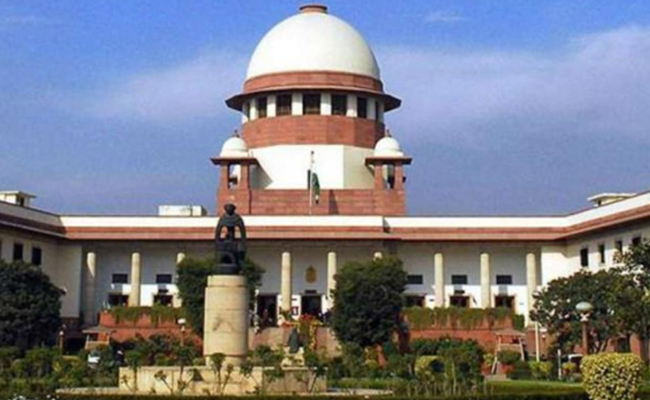
New Delhi (PTI): The government has promulgated an ordinance to increase the strength of the Supreme Court from the present 34 judges to 38, including the Chief Justice of India.
The law ministry notified the ordinance on Saturday, which amended the Supreme Court (Number of Judges) Act, 1956, to increase the sanctioned strength of the top court.
So far, the sanctioned strength of the top court was 34, including the Chief Justice of India (CJI). Now, the number of judges has been increased by four, taking the sanctioned strength to 38.
The top court will now have 37 judges, other than the CJI.
With the apex court having two vacancies at present, and the ordinance coming into force immediately, the Supreme Court Collegium will now have to recommend six names for appointment as judges in the top court.
A bill will be brought in the Monsoon Session of Parliament to convert the ordinance – an executive order – into a law passed by Parliament.
The Union Cabinet had cleared a draft bill on May 5 to increase the number of apex court judges.
The strength of the Supreme Court was last increased from 30 to 33 (excluding the CJI) in 2019.
The Supreme Court (Number of Judges) Act, as originally enacted in 1956, put the maximum number of judges (excluding the CJI) at 10.
This number was increased to 13 by the Supreme Court (Number of Judges), Amendment Act, 1960, and to 17 by another amendment to the law.
The Supreme Court (Number of Judges) Amendment Act, 1986, augmented the strength of judges from 17 to 25, excluding the CJI.
A fresh amendment in 2009 further increased the strength from 25 to 30.
Article 124(3) of the Constitution lists the qualifications required to become a Supreme Court judge.
An Indian citizen who has either served as a high court judge for at least five years, or as an advocate for 10 years, or is a distinguished jurist, can be appointed to the top court.
The strength of the Supreme Court is increased based on the recommendations of the CJI, who writes to the Union law minister. After consulting the finance ministry, the Department of Justice under the law ministry moves the Cabinet with a draft bill.