Malegaon: Over 1 lakh Muslims protest, calls for anti-lynching law
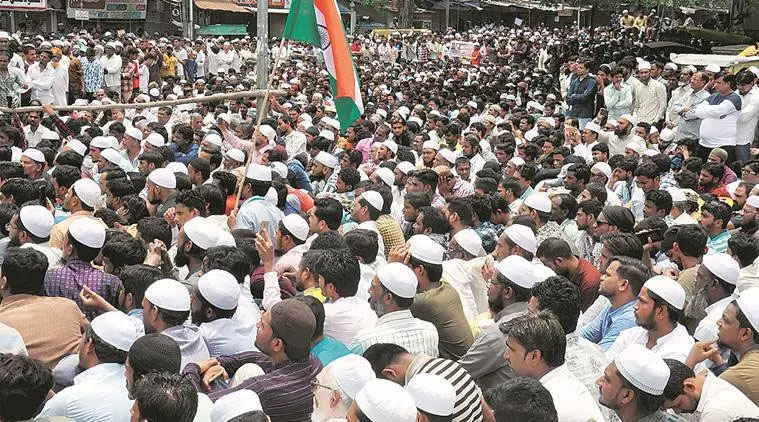
Panaji : On Monday, 97 years after seven freedom fighters were hanged by the British, Malegaon’s “Shahidon ki Yaadgaar” (martyrs’ memorial) monument witnessed an equally important historic event, according to the organisers, with at least 1 lakh people from the Muslim community congregating at the historical site in response to a call for a law against mob lynching.
Calling it the first rally by the community to protest mob lynching, the organisers said the killing of Tabrez Ansari, 24, from Jharkhand, was the final trigger.
Clerics of Jamiat Ulema, the umbrella NGO which called for the silent protest, urged governments to take note that on a “weak call” the entire textile town had “come out to safeguard the Constitution”. They said, “We do not seek revenge, and don’t believe in violence. We believe in the rule of law.”
The rally had people merging at Malegaon fort before making their way to the martyrs’ monument.
The speeches were fiery, and often emotional, with appeals made to the police administration and state and Central governments to pay heed to the Constitution. The crowd was also asked to spread the message among Muslims that the “victims of lynchings should not show helplessness in chanting Jai Shri Ram; instead, they should die by taking the Sahadat”.
Maulana Umrain Mahfouz Rahmani, secretary, All-India Muslim Personal Law Board, told The Indian Express: “The issue (mob lynching) has pierced our hearts; there seems to be no end. Ab bardaash ke bhi bahar hai (now it’s unbearable)…. Muslims are unlike other communities. If any other community was the target, they would have responded by now. Largely, the entire faith responds to the elders and clerics.”
He said, “We are doing our best and holding them together, convincing them, asking them to show restraint, praying with them. But now even we are being tested. In Pehlu Khan’s case, the way the government machinery behaved was heart-breaking —- in most cases there are no FIRs and then our community has to watch photographs and videos of the lynching; then see the accused being garlanded by ministers..”
At the protest venue, Rahmani delivered a fiery speech: “Today’s historical rally is enough to tell the entire country that Muslims will not tolerate oppression for long. We say it clearly: mob lynching is a mobilised murder and is being spread according to a well-devised plan. This is state and non-state terrorism, and it is obligatory on all citizens to stop terrorism. In the pure land of Sita, we can (now) hear footsteps of Ravan, and it is our collective responsibility to stop this.”
In a letter submitted to the Maharashtra administration, the community has urged the President to write to all state governments and Union Territories about lynchings and remind the state heads of their constitutional duties. There is also a demand for Rs 50 lakh compensation to the family of each victim of mob lynching.
Malegaon’s Mufti Mohammed Ismail Qasmi evoked the words of the poet Fayaz as he said, “Aaj agar nishane mein hum hain, toh doosre logon ko khush nahi hona chahiye(if today we are being targetted others should not be happy about that)”
The clerics decided to hold a rally on Friday with the campaign messages reaching Malegaon through social media.
courtesy: indianexpress.com
Let the Truth be known. If you read VB and like VB, please be a VB Supporter and Help us deliver the Truth to one and all.
What is Iran’s 10-point plan? Key demands ahead of US talks in Islamabad
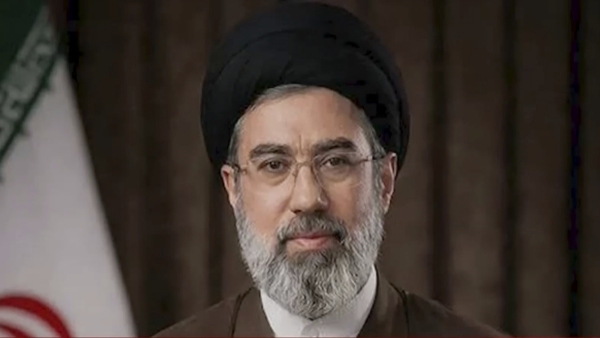
Tehran/Islamabad: Iran has outlined a 10-point plan as the basis for upcoming talks with the United States, expected to begin in Islamabad on April 11, according to a statement from the Iranian Supreme National Security Council.
The plan lays out Tehran’s key political, military and economic demands, and is being seen as a framework for negotiations following the recent escalation in the region.
Strait of Hormuz at the centre
A major focus of the plan is the Strait of Hormuz, a critical global shipping route. Iran has proposed “controlled passage through the Strait of Hormuz in coordination with the Iranian armed forces,” which it says would give the country a unique economic and geopolitical position.
The plan also calls for the “establishment of a safe transit protocol” in the Strait that would guarantee Iran’s dominance under an agreed mechanism.
Call to end conflict
Iran has demanded “the necessity of ending the war against all elements of the axis of resistance,” signalling its expectation that hostilities should stop not only in Iran but also involving allied groups in the region.
US troop withdrawal
Another key demand is the “withdrawal of US combat forces from all bases and deployment points in the region,” indicating Tehran’s long-standing position against American military presence in West Asia.
Sanctions relief and compensation
The plan places strong emphasis on economic measures. It calls for “full payment of Iran’s damages according to estimates,” along with “the lifting of all primary and secondary sanctions and resolutions of the Board of Governors and the Security Council.”
It also seeks “the release of all Iranian assets and properties frozen abroad,” which have been a major point of contention for years.
Binding global guarantee
Finally, Iran has demanded that all these terms be formally recognised through “a binding Security Council resolution,” suggesting it wants international legal backing to ensure enforcement.
What this means
The 10-point plan reflects Iran’s broader push for security guarantees, economic relief and regional influence. The upcoming talks in Islamabad are expected to test how far both sides are willing to negotiate on these demands.