Mangaluru-origin pilot among crew killed in Air India crash near Ahmedabad
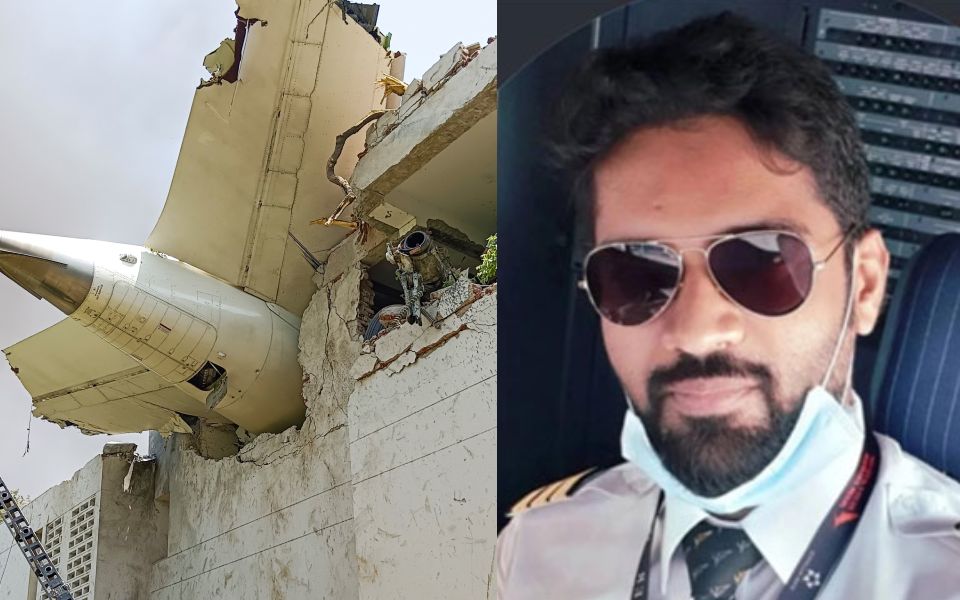
Ahmedabad, June 12: First Officer Clive Kunder, who hails from Mangaluru and was a resident of Mumbai, was among the crew members aboard the Air India flight AI 171 that tragically crashed in a residential area near Meghaninagar in Ahmedabad on Thursday afternoon, shortly after take-off.
The Boeing 787 Dreamliner had departed from Sardar Vallabhbhai Patel International Airport at 1:38 PM en route to London. Just about five minutes into the flight, the aircraft went down, leading to a devastating crash that claimed at least 133 lives. The flight was carrying 232 passengers—including two infants—and 12 crew members, making a total of 242 people on board.
Clive Kunder had completed his pilot training at Paris Air Inc. and had clocked around 1,100 hours of flying experience. He was assisting Captain Sumeet Sabharwal, a Line Training Captain with over 8,200 hours of flight experience. Both were in the cockpit when the aircraft encountered trouble and crashed.
There were unconfirmed reports suggesting that former Gujarat Chief Minister Vijay Rupani was also on the passenger manifest, reportedly listed as passenger number 12. However, authorities are yet to confirm his presence on board.
Following the crash, flames engulfed the aircraft wreckage, with thick black smoke visible from several kilometres away. Emergency services, including the fire department, responded promptly. Fire Officer Jayesh Khadia confirmed that fire tenders were dispatched immediately to control the blaze and assist in rescue operations.
Senior cabin crew on duty included Shradha Dhavan and Aparna Mahadik. Other crew members identified were Saineeta Chakravarti, Nganthoi Kongbrailatpam Sharma, Deepak Pathak, Maithili Patil, Irfan Shaikh, Lamnunthem Singson, Roshni Songhare Rajendra, and Manisha Thapa.
The Directorate General of Civil Aviation (DGCA) has deployed a dedicated investigation team to probe the incident. The team includes the Director of Airworthiness, Assistant Director of Airworthiness, and a Flight Operations Inspector—who were already in Ahmedabad at the time of the incident.
Meanwhile, operations at the Ahmedabad airport have been suspended until further notice. "All flight operations at SVPIA are temporarily suspended," an airport spokesperson said.
The exact cause of the crash remains unknown. Rescue and recovery operations continue at the crash site, as authorities work to identify victims and offer support to grieving families.
Let the Truth be known. If you read VB and like VB, please be a VB Supporter and Help us deliver the Truth to one and all.
CM Siddaramaiah ready to "sacrifice power" or continue, as per Rahul's directions: Rajanna
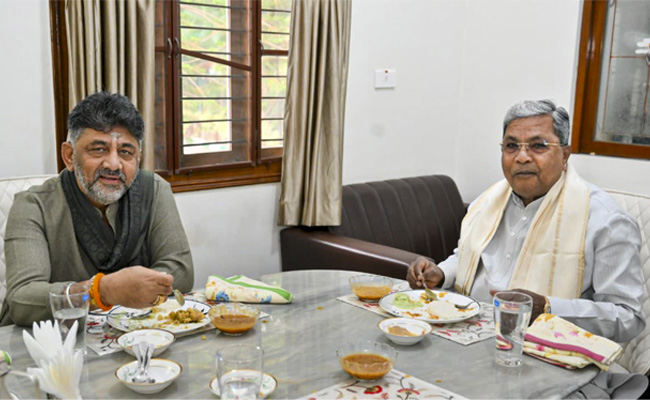
Bengaluru (PTI): As the speculation about leadership change in Karnataka rages yet again, a senior party leader and close aide of Siddaramaiah on Tuesday said the Chief Minister was ready to "sacrifice power" or continue in the top post, based on the directions of Congress leader Rahul Gandhi.
KN Rajanna also seemed to support the idea of a change in the party leadership as well, an apparent reference to deputy CM and Karnataka Congress president D K Shivakumar, whose supporters want him to be made CM.
Urging the Congress high command to clear the confusion on the leadership issue, Rajanna, a former minister who is considered close to Siddaramaiah, warned that continued uncertainty would be detrimental for the party and governance.
He also insisted that if the chief minister is changed, there should be a "Dalit CM" in Karnataka.
The development comes amid speculations within the party and political circles about a possible decision on leadership change and cabinet reshuffle after May 4, once the results for assembly elections in four states and one union territory, along with bypolls to two assembly segments in Karnataka, are announced.
"The Chief Minister has an open mind and has said he will abide by the directions of the high command and Rahul Gandhi, and that everyone should cooperate. The CM has repeatedly reiterated that he will abide by Rahul Gandhi's directives and suggested that everyone follow the decision. All ministers have agreed to it," Rajanna said in response to a question about the CM's recent discussion with his close cabinet colleagues and MLAs.
Speaking to reporters here, he said, "power is not permanent for any politician, those who lose it will try to gain it and those who have gained it will try to maintain it. The CM's mindset is that he is ready to sacrifice power or continue in power as per Rahul Gandhi's directions. He will abide by Rahul Gandhi's decision."
When asked whether supporters of Siddaramaiah demanded that he continue as CM, and if he steps down, that an AHINDA leader should take over, the MLA said the matter is for the high command to decide.
"We have told the high command what we had to. Ultimately it is left to high command and Rahul Gandhi," he said.
AHINDA (Kannada acronym for minorities, backward classes, and Dalits) is considered as the strong support base of Siddaramaiah and also the Congress party.
When asked about his past statement that there should be a Dalit CM after Siddaramaiah, Rajanna said, "What's wrong with it. I am committed to the statement that there should be a Dalit CM."
MLAs and leaders who want Shivakumar to be elevated have recently claimed they expect some "sweet news" by May 15, which is their leader's birthday.
When asked whether the party president should also be changed, the former minister said that everything has to change.
"If the ministers have to change, why shouldn't the party president. Everything will be decided by high command," he said.
Shivakumar is the state Congress President and has completed six years in the post.
For the government to function more actively towards the welfare of the people it is important that the high command clears the existing confusion in the Congress party at the earliest, Rajanna said, adding, the ministers have gone to discuss the same with the leadership.
"I too urge that the high command should not allow the confusion to continue; as long as the confusion continues, it is detrimental for the party and governance. I will also go to Delhi after May 4," he said.
"The high command is at it (resolving the confusion), but because of elections, the leaders are busy. The matter cannot be decided hastily, it must be decided with a clear state of mind, as it involves the future of the people of Karnataka and the party," he said, expressing confidence that the party will take appropriate decisions after examining all aspects.
PWD Minister Satish Jarkiholi on Monday met Congress President Mallikarjun Kharge and General Secretary (in charge of Karnataka) Randeep Surjewala in New Delhi and requested them to address the speculation regarding the change of leadership in the state.
Subsequently Social Welfare Minister H C Mahadevappa too met the party leadership in Delhi.
Both Jarkiholi and Mahadevappa are considered close to Siddaramaiah.
Regarding the demand for cabinet reshuffle, Rajanna said there is an expectation within both the party and the public that the administration should be sensitised more, and there is nothing wrong in new people getting opportunities.
Responding to a question, Rajanna said, there is a feeling among AHINDA communities that their expectations from the current government have not been fulfilled. "I too agree with it," he said.
Rajanna, who recently alleged that the Chief Minister is "helpless" and under some "compulsion," reiterated his statement by saying, "compare Siddaramaiah as CM during 2013-18 and 2023 to now, there is a huge difference, people are saying it."
The leadership issue is being hotly debated as Shivakumar's supporters have been demanding his elevation since late 2025, in lines with a rumoured power-sharing agreement involving Siddaramaiah when the party won the 2023 Assembly elections.