Mani Shankar Aiyar justifies 'neech' jibe against PM, BJP takes strong note

New Delhi: Congress leader Mani Shankar Aiyar was back in the news on Tuesday with an article justifying his "neech" jibe against Prime Minister Narendra Modi two years ago, prompting the BJP to call him "abuser-in-chief" and his party arrogant.
In an article, written for Rising Kashmir, Aiyar also slammed Modi on a series of issues and asked, "Remember how I described him on 7 December 2017? Was I not prophetic?"
In 2017, the former Union minister called Modi "neech aadmi" following which he was suspended from the Congress party.
BJP spokesperson G V L Narasimha Rao put out a tweet saying "Abuser-in-chief' Aiyar" had returned to justify his 2017 'Neech' jibe.
"... Aiyar then apologized & hid behind poor Hindi excuse. Now he says he was prophetic. Congr revoked his suspension last year for filthy outburst.Double speak & arrogance of @INCIndia on display again!" he said.
Reacting to the article, which triggered a fresh political row, BJP's IT Cell head Amit Malviya referred to Congress leader Sam Pitroda, in the spotlight for his "hua to hua" remark on the 1984 anti-Sikh riots.
"Upset that Sam Pitroda was getting all the attention, the irrepressible Mani Shankar Aiyar pulls Pitroda's foot out of his mouth and puts it in his...Reiterates and justifies his Neech' comment for PM!" he said on Twitter.
Justifying his "neech" comment made in 2017, Aiyar said in his article, "Modi will, in any case, be ousted by the people of India on 23 May. That would be a fitting end to the most foul-mouthed prime minister this country has seen or is likely to see. Remember how I described him on 7 December 2017? Was I not prophetic?
Let the Truth be known. If you read VB and like VB, please be a VB Supporter and Help us deliver the Truth to one and all.
We received request; will decide soon whether to support TVK: Thirumavalavan
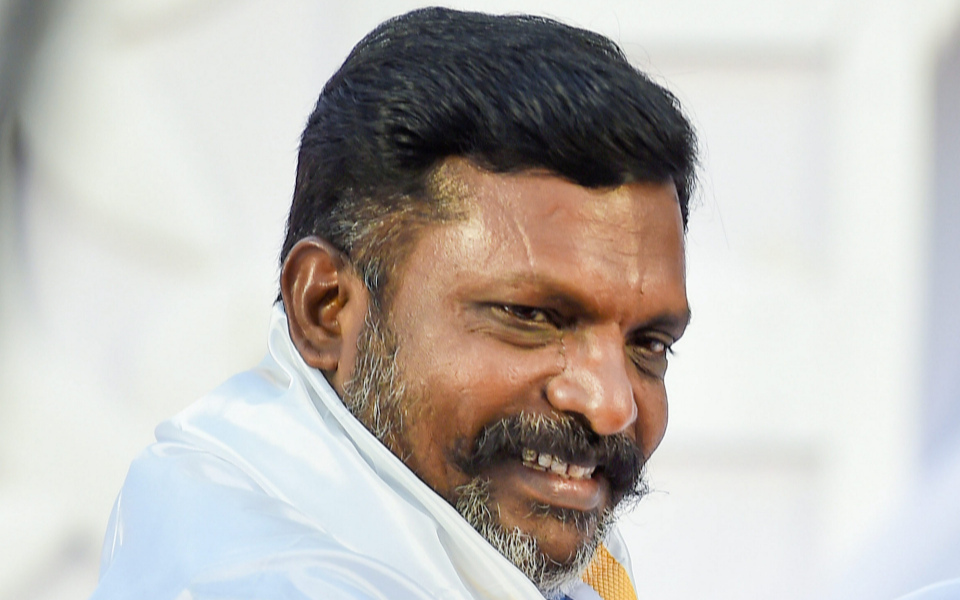
Chennai (PTI): VCK leader Thol Thirumavalavan on Thursday said that his party received a request from TVK for support and the high-level committee of his party will decide whether to support the Vijay-led party to form the government.
The TVK won 108 seats in the 234-member Assembly and emerged as the single largest party. Vijay will have to resign from one of the two constituencies he has won.
Though the Congress party, which has five MLAs, has extended support to TVK, the actor-politician-led party was still short of as many seats to touch the magic number of 118, the majority mark in the 234-member House.
"We received the request letter from TVK. We are thankful for that. We have not ignored his (Vijay's) request. We have a procedure. Therefore, our party's high-level committee will decide soon. We are going to discuss the merits and demerits of our position," the VCK leader told reporters here.
With regard to the delay in the governor's call to the TVK, which is the single largest party, to form the government, Thirumavalavan requested the governor to invite Vijay to form the government. "It is a constitutional right and people's verdict," he added.
Asserting that the governor cannot say that Vijay should hold 118 MLAs' support now itself to form the government, he said that after taking over power, Vijay has to prove an absolute majority only on the floor of the Assembly.
VIDEO | Chennai: VCK chief Thol Thirumavalavan (@thirumaofficial) says, “The Governor has no right to ask Vijay to prove his numbers or absolute majority of 118 before inviting him to form the government. He should first assume charge as Chief Minister, as it is the people’s… pic.twitter.com/sok3faXWBT
— Press Trust of India (@PTI_News) May 7, 2026