Manipur: Churachandpur limps back to normalcy after two days of protests
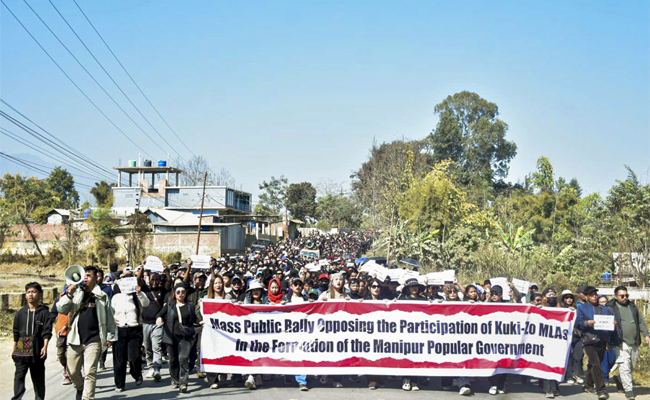
Imphal/Churachandpur (PTI): Normalcy began returning to parts of Manipur's Churachandpur district on Saturday morning after two days of protests, police said.
The violent protests began on Thursday after three BJP legislators from the Kuki-Zo and Hmar communities joined Meitei MLAs to form a government in the ethnic strife-hit state.
MLA Nemcha Kipgen joined the Y Khemchand Singh-led government as deputy chief minister, while LM Khaute and N Sanate supported her.
The demonstrations were largely confined to the stretch between Tuibong and Kangvai in Churachandpur town, unlike earlier instances when disturbances had spread across the district headquarters, police said.
ALSO READ: Kashmir minimum temperature rises, snowfall in higher reaches drops day temperature
While most areas of Churachandpur town witnessed a resumption of business activities, several shops in the Tuibong area remained closed, they said.
Additional security forces have been deployed to prevent any untoward incidents, they added.
Two tribal bodies imposed a "total shutdown" in Kuki-dominated Churachandpur, while rallies were held in Kangpokpi and Tengnoupal districts, alleging that the legislators betrayed their community.
The Kuki-Zo groups have been demanding a separate administrative unit for them, as the violence that broke out in May 2023 deeply divided the state on ethnic lines, with members of the two communities not venturing into each other's areas.
Over 260 people have been killed and thousands displaced in the ethnic clashes. The state has been under the President's Rule for one year, before Singh took oath as the chief minister on Wednesday.
Meanwhile, the Zomi Council, the apex body of the Zomi tribe, has summoned the three legislators who joined the government to appear before its office within three days.
In a statement issued on Friday night, the Churachandpur-based civil organisation said the legislators were elected with the expectation that they would represent the rights, voices and aspirations of the community.
However, their recent actions have caused widespread public dismay, it said.
The council warned that failure to respond to its "call for dialogue" would compel it to take appropriate organisational measures, including prohibiting the legislators' entry into the Zomi Council premises.
Let the Truth be known. If you read VB and like VB, please be a VB Supporter and Help us deliver the Truth to one and all.
11k litres of milk poured into Narmada river after religious event; environmentalists see red
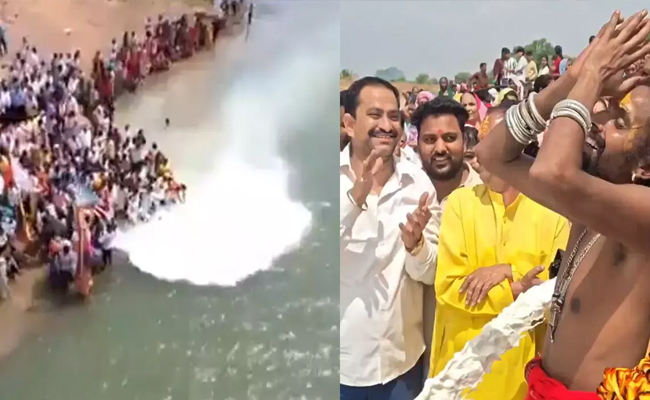
Sehore (PTI): Around 11,000 litres of milk were poured into Narmada river, often called the lifeline of Madhya Pradesh, in Sehore district on the culmination of a 21-day religious event as part of a sanctification ritual, prompting environmentalists to flag its negative impact on the ecosystem.
The event concluded at Satdev village in Bherunda area, located about 90 km from the district headquarters, with a 'mahayagna' on Wednesday.
The milk was offered to the river as part of rituals and prayers for the purity of the waters, the well-being of pilgrims and prosperity, organisers said.
The milk was brought in tankers to the riverbank and later poured into the flowing water amid chanting of mantras in the presence of a crowd of devotees.
However, environmentalists raised concerns over the practice, warning of its potential ecological impact.
"Such large quantities of organic matter can deplete dissolved oxygen in water, adversely affecting the river ecosystem. These impact local communities dependent on the river for drinking water and threaten aquatic life as well as domestic animals," noted environmentalist and wildlife activist Ajay Dube said.
Religious offerings should be symbolic and mindful, he asserted.
Renowned environmentalist Subhash Pandey said 11,000 litres of milk acts as a significant organic pollutant.
"It is highly oxygen-demanding and can lead to oxygen depletion, aquatic mortality, eutrophication (process of plants growing on river surface) and loss of potability. These effects are predictable from dairy-effluent chemistry and have been documented in similar incidents worldwide," Pandey pointed out.
Narmada originates at Amarkantak in the state and traverses 1,312 km westward to Maharashtra and Gujarat, emptying into the Arabian Sea via the Gulf of Cambay.
It is the largest west-flowing river in the peninsula, passing through a rift valley, and acts as a crucial water source for irrigation in MP, Gujarat and Maharashtra.