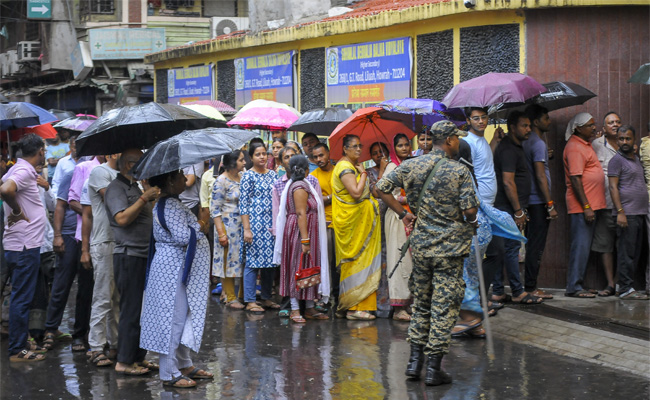
Massive cloudburst in J-K's Kishtwar, at least 12 killed
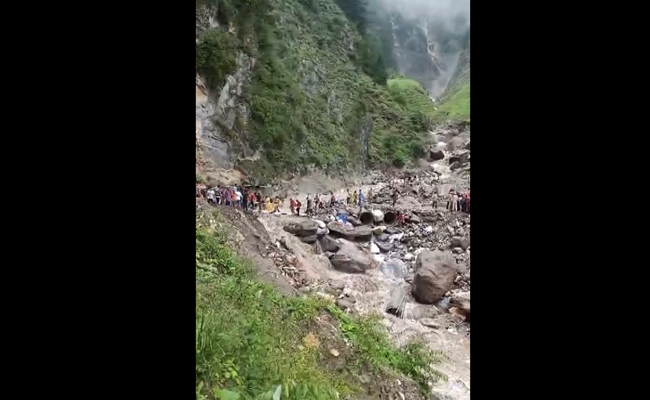
Jammu (PTI): A massive cloudburst struck a remote village in Jammu and Kashmir's Kishtwar district on Thursday, killing at least 12 people and leading to widespread damage, officials said.
The disaster hit Chasoti, the last motorable village on the way to the Machail Mata temple, between 12 noon and 1 pm when a large number of people had gathered for the Machail Mata yatra. From there begins the 8.5 km trek to the shrine.
Twelve bodies have been recovered and there are fears that the toll could rise, officials said.
Chasoti is at an altitude of 9,500 ft and about 90 km from Kishtwar.
A 'langar' set up for devotees bore the brunt of the cloudburst, which led to flashfloods.
"A massive Cloud burst in Chositi area, which could result in substantial casualty. Administration has immediately swung into action, rescue team has left for the site,"
Union Minister Jitendra Singh said in a post on X. He said he also spoke to Deputy Commissioner Kishtwar Pankaj Kumar Sharma on the matter.
The annual yatra to the shrine was suspended following the tragedy as authorities mobilised all resources and headed to the scene to conduct a massive rescue and relief operation, the officials said.
Two teams of the National Disaster Response Force (NDRF) have been rushed from Udhampur to Kishtwar.
"Massive rescue operations have been started in the area," said the deputy commissioner, who was on way to the spot.
Officials added that the flashfloods hit several houses clustered together in the foothills.
Lt Governor Manoj Sinha condoled the loss of lives in the incident.
"Anguished by cloudburst in Chositi Kishtwar. Condolences to bereaved families & prayers for quick recovery of injured. Directed Civil, Police, Army, NDRF & SDRF officials to strengthen the rescue & relief operations and ensure all possible assistance is provided to the affected," he said on X.
Leader of Opposition Sunil Kumar Sharma said he had received information from his workers that a massive cloudburst has occurred. "At the moment, I don’t think anyone has exact figures but I believe there could be significant damage in the area", he said, adding that there were a lot of people gathered for the yatra.
Officials said it could take up to 20 days for rescue, relief, and recovery operations.
Let the Truth be known. If you read VB and like VB, please be a VB Supporter and Help us deliver the Truth to one and all.
Rickelton's ton in vain as SRH beat MI by 6 wickets
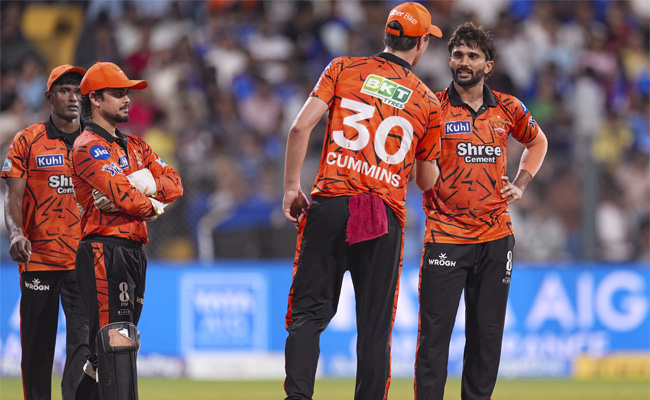
Mumbai (PTI): Ryan Rickelton's whirlwind unbeaten ton was overshadowed by Heinrich Klaasen's unbeaten 65 as Sunrisers Hyderabad defeated Mumbai Indians by six wickets in an IPL match here on Wednesday.
Chasing an imposing 244-run target, Travis Head (76 off 30) and Abhishek Sharma (45 off 24) shared 129 runs for the opening wicket to set the platform for SRH.
Klaasen (65 not out off 30 balls) then displayed his all-round hitting abilities to guide SRH home with the help of Nitish Kumar Reddy (21) and Salil Arora (30 not out off 10) in 18.4 overs.
Earlier, Rickelton's knock powered MI to 243 for five.
MI rode on a 93-run stand between Rickelton (123 not out off 55 balls) and Will Jacks (46 off 22) in 7.1 overs for the opening stand to power the side.
MI skipper Hardik Pandya scored a valuable 31 off 15 balls before being dismissed.
Praful Hinge (2/54), Eshan Malinga (1/29), Sakib Hasan (1/39) and Nitish Kumar Reddy (1/31) were the wicket-takers for SRH.
Brief Scores:
Mumbai Indian: 243 for 5 in 20 overs (Ryan Rickelton 123 not out; Praful Hinge 2/54).
Sunrisers Hyderabad: 249 for 4 in 18.4 overs (Travis Head 76, Heinrich Klaasen 65 not out; AM Ghazanfar 2/51).