Matter of concern: India on US charging Indian national in case relating to plot to kill separatist
New Delhi (PTI): India on Thursday described as a "matter of concern" the US charging an Indian national with conspiring to kill a Sikh separatist on American soil, and asserted that a high-level probe committee will investigate all aspects of the case.
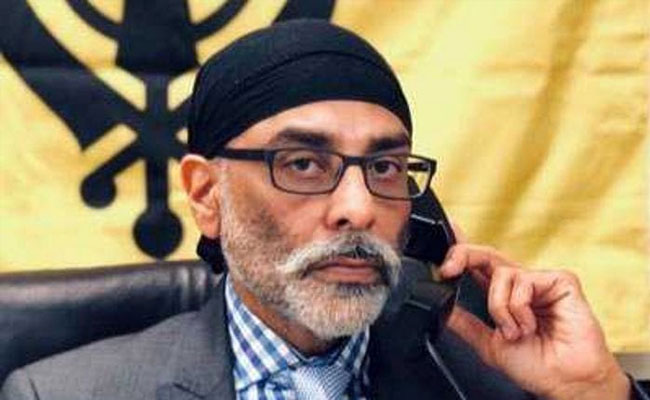
India has constituted a probe team to investigate allegations relating to the foiled plot to kill Gurpatwant Singh Pannun, a Sikh extremist and known to be an American and Canadian citizen.
On Wednesday, US federal prosecutors charged Indian national Nikhil Gupta of working with an Indian government employee in the foiled plot to kill Pannun.
US prosecutors informed a Manhattan court on Wednesday that authorities in the Czech Republic arrested and detained Gupta, and he is currently awaiting extradition to the US.
"As regards the case against an individual that has been filed in a US court allegedly linking him to an Indian official, this is a matter of concern," External Affairs Ministry spokesperson Arindam Bagchi said.
"We have said and let me reiterate that this is also contrary to government policy," he said at a media briefing.
Bagchi said the "nexus between organised crime, trafficking, gunrunning and extremists at an international level is a serious issue for the law enforcement agencies and organisations to consider and it is precisely for that reason a high-level inquiry committee has been constituted and we will obviously be guided by its results."
The MEA spokesperson said the US side shared some "inputs" pertaining to nexus between organised criminals, gun runners and terrorists and that India takes such inputs seriously since they impinge on "our national security interests as well" and that relevant departments were examining the issue.
"During the course of discussions with the US on bilateral security cooperation, the US side shared some inputs pertaining to nexus between organised criminals, gunrunners, terrorists and other extremists," he said.
"We take such inputs very seriously and a high level inquiry committee has been constituted to look into all the relevant aspects of the matter," he said, in identical remarks that he made on Wednesday.
Bagchi said India will take necessary follow-up action based on the findings of the enquiry committee.
"We cannot share any further information on such security matters," he said.
Pannun, a leader of the so called 'Sikhs for Justice', is wanted by Indian probe agencies on various terror charges.
The Financial Times, citing unnamed sources, first reported last week that US authorities foiled a plot to assassinate Pannun, and issued a warning to the Indian government over concerns it was involved in the plot.
The Washington Post on Wednesday said the Biden administration was so concerned after discovering the plot that it sent CIA Director William J Burns and Director of National Intelligence Avril Haines to India in August and October respectively to demand investigation and hold those responsible to account.
Washington's allegations relating to the failed plot came weeks after Canadian Prime Minister Justin Trudeau alleged that there was a "potential" involvement of Indian agents in the killing of Khalistani separatist Hardeep Singh Nijjar in a Vancouver suburb in June.
India had strongly rejected Trudeau's charges.
On Canada's allegations, Bagchi said the main issue with Ottawa has been that of activities of anti-India elements in that country.
"In so far as Canada is concerned, we have said that they have consistently given space to anti-India extremists and violence and that is actually the heart of the issue. Our diplomatic representatives in Canada have borne the brunt of this," Bagchi said.
"We expect the government of Canada to live up to its obligations under the Vienna Convention on Diplomatic Relations. We have also seen interference by Canadian diplomats in our internal affairs," he said.
It is obviously unacceptable, Bagchi added.
Let the Truth be known. If you read VB and like VB, please be a VB Supporter and Help us deliver the Truth to one and all.
4 held for sexually assaulting woman, girl on moving bus after social media alert in UP's Agra

Agra (UP) (PTI): Four people were arrested, after a prompt response by police following a social media alert, for allegedly sexually assaulting a woman and a girl inside a moving bus here, officials said on Tuesday.
According to an official police statement, at 12:27 am on April 27, information was received on the social media platform X about an incident of sexual assault on a bus travelling from Kanpur to Ahmedabad, which was approaching Namner crossing in Agra.
Acting under the direction of Police Commissioner Deepak Kumar, the Agra Police social media team immediately alerted the Rakabganj police station within minutes and coordinated with the victims to confirm the incident and obtain the exact location, it stated.
Police teams launched intensive checking at Namner crossing and intercepted the bus as it reached the spot. The four accused involved in the incident were apprehended on the spot, and legal action was initiated against them, the statement said.
The police said the swift response and coordination between the social media team and field units ensured timely action, bringing relief to the victims and other passengers, who expressed gratitude towards the police, it added.