Merely threatening by claiming to be ISIS terrorist not offence under UAPA: Madras HC
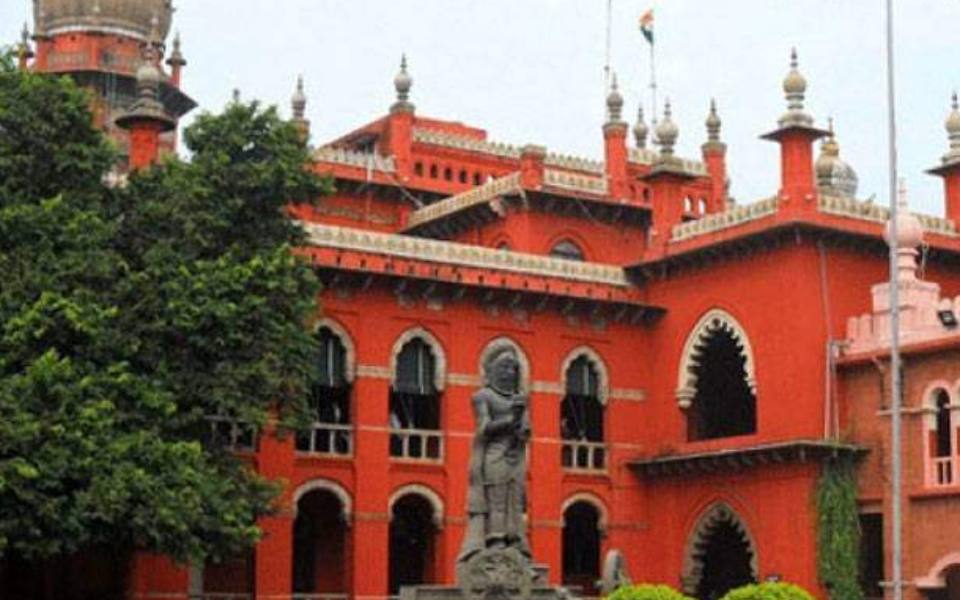
Chennai: The Madras High Court, while granting bail to a man accused under the Unlawful Activities Prevention Act (UAPA), emphasized that merely threatening a person by claiming association with ISIS is not sufficient to conclude that the person supported the terrorist organization. The court specified that such threats could constitute a separate offense but not under the UAPA.
A bench comprising Justice SS Sundar and Justice Sunder Mohan asserted that the prosecution needed to present independent evidence to establish support for a terrorist organization. The judges stated, "Merely because the appellant had threatened the person stating that he was associated with an ISIS terrorist, it would by itself not be a reasonable ground to hold that he had supported a terrorist organization. The threat would certainly amount to an offense but not an offense under Section 39 of the UA (P) Act."
The court further highlighted that the materials provided by the prosecution did not demonstrate an intention to support a terrorist organization. Instead, they showed that the appellant handled funds for the prime accused, which differed from supporting a terrorist organization. The judges pointed out that, for bail in cases involving conspiracy under the UAPA, it was essential to specify the exact terrorist act agreed upon.
"The allegation of conspiracy to commit a terrorist act must spell out the object of the conspiracy (i.e.) as to what exactly was the terrorist act that was agreed to be committed. However, we may hasten to add that the above observations are made only for arriving at a prima facie satisfaction for the purpose of considering the bail application on the basis of the broad probabilities of the case," the court explained.
The court heard an appeal filed by Mohamed Irfan challenging the denial of bail. Irfan, along with others, was found in a car intercepted by the police on information that it was carrying arms and weapons. The National Investigation Agency (NIA) took over the investigation, and the case was registered for offenses under the Indian Penal Code and the Arms Act. The government granted sanction to prosecute the accused under the UAPA.
According to the final report, the prime accused, along with Irfan, engaged in anti-national activities in the name of the Khilafah Party of India and Intellectual Students of India (ISI). The appellant allegedly participated in discussions about ISIS ideologies and promoting the Khilafah Party of India. Irfan argued that the final report was based on surmises and conjectures, contending that there was no material to charge him under the UAPA. He asserted that the prosecution could only establish his association with the prime accused, not the terrorist organization.
The prosecution countered that Irfan had threatened witnesses by claiming association with ISIS, creating a potential danger. The court noted that, while assessing a prima facie case, even a grave suspicion is sufficient to frame charges. However, when considering bail and the denial of liberty, a different test applies. The court stressed that the accusations must not only be grave but also supported by cogent materials.
Regarding the restrictions under Section 43D of the UAPA, the court clarified that the provision does not take away basic human or constitutional rights. The restriction implies that courts cannot grant bail without sufficient reasons, ensuring that bail is not a mere formality. The court granted bail to Irfan on conditions, emphasizing that pre-trial detention should not be indefinite.
Let the Truth be known. If you read VB and like VB, please be a VB Supporter and Help us deliver the Truth to one and all.
Karnataka: College student dies by suicide in Dharwad, 3 policemen suspended

Dharwad (Karnataka) (PTI): A college student allegedly died by suicide here, following which three policemen were suspended over allegations of harassment linked to his death by the victim's family.
Aditya Myageri, a BSc student at a private college here, was among 18 students detained by the Vidyagiri police on April 25 during an anti-drug drive, police said on Wednesday.
He hailed from Belur village in Bagalkot district, but was staying with his friends at a rented accommodation in Girinagar area of Dharwad city, police said.
Among the 18 students tested, Aditya was among the 10 who had tested negative for ganja consumption and was subsequently released.
Some of his roommates, however, tested positive.
According to police, Aditya's family alleged that despite testing negative, he was harassed by police. They also claimed some policemen demanded Rs 2,000 to settle the matter and threatened legal action if he failed to pay.
He had called his mother asking for money, but she could not arrange it immediately, the family claimed.
On Monday night, Aditya allegedly died by suicide by hanging from a ceiling fan at his rented accommodation, with his family alleging police harassment and pressure over demand for money drove him to the extreme step, a senior police officer said.
Police Commissioner N Shashi Kumar told PTI that an unnatural death case has been registered at Vidyagiri police station. Three policemen have been suspended over the allegations, and further investigation is underway.