Middle East crisis: EAM Jaishankar speaks to foreign ministers of Iran & Israel
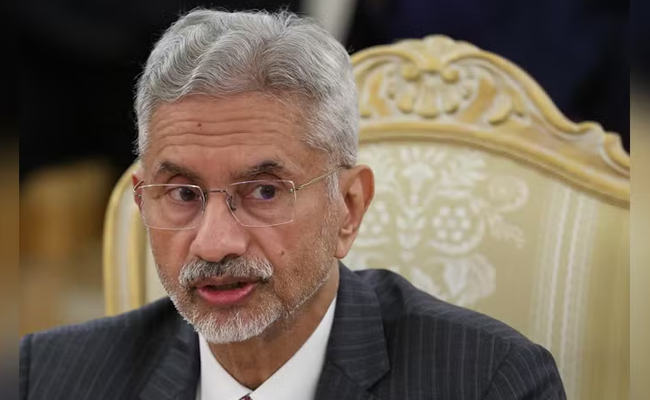
New Delhi (PTI): External Affairs Minister S Jaishankar on Saturday held separate phone conversations with Iranian Foreign Minister Seyed Abbas Araghchi and his Israeli counterpart Gideon Sa'ar as the Middle East reeled under massive tension following a joint US-Israel military offensive against Iran.
The external affairs minister also spoke to his Saudi counterpart Prince Faisal bin Farhan Al Saud, Kuwait's Foreign Minister Sheikh Jarrah Jaber Al-Ahmad Al-Sabah, and Bahrain's Foreign Minister Abdullatif bin Rashid Al Zayani.
Jaishankar held separate phone conversations with Qatar Prime Minister Sheikh Mohammed bin Abdulrahman bin Jassim Al Thani and UAE Foreign Minister Sheikh Abdullah Bin Zayed Al-Nahyan
In his conversation with Araghchi, the external affairs minister conveyed India's deep concern over the developments in Iran and the region.
"Had a telecon with Iranian FM Seyed Abbas Araghchi this evening. Shared India's deep concern at the recent developments in Iran and the region," Jaishankar said on social media.
On his conversation with Sa'ar, Jaishankar said he reiterated "India's call for dialogue and diplomacy to de-escalate tensions”.
The external affairs minister said he and Saudi Foreign Minister Al Saud exchanged views on the ongoing situation in the Gulf.
"Underlined India's stakes in regional peace and stability and in the welfare of the Indian community," he said.
"Was apprised of the situation in Qatar. Value his assurance on the well-being of the Indian community," Jaishankar said on his conversation with the Qatar prime minister.
"Discussed the evolving situation in the Gulf with UAE DPM and FM Sheikh Abdullah Bin Zayed Al-Nahyan this evening. India is concerned with the escalating situation. Appreciate his commitment to the welfare of the Indian community," he said on social media.
Following the attack by the US and Israel, Iran launched retaliatory military strikes targeting Israeli and American military bases across the region, including in Qatar, the UAE, Kuwait, Bahrain and Jordan.
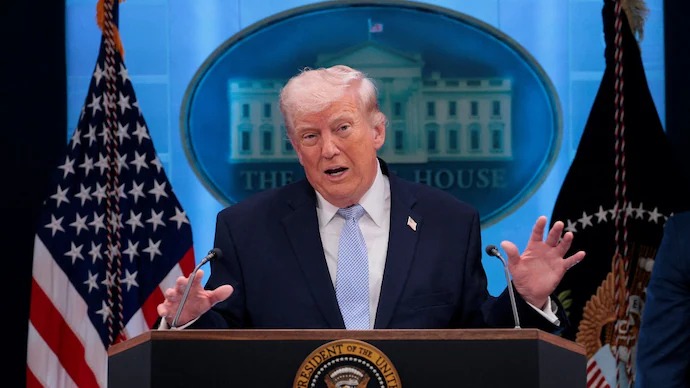
Earlier in the day, US President Donald Trump, announcing the military offensive against Tehran, called on the people of Iran to "take over" the government, saying it will "probably be your only chance for generations".
The US-Israel joint strikes on Iran came after weeks of negotiations between Washington and Tehran on the Iranian nuclear programme did not produce any tangible outcome.
At least 57 people were killed at a girls' school in southern Iran in the US-Israel strikes, Iranian state media reported.
The Ministry of External Affairs (MEA) said India is deeply concerned about the recent developments in Iran and the Gulf region.
"We urge all sides to exercise restraint, avoid escalation, and prioritise the safety of civilians," the MEA said.
"Dialogue and diplomacy should be pursued to de-escalate tensions and address underlying issues. Sovereignty and territorial integrity of all states must be respected," it said in a statement.
Let the Truth be known. If you read VB and like VB, please be a VB Supporter and Help us deliver the Truth to one and all.
What is Iran’s 10-point plan? Key demands ahead of US talks in Islamabad
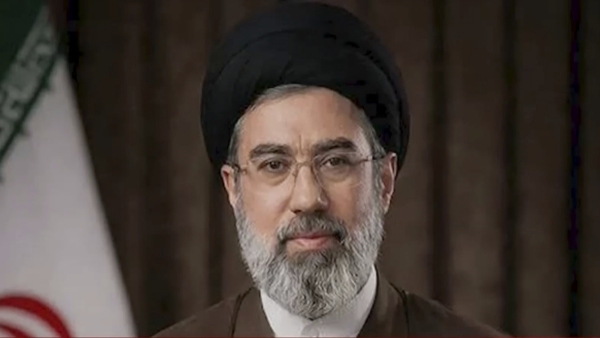
Tehran/Islamabad: Iran has outlined a 10-point plan as the basis for upcoming talks with the United States, expected to begin in Islamabad on April 11, according to a statement from the Iranian Supreme National Security Council.
The plan lays out Tehran’s key political, military and economic demands, and is being seen as a framework for negotiations following the recent escalation in the region.
Strait of Hormuz at the centre
A major focus of the plan is the Strait of Hormuz, a critical global shipping route. Iran has proposed “controlled passage through the Strait of Hormuz in coordination with the Iranian armed forces,” which it says would give the country a unique economic and geopolitical position.
The plan also calls for the “establishment of a safe transit protocol” in the Strait that would guarantee Iran’s dominance under an agreed mechanism.
Call to end conflict
Iran has demanded “the necessity of ending the war against all elements of the axis of resistance,” signalling its expectation that hostilities should stop not only in Iran but also involving allied groups in the region.
US troop withdrawal
Another key demand is the “withdrawal of US combat forces from all bases and deployment points in the region,” indicating Tehran’s long-standing position against American military presence in West Asia.
Sanctions relief and compensation
The plan places strong emphasis on economic measures. It calls for “full payment of Iran’s damages according to estimates,” along with “the lifting of all primary and secondary sanctions and resolutions of the Board of Governors and the Security Council.”
It also seeks “the release of all Iranian assets and properties frozen abroad,” which have been a major point of contention for years.
Binding global guarantee
Finally, Iran has demanded that all these terms be formally recognised through “a binding Security Council resolution,” suggesting it wants international legal backing to ensure enforcement.
What this means
The 10-point plan reflects Iran’s broader push for security guarantees, economic relief and regional influence. The upcoming talks in Islamabad are expected to test how far both sides are willing to negotiate on these demands.