UP: Over 50 patients die at Ballia district hospital in 3 days, CMS removed
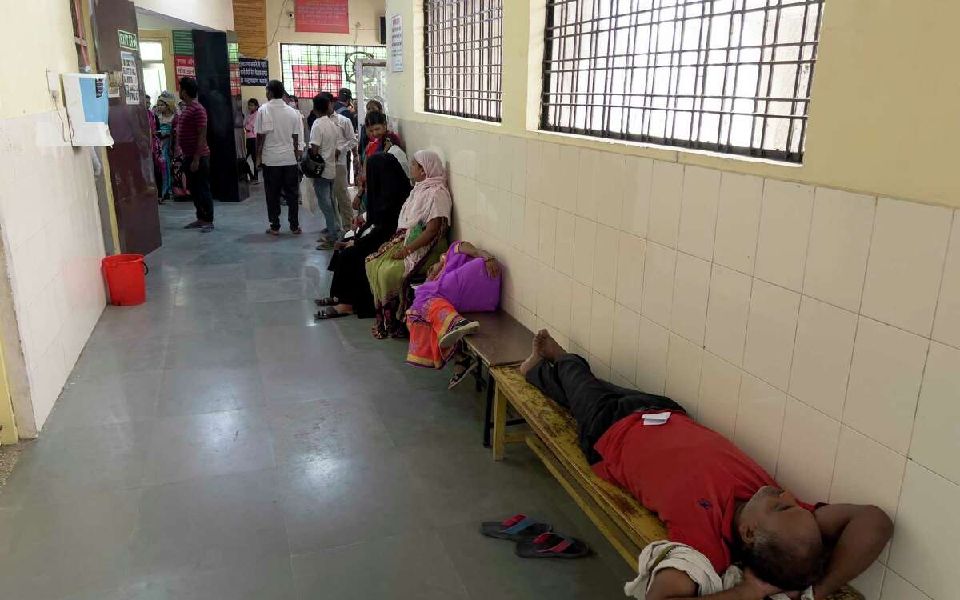
Ballia (UP), Jun 18: Fifty-four people admitted at Uttar Pradesh's Ballia district hospital have died in the last three days, following which a team of the health department from Lucknow has reached the hospital to ascertain the cause of deaths, officials said on Sunday.
Nearly 400 patients were admitted to the district hospital from June 15 to June 17, they said, adding all the patients who died at the government hospital were aged above 60 years.
Meanwhile, Chief Medical Superintendent (CMS) of the district hospital, Dr Divakar Singh, was removed and sent to Azamgarh, allegedly after he made a careless remark about the cause of deaths.
Dr S K Yadav has been given the charge of CMS, a senior official said.
Ballia Chief Medical Officer (CMO) Dr Jayant Kumar said two people have died due to heat stroke in the district till Sunday.
"As per records of the district hospital, of the 54 deaths, 40 per cent of the patients had fever, while 60 per cent were suffering from other diseases. So far, only two persons have died due to heat stroke in the district," Kumar told PTI.
CMS Yadav said the hospital is under pressure as around 125 to 135 patients are being admitted here daily.
"On June 15, as many as 154 patients were admitted to the district hospital, of which 23 patients died due to various reasons. While 20 patients died on June 16, 11 passed away on the following day. They were all aged above 60 years," he added.
According to the health officials, on average about eight deaths are reported daily at the district hospital.
On Saturday, additional director of the health department of Azamgarh division, O P Tiwari, said a team of the health department from Lucknow would come to Ballia and conduct tests, after which the cause of the deaths would be ascertained.
"Maybe there is a disease, which could not be detected. The temperature is also high in the region. During the summers and winters, death rates among diabetic patients and those with breathing difficulties and blood pressure usually increase," Tiwari said.
On Sunday, District Magistrate Ravindra Kumar said that the number of beds at the district hospital has been increased to accommodate more patients.
"In order to ensure that patients at the district hospital do not face any difficulties, some air coolers and air-conditioners have been arranged. Apart from this, 15 beds have also been increased," he said.
The DM also said, "CMS Dr Divakar Singh has been sent to Azamgarh, since he gave wrong information about death figures."
Deputy Chief Minister Brajesh Pathak, who also holds the health portfolio, said, "The superintendent's removal has been done since he had made a careless remark without having information about the heatwave. All the chief medical officers and the chief medical superintendents in the state have been instructed to identify each and every patient, and provide them treatment."
Let the Truth be known. If you read VB and like VB, please be a VB Supporter and Help us deliver the Truth to one and all.
Bhojshala case: Disputed structure built from remains of pre-existing temples, claims ASI
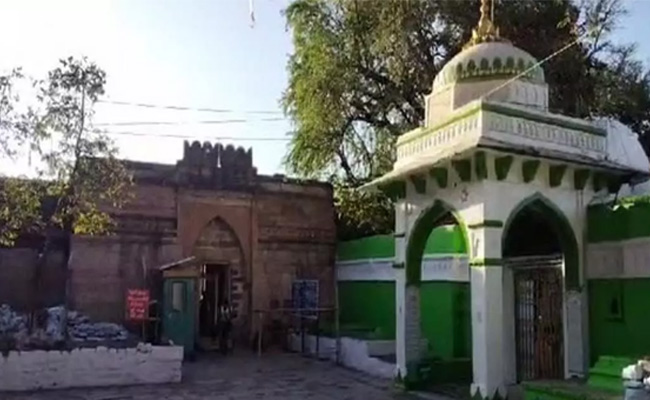
Indore (PTI): The ASI has told the Madhya Pradesh High Court that a massive structure dating back to the Paramara kings' rule existed at the disputed Bhojshala temple-Kamal Maula mosque complex, and the current structure was built from the remains of temples.
The Archaeological Survey of India (ASI) made the claim on Tuesday based on its 98-day scientific survey and over 2,000-page report.
The Hindu community considers Bhojshala a temple dedicated to Vagdevi (Goddess Saraswati), while the Muslim side claims the monument as the Kamal Maula Mosque. The disputed complex is protected by the ASI.
During the hearing before Justices Vijay Kumar Shukla and Alok Awasthi of the HC's Indore bench, Additional Solicitor General Sunil Kumar Jain, representing the ASI, presented a detailed account of the scientific survey conducted two years ago at the complex.
Referring to the ASI's survey report, he said, "Retrieved architectural remains, sculptural fragments, large slabs of inscriptions with literary texts, Nagakarnika inscriptions on pillars, etc, suggest that a large structure associated with literary and educational activities existed at the site. Based on scientific investigations and archaeological remains recovered during the investigations, this pre-existing structure can be dated to the Paramara period."
It can be said that the existing structure was made from the parts of earlier temples, based on scientific investigations, survey and archaeological excavations conducted, study and analysis of retrieved finds, study of architectural remains, sculptures, and inscriptions, art and sculptures, Jain said quoting the report.
Summarising the report, he also drew the court's attention to the fact that the archaeological study identifies that many architectural components, such as pillars and beams, were originally part of temple structures before being repurposed for a mosque.
"The evidence of this transition includes Sanskrit and Prakrit inscriptions that were damaged or hidden, alongside sculptures of deities and animals that were often mutilated or defaced," Jain contended.
The report also states that "all Sanskrit and Prakrit inscriptions are older than the Arabic and Persian inscriptions, indicating that users or engravers of the Sanskrit and Prakrit inscriptions occupied the place earlier".
In light of the Muslim side's earlier objections, the bench wanted to know why there were some discrepancies in the ASI's responses regarding the status of the disputed complex in the cases filed over the years.
The Additional Solicitor General argued that earlier studies of the complex involved only officials, while the current survey involved scientists and the use of advanced technologies such as Ground Penetrating Radar (GPR).
The hearing in the Bhojshala case will continue on Wednesday.
The high court has been regularly hearing four petitions and one writ appeal regarding the religious nature of the Bhojshala temple-Kamal Maula mosque complex since April 6.