Modi govt didn't initiate Rana's extradition, merely benefited from diplomacy begun under UPA: Cong
New Delhi (PTI): With Mumbai terror attack accused Tahawwur Rana being extradited from the US, the Congress Thursday said the Modi government did not initiate the process, instead it benefited from the "mature, consistent and strategic diplomacy" that begun under the UPA.
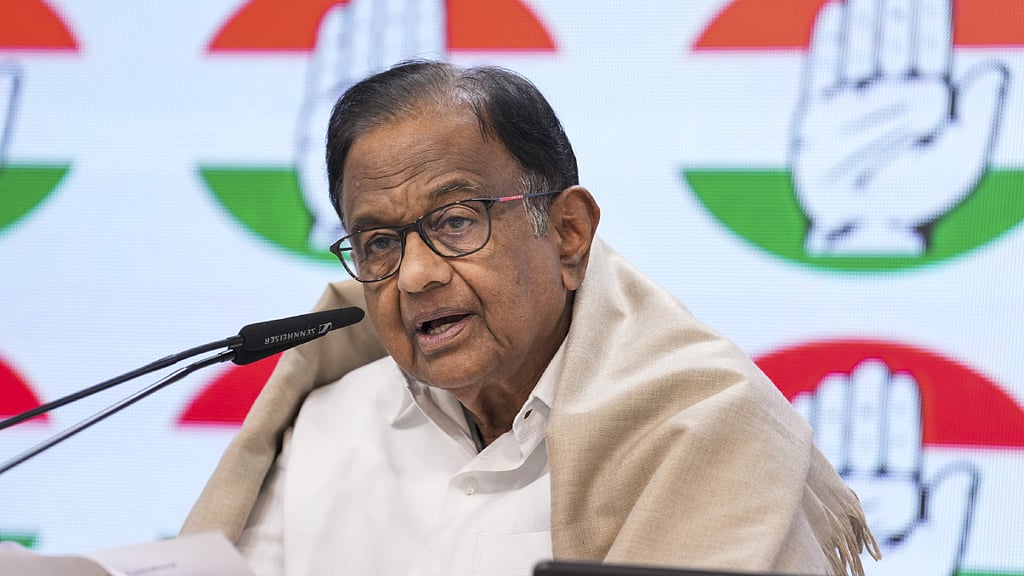
Congress leader and former Home Minister P Chidambaram said the government did not secure any breakthrough to make the extradition possible, nor is it the result of any grandstanding.
Chidambaram added that it was a testament to what the Indian state can achieve when diplomacy, law enforcement and international cooperation are pursued sincerely and without any kind of chest-thumping.
"While the Modi government is rushing to take credit for this development, the truth is far from their spin," Chidambaram said in a statement.
This extradition is the culmination of a decade-and-a-half of painstaking diplomatic, legal and intelligence efforts which were initiated, led, and sustained by the UPA government in close coordination with the United States, he said.
Rana, 64, is a Pakistan-born Canadian national and close associate of one of the main conspirators of the 2008 Mumbai terror attacks David Coleman Headley alias Daood Gilani, a US citizen.
Rana is being brought to India after his last-ditch attempt to evade extradition failed as the US Supreme Court justices rejected his application.
As many as 166 people were killed in the Mumbai terror attack on November 26, 2008.
The coursework, Chidambaram said, began on November 11, 2009, when the NIA registered a case in New Delhi against David Coleman Headley (US citizen), Tahawwur Rana (Canadian citizen), and others involved in the 26/11 conspiracy, he said.
"That very month, Canada's Foreign Minister confirmed collaboration with Indian agencies, thanks to UPA's effective foreign policy. The FBI had arrested Rana in Chicago in 2009 for supporting a failed LeT plot in Copenhagen," said Chidambaram, who was the Union home minister from November 2008 to July 2012.
"Even though Rana was acquitted by a US court of direct involvement in the 26/11 attack in June 2011, he was convicted for other terrorism-related offences and sentenced to 14 years in prison. The UPA government publicly expressed its disappointment over his acquittal and kept diplomatic pressure alive," Chidambaram said.
Despite legal setbacks, the UPA government persisted through institutional diplomacy and legal mechanisms, he asserted.
A three-member NIA team interrogated Headley in the US before the end of 2011, based on mutual legal cooperation frameworks under the MLAT, he said in a statement released by the Congress.
Chidambaram further said the US government transferred crucial evidence to India, which became part of the NIA's chargesheet filed in December 2011 against nine accused, including Rana.
"The Special NIA court in Delhi issued non-bailable warrants, and Interpol Red Notices were secured for absconding accused. This was not a media stunt but quiet, determined legal diplomacy.
"In 2012, External Affairs Minister Salman Khurshid and Foreign Secretary Ranjan Mathai took up the matter of Headley's and Rana's extradition with US Secretary of State Hillary Clinton and Under Secretary Wendy Sherman," he said.
By January 2013, Headley was sentenced to 35 years and Rana's sentencing in the US also took place, the Congress leader said.
"India's demand for Headley's extradition was reiterated firmly, even as the UPA government expressed its disappointment at the sentence. Then Ambassador to the US Nirupama Rao also pursued the matter consistently," he said.
Chidambaram asserted that this was a textbook example of how sensitive issues of international justice should be handled through diplomacy.
"Even after the change in government in 2014, it was the institutional efforts already in motion that kept the case alive. In 2015, Headley agreed to turn approver in the 26/11 case," he said.
In 2016, a Mumbai court pardoned him on the condition of full cooperation, which helped the case against Zabiuddin Ansari (Abu Jundal), he said.
A team visited the US in December 2018 to resolve legal hurdles and again in January 2019 was told that Rana must serve his full sentence in the US, Chidambaram said.
"His release date was set for 2023, accounting for time served. These are not 'strong leader' moments, but are the slow wheels of justice, pushed forward by years of hard work. In June 2020, after Rana was released on health grounds, the Indian government requested his arrest," he noted.
Pointing out that the Biden administration supported his extradition, Chidambaram said that in May 2023, a US court certified his extraditability under the US-India Extradition Treaty.
"Rana appealed and filed multiple petitions including a habeas corpus and, finally, a writ to the US Supreme Court citing double jeopardy. All were rejected. The final denial came on January 21, 2025, a day after Donald Trump's inauguration," he said.
In February 2025, Prime Minister Modi and President Trump stood at a press conference and tried to take credit for what was essentially the result of years of UPA-era groundwork, he said.
By February 17, Indian officials confirmed Rana's role in the 26/11 conspiracy, dating back to 2005, when he coordinated with LeT and ISI operatives, Chidambaram said, adding that finally, on April 8, 2025, US authorities handed over Rana to Indian officials.
"Let the facts be clear: the Modi government did not initiate this process, nor did it secure any new breakthrough. It merely benefited from the mature, consistent and strategic diplomacy begun under the UPA," Chidambaram said.
"This extradition is not the result of any grandstanding, it is a testament to what the Indian state can achieve when diplomacy, law enforcement, and international cooperation are pursued sincerely and without any kind of chest-thumping," he said.
Let the Truth be known. If you read VB and like VB, please be a VB Supporter and Help us deliver the Truth to one and all.
Bhojshala case: Disputed structure built from remains of pre-existing temples, claims ASI
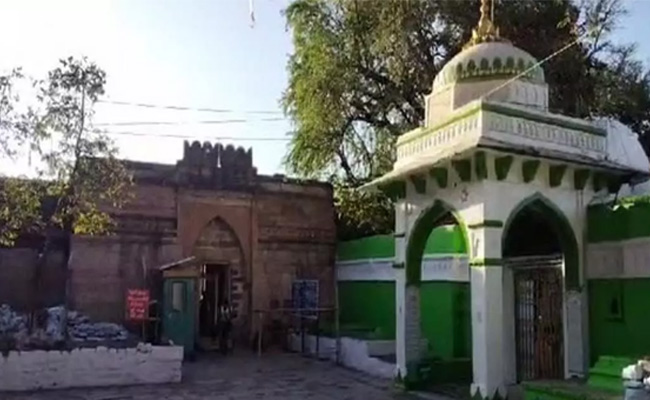
Indore (PTI): The ASI has told the Madhya Pradesh High Court that a massive structure dating back to the Paramara kings' rule existed at the disputed Bhojshala temple-Kamal Maula mosque complex, and the current structure was built from the remains of temples.
The Archaeological Survey of India (ASI) made the claim on Tuesday based on its 98-day scientific survey and over 2,000-page report.
The Hindu community considers Bhojshala a temple dedicated to Vagdevi (Goddess Saraswati), while the Muslim side claims the monument as the Kamal Maula Mosque. The disputed complex is protected by the ASI.
During the hearing before Justices Vijay Kumar Shukla and Alok Awasthi of the HC's Indore bench, Additional Solicitor General Sunil Kumar Jain, representing the ASI, presented a detailed account of the scientific survey conducted two years ago at the complex.
Referring to the ASI's survey report, he said, "Retrieved architectural remains, sculptural fragments, large slabs of inscriptions with literary texts, Nagakarnika inscriptions on pillars, etc, suggest that a large structure associated with literary and educational activities existed at the site. Based on scientific investigations and archaeological remains recovered during the investigations, this pre-existing structure can be dated to the Paramara period."
It can be said that the existing structure was made from the parts of earlier temples, based on scientific investigations, survey and archaeological excavations conducted, study and analysis of retrieved finds, study of architectural remains, sculptures, and inscriptions, art and sculptures, Jain said quoting the report.
Summarising the report, he also drew the court's attention to the fact that the archaeological study identifies that many architectural components, such as pillars and beams, were originally part of temple structures before being repurposed for a mosque.
"The evidence of this transition includes Sanskrit and Prakrit inscriptions that were damaged or hidden, alongside sculptures of deities and animals that were often mutilated or defaced," Jain contended.
The report also states that "all Sanskrit and Prakrit inscriptions are older than the Arabic and Persian inscriptions, indicating that users or engravers of the Sanskrit and Prakrit inscriptions occupied the place earlier".
In light of the Muslim side's earlier objections, the bench wanted to know why there were some discrepancies in the ASI's responses regarding the status of the disputed complex in the cases filed over the years.
The Additional Solicitor General argued that earlier studies of the complex involved only officials, while the current survey involved scientists and the use of advanced technologies such as Ground Penetrating Radar (GPR).
The hearing in the Bhojshala case will continue on Wednesday.
The high court has been regularly hearing four petitions and one writ appeal regarding the religious nature of the Bhojshala temple-Kamal Maula mosque complex since April 6.