Modi lookalike fights elections, gets notice for his 'one vote, one note' slogan
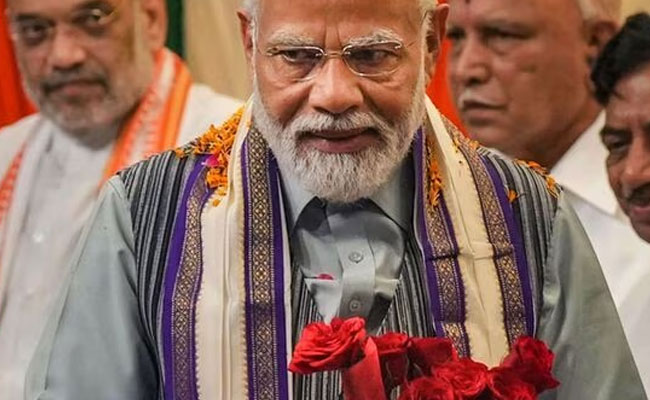
Lucknow, Apr 13: A Narendra Modi lookalike who is contesting the Lok Sabha elections has been served notice for violating the poll code over what he calls is his slogan "one vote, one note".
Abhinandan Pathak filed his nomination papers from Lucknow on Friday as an Independent candidate and said he would also contest Varanasi Lok Sabha constituency represented by Prime Minister Narendra Modi.
After filing nomination, he told the media that his slogan was "one note, one vote".
In a notice served to Pathak Friday evening, District Magistrate Kaushal Raj Sharma said that the slogan appeared to be in violation of the Model Code of Conduct (MCC) and amounts to "luring electorate for votes".
"Pathak has been given 24 hours time to reply to the notice after receiving it. In absence of the reply, FIR under relevant sections will be lodged against him," the DM, also the returning officer, said.
After challenging Home Minister Rajnath Singh, sitting MP and BJP candidate, who is yet to file his nomination from Lucknow, Pathak said that he would also file nomination from from Varanasi on April 26.
Claiming himself to be a "serious candidate and not the dummy one", Pathak said he was against 'jumla' (gimmick) and after winning, "I would support Rahul Gandhi's PM's candidature" .
Pathak bears resemblance to PM Modi. He dresses and speaks like Modi and begins his speech with 'Mitron' (friends), the pet word PM uses frequently to address his audiences.
A resident of Saharanpur, Pathak was with the BJP-led NDA constituent Republican Party of India (Athawale) as its state vice-president for Uttar Pradesh till he joined the Congress last month.
During the 2014 Lok Sabha polls, there were several lookalikes of Modi, including Pathak, who were seen in different places across the country during election campaigns.
However, Pathak had actively campaigned for the Congress in the run-up to the assembly elections in Chhattisgarh last year, holding meetings in a number of seats in the state, including Jagdalpur, Dantewada, Kondagaon and Bastar.
Lucknow, from where Pathak has filed his nomination, will vote in the fifth phase of the elections on May 6.
Let the Truth be known. If you read VB and like VB, please be a VB Supporter and Help us deliver the Truth to one and all.
CM Siddaramaiah alleges ‘criminal conspiracy’ in Sringeri recount, vows legal action
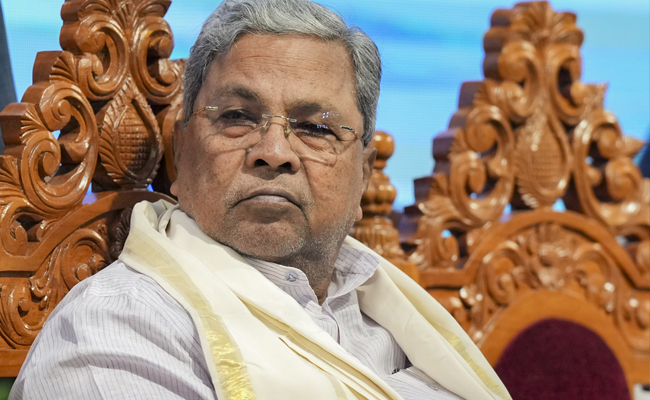
Bengaluru (PTI): Alleging a “criminal conspiracy” by BJP candidate D N Jeevaraj in the Sringeri Assembly poll recounting, Karnataka CM Siddaramaiah on Tuesday said the outcome was manipulated after valid postal ballot votes in favour of Congress leader T D Raje Gowda were tampered with during the recounting process.
Following a Karnataka High Court order on an election petition filed by Jeevaraj, challenging Raje Gowda’s election, the reverification and recounting were conducted on Saturday.
After the reverification and recount of postal ballots for the Sringeri Assembly constituency, votes polled in favour of Raje Gowda were reduced by 255, the returning officer said.
A report on the matter has been submitted to the Election Commission of India for further action, the officer added.
Congress leader Raje Gowda had won the 2023 Assembly polls from Sringeri by 201 votes, defeating his nearest rival Jeevaraj.
Addressing a press conference in Bengaluru, Siddaramaiah said the High Court had directed the recounting of postal ballots and that irregularities were noticed during the exercise conducted on May 2.
“This is a clear case of criminal conspiracy,” Siddaramaiah said, alleging that valid votes cast in favour of Raje Gowda were altered after being accepted by counting agents of all parties, including Congress, BJP, and JD(S).
He claimed that during the recounting of postal ballots, 255 votes were initially accepted as valid by all agents but were later tampered with by subordinate officials.
“There is a second mark on the votes polled in favour of Raje Gowda. They had accepted these as valid votes. Subsequently, another mark was made by officials. This is a clear case of criminal conspiracy,” he said.
When asked who was behind the alleged conspiracy, the CM replied, “It was hatched by Jeevaraj and others. It is planned.”
Siddaramaiah further alleged that the returning officer acted improperly by declaring the result despite the presence of an Election Commission observer during the recounting.
“Immediately after the counting, the returning officer announced the result. He should not have done so; this is against the law,” he said.
He pointed out that Raje Gowda had originally won by 201 votes, but after the recounting, the BJP candidate was declared the winner by 52 votes.
“The BJP has committed a criminal act of conspiracy. This is not vote chori but vote dacoity,” he alleged.
The CM said a police complaint had already been filed by Raje Gowda’s election agent, Sudhir Kumar, and emphasised the need for electoral integrity.
“We want transparency and free and fair elections. That is what our Constitution mandates,” he added.
Stating that the government would pursue legal remedies, Siddaramaiah said, “We are preparing an appeal challenging the returning officer’s announcement in a court of law.”
Responding to a separate query on elections in other states, the CM said there appeared to be an anti-incumbency factor in West Bengal, while results in Tamil Nadu were “surprising,” adding that Vijay’s party was emerging as the largest there.
Following the victory of party candidates in Bagalkote and Davanagere South, Siddaramaiah expressed confidence about future electoral prospects in Karnataka.
“Even in 2028, we will win the Assembly elections. We will come back,” the CM said.
Siddaramaiah added that he would order a forensic examination into the alleged tampering of postal ballots.