Modi talks like Vajpayee, but does not act like him: Shashi Tharoor
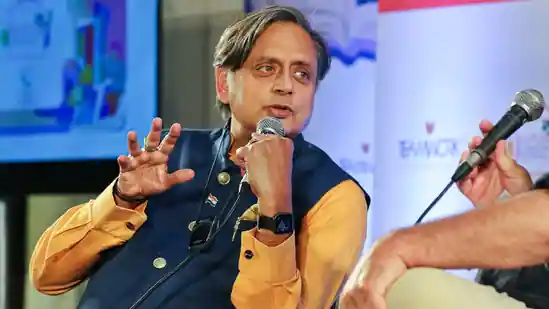
New Delhi, Mar 15: Senior Congress leader Shashi Tharoor on Tuesday said Prime Minister Narendra Modi, at times, displayed certain traits of Atal Bihari Vajpayee by saying the right things, but has not translated his words into actions.
He also said Modi might serve the country better by implementing what he has said publicly.
"Sometimes, in his speeches, he (Modi) seems to channelise his inner Vajpayee by saying all the right things, but he does not implement them. That is the real difference," Tharoor said here during a discussion to mark the launch of a biography of Vajpayee, authored by journalist Sagarika Ghosh.
He recalled Modi's visit to Kashmir where he had talked about promoting tourism and urged youngsters to shun the path of terrorism.
"If only he can start implementing some of the thoughts that he has said publicly, he might serve the country better," Tharoor said during the discussion moderated by Ghosh.
Participating in the discussion, Yashwant Sinha, who served as a Union minister in the Vajpayee government, described the former prime minister as a consensus builder who was distressed at disruptions in Parliament.
"He would have been the consensus man even if he had a full majority," said Sinha, who quit the Bharatiya Janata Party (BJP) in 2018 and is now a vice president of the Mamata Banerjee-led Trinamool Congress (TMC).
He recalled an incident when Vajpayee agreed to Opposition demands to adopt a resolution in Parliament, condemning the US attack on Iraq.
Sinha said according to the compromise reached with the Opposition, the Hindi version of the resolution used the word "ninda" (condemn), while the English version "deplored" the American invasion of Iraq.
"Vajpayee was a consensus builder. He believed that democracy should function on the basis of consensus...not on the basis of numbers," said Sinha, who served as the external affairs minister and the finance minister in the Vajpayee government.
"Talking about today's Parliament, I personally think that the whole ruling party erupting into 'Modi, Modi' when the prime minister arrives is the ugliest scene that the Lok Sabha has seen. I would have never imagined such a thing happening in Parliament," he said.
Tharoor said Parliament has been reduced to a notice board of government decisions as no suggestions made by the Opposition were ever taken on board by the ruling party.
"Once they bring a bill, they crack the whip. The anti-defection law applies to every bill and they would get their acquiescent majority to vote for whatever the bill may be about and you would find this repeatedly on relatively non-politically contentious issues," he said.
The Thiruvananthapuram MP said there is an inherent flaw in the Parliament system that elects a legislature to form the executive.
"This is a fundamental violation of the basic principle of separation of powers. And in our country, coupled with the anti-defection law, once you form the executive, the legislature is reduced to a rubber stamp," he said.
"They have an automatic majority in whatever they do and if any member dares to challenge them, the person can be expelled. That is the way the system has reduced the individual Parliamentarian to an irrelevant one," the former Union minister said.
Let the Truth be known. If you read VB and like VB, please be a VB Supporter and Help us deliver the Truth to one and all.
Private bus operators in Karnataka to hike fares by 20-30 pc after fuel price rise
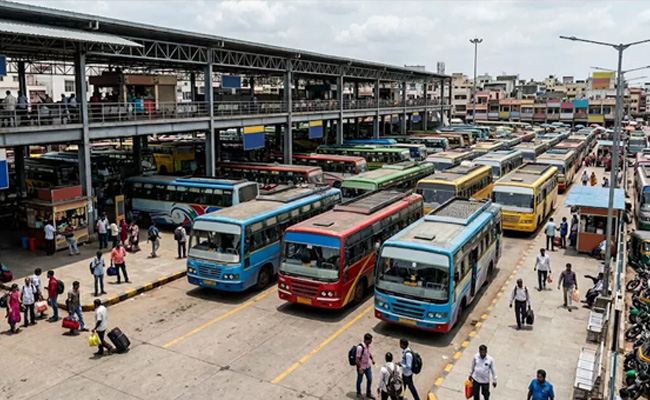
Bengaluru (PTI): In the wake of the hike in fuel prices, private bus operators have decided to increase fares by 20-30 per cent, depending on the route, effective from Friday midnight.
They have also called for government subsidies, a reduction in cess, and lower road taxes to improve the situation.
"The situation for bus owners in the state is already distressing due to high road tax and the impact of the Shakti scheme (free bus travel for women in government buses). On top of this, fuel prices have increased," Karnataka State Bus Owners’ Association President S Nataraj Sharma said.
"This will impose a burden of Rs 15,000 per vehicle per month on bus owners. If an owner has three buses, the burden will be Rs 45,000 to Rs 50,000 per month," he added.
ALSO READ: 'Aurangzebi govt': BJP slams Cong-led Karnataka dispensation over saffron shawl ban in schools
Speaking to reporters, he said the situation has made it inevitable for owners to increase fares by 20-30 per cent, depending on the route, under current conditions.
The increase may be roughly Rs 200 per seat, he added.
"For example, the current bus fare from Bengaluru to Belagavi is around Rs 1,000–Rs 1,200, which is likely to rise to Rs 1,350–Rs 1,400. Similarly, fares from Bengaluru to Mangaluru or Udupi currently range from Rs 900–Rs 1,000 and are expected to go up to Rs 1,100–Rs 1,200," he said.
Petrol and diesel prices were each hiked by Rs 3 per litre on Friday, the first rate increase in more than four years, amid mounting losses for fuel retailers due to surging global crude prices in the wake of the West Asia conflict.
The increase comes a couple of weeks after the Assembly elections concluded in Assam, Kerala, Tamil Nadu, West Bengal, and Puducherry.