Modi’s govt will fall after September 2025: Subramanian Swamy hints at major shake-up in BJP
Explosive Subramanian Swamy Podcast: Part 1
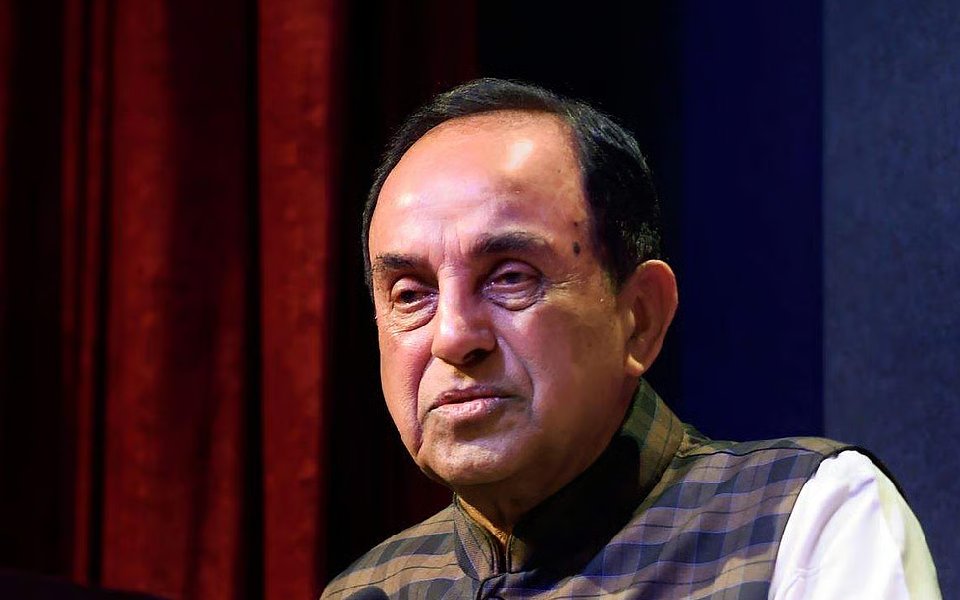
A bold and sensational podcast episode featuring veteran BJP leader Dr. Subramanian Swamy has taken YouTube by storm, garnering nearly 2.6 lakh views within 24 hours of its release on the Molitics YouTube channel, hosted by Editor Neeraj Jha. In the episode released on June 17, 2025, Swamy made a series of explosive remarks targeting Prime Minister Narendra Modi, Union Home Minister Amit Shah, and even raised questions on the future of the BJP and India's economic and political direction.
This is the first part of a five-part news series that breaks down the major statements and allegations made during the podcast. Each part will focus on specific topics discussed in the hour-long conversation. Stay tuned for the upcoming segments.
Here’s what was revealed in Part 1, where the conversation focused on the power dynamics within BJP, the future of Narendra Modi, a possible leadership change, and the upcoming delimitation exercise.
Modi Still in Control, Not the RSS: Swamy
In the part of the conversation, Neeraj Jha asked who truly controls the BJP — Narendra Modi or the Rashtriya Swayamsevak Sangh (RSS).
Without hesitation, Swamy replied, “Modi. There is nothing about the RSS. As far as running the government is concerned, it’s Modi.”
This once again brought focus on the long-debated equation between the BJP government and its ideological parent, the RSS. Swamy dismissed any influence of the Sangh on day-to-day governance under Modi.
A Big Decision in September, Swamy Drops a Hint
When asked about an important organisational development expected in September 2025, Swamy hinted at a major shake-up but refused to disclose full details.
The host pressed further: “Who is being made the new BJP president?”
Swamy evaded the question but added, “I won’t tell you now... A big bomb is going to explode in September.”
On being asked if he himself was being considered for the party president’s post, Swamy denied it, saying, “No, I don’t need any post. I am senior to everyone. Whoever comes, whoever is President, whoever is any official I am not scared, I will take my stance.”
Swamy on North-South Divide and Language Debate
On the question of growing regional divide between northern and southern states, especially on issues like language, Swamy gave a blunt response:
“If anyone talks about breaking the country, two slaps should be enough.”
He added that there is no real language issue, saying even in Tamil Nadu, Hindi is studied widely and “there is no problem in Karnataka either.”
Delimitation Plans Questioned: "Why the Hurry?"
Another critical topic was the upcoming delimitation exercise which has sparked political debate across the country. Swamy questioned the intentions behind it.
“Modi is doing it. I don’t know why the hurry. What was the need to reduce seats in one state and increase in another?”
While the host pointed out that the government wants delimitation based on population, Swamy contradicted that, saying “It will not be.”
When pressed further, he added a cryptic comment, “Let the government remain after September. Then ask me.”
“Modi is Falling, Not the Government”
One of the most shocking statements came when Swamy claimed:
“Modi is falling. The government will remain. Why should the BJP government fall? We will never want Congress.”
He took a direct jab at Rahul Gandhi, saying his citizenship is British, and that he had submitted proof in court. He went on to accuse Modi of “saving Rahul Gandhi.”
When asked whether this meant Modi was shielding the Congress leader, Swamy did not deny it.
Finally, when asked who would lead the BJP government if Modi steps down, Swamy kept things vague, saying:
“I won’t say anything now. I don’t want to make one person happy and another sad. Let it happen. It will happen.”
Let the Truth be known. If you read VB and like VB, please be a VB Supporter and Help us deliver the Truth to one and all.
4 workers die after being buried under coal slurry in Jharkhand's Dhanbad
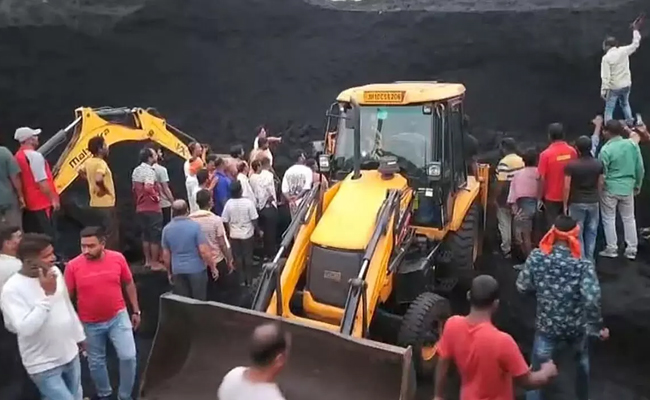
Dhanbad (Jharkhand) (PTI): At least four workers died after being buried under coal slurry in Jharkhand's Dhanbad district on Saturday, a police official said.
The incident took place at Moonidih coal washery in the command area of Bharat Coking Coal Limited (BCCL).
"Bodies of all four workers were dug out of debris during a rescue operation," Putki police station in-charge Waqar Hussain told PTI.
The incident took place when coal slurry was being loaded into trucks by workers, during which a large chunk of slurry fell and trapped several workers underneath, officials said.
The deceased have been identified as Manik Bauri, Dinesh Bauri, Deepak Bauri, and Hemlal Gope.
Meanwhile, the family members of the deceased and local villagers placed the bodies in front of the washery gate and began a protest.
They demanded compensation, jobs for dependents and action against those responsible for the incident.
Police and administration officials are trying to pacify the protesters, an official said.