Month after veiled attack on Hooda, Haryana Cong leader Sampat Singh quits party
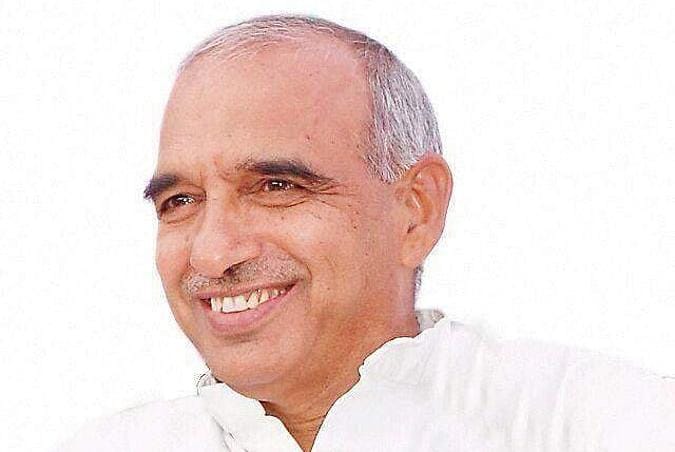
Chandigarh (PTI): A month after taking a veiled dig at former chief minister Bhupinder Singh Hooda's appointment as the CLP leader in Haryana, senior state Congress leader Sampat Singh quit the party on Sunday.
In his resignation letter addressing Congress president Mallikarjun Kharge, Singh gave a detailed account of how circumstances were allegedly created in the party, forcing several leaders to switch to other parties over the years.
The former Haryana minister claimed that "no accountability has been fixed for the party's continuous decline" in the state over the last 15 years.
A month ago, Singh had taken a veiled dig at Hooda's appointment as the CLP leader, asking "if the party wanted to appoint the same person, what was the need to wait for one year".
The Congress central leadership named Hooda as the CLP leader in Haryana on September 29, almost a year after the assembly polls in which the BJP returned to power a third consecutive term.
Without taking Hooda's name, Singh then said that the Congress had handpicked a person and made him the chief minister when it won 67 out of 90 seats under the leadership of Bhajan Lal in 2005.
"After this, over the years, leaders from prominent political families, including Bhajan Lal and Bansi Lal, were sidelined in the party," Sampat had said.
The six-time MLA described how he was sidelined despite his contribution and experience.
He said he joined the Congress in 2009 (after he left INLD).
"I was assured the Fatehabad Assembly seat, but assigned Nalwa instead. The people of Nalwa, however, placed their trust in my ethics and commitment, and elected me as their representative in the Haryana Assembly," he said.
"But Congress lost the Fatehabad seat, a direct result of public resentment over my shift to Nalwa despite winning Fatehabad five times. My entry helped the Congress win about half a dozen additional seats in regions where I had political influence," he wrote.
"Despite my contribution and experience, I was denied a cabinet berth or any organisational role. I later learned that this was because I had met Kumari Selja after the elections, and her ministry (as then Union minister) had approved a Rs 18 crore grant for my constituency," he said.
He said the history repeated in the 2019 Assembly elections, when he was again denied a ticket, and both Nalwa and Fatehabad were won by the BJP.
"In 2024, I was appointed coordinator for the Lok Sabha elections in Sirsa constituency, where Kumari Selja was contesting as the Congress candidate. Due to my sincere efforts for her victory, the party's state leadership felt insecure. In the same year, I attended Kumari Selja's rally in Narnaund, which angered the state leadership. Later that year, I was again denied a party ticket, and the Congress lost Nalwa once again," he said.
Singh further alleged that in 2024 Haryana Assembly polls, "capable candidates were ignored, while tickets were given to those with money power."
He alleged that Congress in Haryana has been reduced to a personal fiefdom, where "loyalty is rewarded with servitude and dissent with exile".
No accountability has been fixed for the party's continuous decline between 2009 and 2024, he said.
Singh's resignation letter gave a detailed account of leaders who left the party, including late Bhajan Lal, Rao Inderjit Singh, Kuldeep Bishnoi, Dharambir Singh and Arvind Sharma.
It talked about how circumstances were allegedly created within the party, forcing many senior leaders to quit and join other outfits.
"Shruti Choudhry, two-term MP and granddaughter of late Bansi Lal, was denied a ticket from Bhiwani. Today, she is a cabinet minister in the BJP government in Haryana," he said.
"Kiran Choudhry, a five-term MLA, former Deputy Speaker in Delhi, and two-term cabinet minister in Haryana, was repeatedly insulted and sidelined. When she served as the CLP leader, a certain group's MLAs were instructed to boycott her meetings. Her departure from the Congress was celebrated by those now presiding over its decline. She went on to help the BJP secure five of six seats in Bhiwani-Dadri and is now a BJP Rajya Sabha member," he further wrote.
Savitri Jindal, a three-term MLA and two-term minister, resigned from the Congress. She now serves as an Independent MLA backing the BJP government in the state. Her son Naveen Jindal, a three-time MP, also left the Congress and is now a BJP MP from Kurukshetra, Singh said.
He further said, "Kumari Selja, AICC general secretary and one of India's tallest Dalit women leaders, was appointed Haryana Congress president but removed in 2022 at the insistence of the state leadership. She was systematically prevented from performing her duties".
Singh said that the 2024 Haryana Assembly elections should serve as a case study for the Congress as despite "every survey, media outlet, and informal assessment predicting a Congress victory, the party suffered defeat, a result that came as no surprise to those aware of the persistent decay within the organisation. Since 2009, the party has ignored every warning sign as its fortunes steadily declined".
Taking a veiled dig at Hooda, Singh said, "The state leadership consolidated its personal political power. In 2020, when a Rajya Sabha seat fell vacant, instead of promoting a deserving member from the Scheduled or Backward Castes, the leader's own son (Deepender Singh Hooda) was nominated, turning a national party into a regional family enterprise."
"Even Randeep Singh Surjewala, a four-term MLA and INC General Secretary, had to be nominated from Rajasthan due to factionalism. Later, Ajay Maken, Congress treasurer, lost the Rajya Sabha election from Haryana, another reflection of the leadership crisis," Singh alleged.
"..Under these circumstances, I have lost faith in the ability of the Indian National Congress to represent the interests of the people of Haryana. As a proud Haryanvi, I cannot let my people down. My commitment to Haryana remains steadfast, but my faith in the current Congress leadership does not," he said, citing the reason for tendering his resignation.
Let the Truth be known. If you read VB and like VB, please be a VB Supporter and Help us deliver the Truth to one and all.
No unannounced load shedding in Kerala, outages due to overload, says Minister
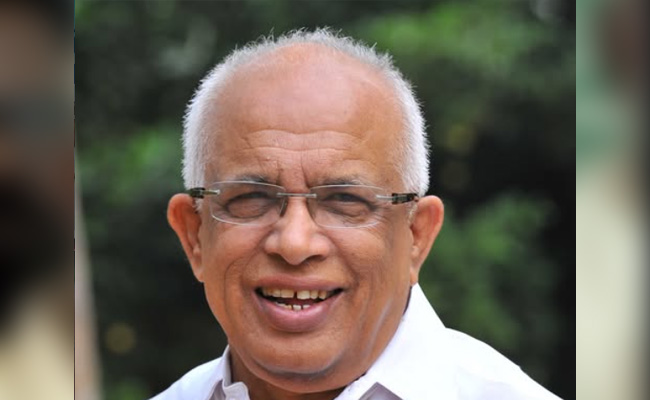
Palakkad (PTI): Kerala Electricity Minister K Krishnankutty on Saturday said there was no unannounced load shedding in the state, attributing recent power interruptions to temporary overload caused by high consumption.
Clarifying concerns raised from various parts of the state, the minister said the disruptions are not deliberate but occur when demand peaks, particularly between 10 pm and 11 pm.
"It is not being done intentionally. Power consumption has risen sharply, and when there is excessive and indiscriminate usage, the system experiences overload, leading to natural supply interruptions," he told reporters here.
His remarks come amid complaints that several areas have been witnessing frequent power cuts, often lasting around 15 minutes and occurring multiple times during the night.
Krishnankutty said the state's power demand has crossed 6,195 MW, putting pressure on the supply system. He added that around 70 per cent of Kerala's electricity is procured from outside, and existing power banking arrangements have been exhausted.
"We have approached the Regulatory Commission seeking permission to purchase more power. However, this will come at a higher cost," he said.
The minister said the government is trying to avoid increasing electricity tariffs and urged consumers to exercise restraint in usage to help manage the situation.
Responding to opposition criticism over the ruling LDF's earlier claims of a decade without power cuts, he said the current situation is not unique to Kerala.
A power crisis is emerging across the country, he said, and sarcastically asked the Opposition to take note of the role of natural factors in this.
Krishnankutty expressed confidence that the situation would improve within two days, while cautioning that long-term energy security would depend on enhancing in-state power generation.
He also warned that future generations could face serious challenges if adequate electricity production capacity is not developed within Kerala.