Most exit polls get Chhattisgarh poll results, scale of BJP's MP win wrong
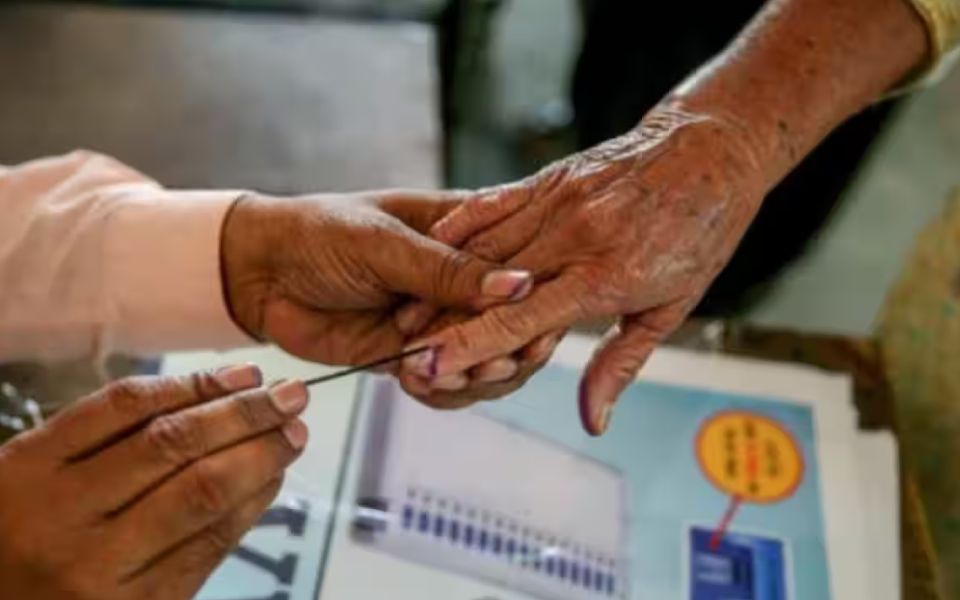
New Delhi, Dec 3: With the Assembly election results throwing up surprises, most exit polls got the outcome in Chhattisgarh and the scale of the BJP's win in Madhya Pradesh wrong.
Only India Today-Axis My India, Today's Chanakya and India TV-CNX had predicted a big victory for the Bharatiya Janata Party (BJP) in Madhya Pradesh.
Many pollsters, however, got their prediction for the Telangana and Rajasthan polls right.
The BJP tightened its stranglehold in the Hindi heartland with big victories in the Madhya Pradesh, Rajasthan and Chhattisgarh polls, while the Congress is set to oust the Bharat Rashtra Samithi (BRS) from power in Telangana.
According to the Election Commission (EC), while the BJP is projected to win 54 seats and the Congress 35 in Chhattisgarh, in Rajasthan, the saffron party is set to win 115 seats and the Congress 69.
In Madhya Pradesh, the BJP is set to win 165 seats and the Congress 64. In Telangana, the Congress is poised to win 64 seats, the BRS 39 and the BJP eight.
Elections to five states, including Mizoram, took place between November 7 and November 30 and the counting of votes for four states was taken up on Sunday.
The poll results for Mizoram will be declared on Monday.
In Madhya Pradesh, while Dainik Bhaskar had predicted 95 to 115 seats for the BJP and 105 to 120 seats for the Congress, India Today-Axis My India had said the saffron party would get 140 to 162 seats and the Congress between 68 and 90.
India TV-CNX had also predicted a landslide victory for the BJP, pegging the number of seats at 140 to 159 and 70 to 89 for the Congress. Today's Chanakya had predicted that the BJP would get up to 163 seats while the Congress's tally would be between 62 and 86.
While the Jan Ki Baat exit poll had predicted that the BJP would get 100 to 123 seats and the Congress 102 to 125, Republic TV-Matrize had given 118 to 130 seats to the saffron party and 97 to 107 seats to the Congress.
TV9 Bharatvarsh-Polstrat had said the BJP would get 106 to 116 seats and the Congress between 111 and 121. Times Now-ETG had given 105 to 117 seats to the BJP and 109 to 125 seats to the Congress.
Jist-TIF-NAI had said the Congress had an edge in Madhya Pradesh, just like in 2018, and predicted 107 to 124 seats for the party as against the BJP's tally of 102 to 119 seats.
In Rajasthan, India Today-Axis My India had hinted at a tight race, predicting 86 to 106 seats for the Congress, 80 to 100 seats for the BJP and nine to 18 seats for others.
While Dainik Bhaskar had given 98 to 105 seats to the BJP and 85 to 95 seats to the Congress, Jan Ki Baat had forecast that the saffron party would get 100 to 122 seats and the Congress between 62 and 85.
TV9 Bharatvarsh-Polstrat had predicted 100 to 110 seats for the BJP and 90 to 100 seats for the Congress in Rajasthan. Times Now-ETG had predicted 108 to 128 seats for the BJP and 56 to 72 seats for the Congress in the desert state.
Today's Chanakya got it wrong, giving a simple majority to the Congress, projecting that it would get 101 seats as against the BJP's tally of 89.
While India TV-CNX had put the Congress's tally at 94 to 104 in the 200-member Rajasthan Assembly and the BJP's at 80 to 90, Republic TV-Matrize had given 115 to 130 seats to the saffron party and 65 to 75 seats to the Congress.
P-MARQ pollsters gave 105 to 125 seats to the BJP and 69 to 91 seats to the Congress.
Jist-TIF-NAI had predicted that the revolving-door tradition would continue in Rajasthan and said the BJP would bag 110 seats and the Congress 70.
For Chhattisgarh, while ABP News-C Voter had predicted 41 to 53 seats for the Congress and 36 to 48 seats for the BJP in the 90-member House, India Today-Axis My India had forecast 40 to 50 seats for the Congress and 36 to 46 seats for the BJP.
India TV-CNX had forecast 46 to 56 seats for the Congress and 30 to 40 seats for the BJP.
News 24-Today's Chanakya was off the mark in Chhattisgarh, predicting that the Congress would secure a clear majority with 57 seats (plus-minus eight) while the BJP would get 33 seats (plus-minus eight).
According to Jan Ki Baat, the BJP would get 34 to 45 seats and the Congress between 42 and 53.
Dainik Bhaskar had also predicted a Congress victory, putting the party's tally at 46 to 55 seats as against the BJP's 35 to 45 seats.
For Telangana, while India TV-CNX had forecast 63 to 79 seats for the Congress, 31 to 47 seats for the BRS, two to four seats for the BJP and five to seven seats for the All India Majlis-e-Ittehadul Muslimeen (AIMIM), Jan Ki Baat had forecast that the Congress would get 48 to 64 seats, the BRS would get 40 to 55 seats, the BJP would get seven to 13 seats and the AIMIM between four and seven seats.
Republic TV-Matrize had predicted that the Congress would get 58 to 68 seats in Telangana, the BRS would get 46 to 56 seats, the BJP four to nine seats and the AIMIM five to seven seats. TV9 Bharatvarsh-Polstrat had said the Congress would get 49 to 59 seats, the BRS 48 to 58, the BJP five to 10 and the AIMIM six to eight.
News 24-Today's Chanakya had predicted a clear victory for the Congress, giving the party 71 seats against 33 of the BRS and seven of the BJP.
Let the Truth be known. If you read VB and like VB, please be a VB Supporter and Help us deliver the Truth to one and all.
4 held for sexually assaulting woman, girl on moving bus after social media alert in UP's Agra

Agra (UP) (PTI): Four people were arrested, after a prompt response by police following a social media alert, for allegedly sexually assaulting a woman and a girl inside a moving bus here, officials said on Tuesday.
According to an official police statement, at 12:27 am on April 27, information was received on the social media platform X about an incident of sexual assault on a bus travelling from Kanpur to Ahmedabad, which was approaching Namner crossing in Agra.
Acting under the direction of Police Commissioner Deepak Kumar, the Agra Police social media team immediately alerted the Rakabganj police station within minutes and coordinated with the victims to confirm the incident and obtain the exact location, it stated.
Police teams launched intensive checking at Namner crossing and intercepted the bus as it reached the spot. The four accused involved in the incident were apprehended on the spot, and legal action was initiated against them, the statement said.
The police said the swift response and coordination between the social media team and field units ensured timely action, bringing relief to the victims and other passengers, who expressed gratitude towards the police, it added.