Most NPAs originated in 2006-08, banks to blame: Raghuram Rajan
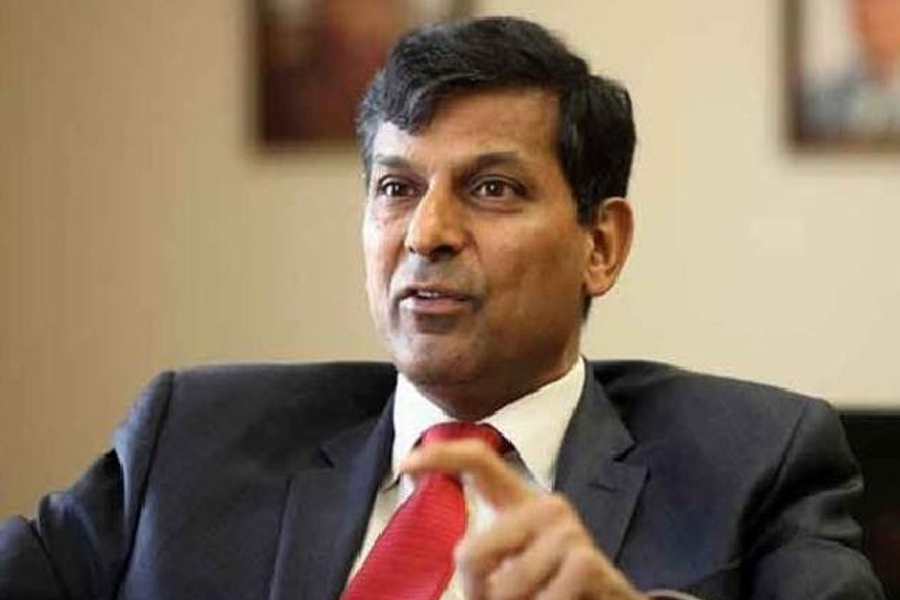
New Delhi, Sep 11 : Former RBI Governor Raghuram Rajan has said that a big number of non-performing assetes (NPAs) originated in 2006-08 when India's economic growth was strong while some banks proved inadequate in making proper due diligence.
Rajan was replying to a Parliamentary panel on NPA,
Acknowledging corruption as a factor, he also said that though he had forwarded some names for filing cases against some "high profile" bank fraudsters to Prime Minister Narendra Modi, no action had been taken in the matter.
"A larger number of bad loans originated in 2006-08 when economic growth was strong, and previous infrastructure projects such as power plants had been completed on time and within budget.
"It is at such times that banks make mistakes. They extrapolate past growth and performance to the future. So, they are willing to accept higher leverage in projects, and less promoter equity," he said.
In his note to Parliament's Estimates Committee on public sector banks headed by BJP leader Murli Manohar Joshi, Rajan said that global slowdown, project cost overruns and government decision-making were among other factors that contributed to the process.
Gross NPAs accumulated in the Indian banking system has touched a staggering level of Rs 10 lakh crore.
Referring to malfeasance as a factor in the NPA issue, Rajan said: "Undoubtedly, there was some... clearly, bankers were overconfident and probably did too little due diligence for some of these loans.
"Unfortunately, the system has been singularly ineffective in bringing even a single high-profile fraudster to book. As a result, fraud is not discouraged.
"I sent a list of four high-profile cases to the PMO for coordinated action to bring at least one or two offenders to book. I am not aware of the progress. This is a matter that should be addressed with urgency," he added.
According to Rajan, the RBI had set up a fraud monitoring cell during his Governorship to coordinate early reporting of such cases to the investigative agencies.
The former Governor also blamed public sector banks for inadequate due diligence before and after handing out loans. "Banker performance after the initial loans were made... (were) also not up to the mark," Rajan said.
"Unscrupulous promoters who inflated the cost of capital equipment through over-invoicing were rarely checked," he noted. He said the RBI could have been more pr-oactive and "raised more flags about the quality of lending in the early days of banking exuberance".
Rajan also said the phenomenon of loan waivers vitiate the credit culture and an all-party agreement to this effect would be in the country's interest in view of impending elections.
Let the Truth be known. If you read VB and like VB, please be a VB Supporter and Help us deliver the Truth to one and all.
CM Siddaramaiah alleges ‘criminal conspiracy’ in Sringeri recount, vows legal action
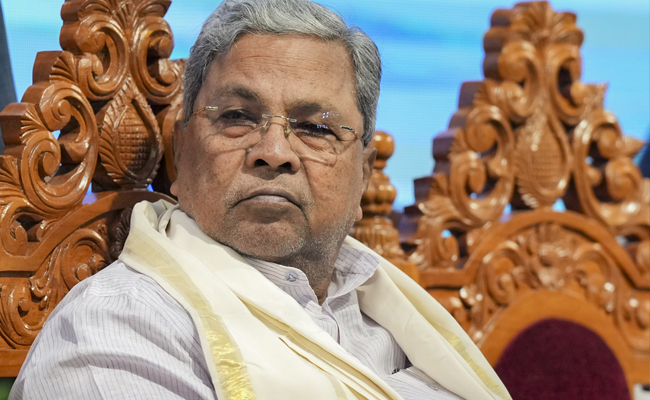
Bengaluru (PTI): Alleging a “criminal conspiracy” by BJP candidate D N Jeevaraj in the Sringeri Assembly poll recounting, Karnataka CM Siddaramaiah on Tuesday said the outcome was manipulated after valid postal ballot votes in favour of Congress leader T D Raje Gowda were tampered with during the recounting process.
Following a Karnataka High Court order on an election petition filed by Jeevaraj, challenging Raje Gowda’s election, the reverification and recounting were conducted on Saturday.
After the reverification and recount of postal ballots for the Sringeri Assembly constituency, votes polled in favour of Raje Gowda were reduced by 255, the returning officer said.
A report on the matter has been submitted to the Election Commission of India for further action, the officer added.
Congress leader Raje Gowda had won the 2023 Assembly polls from Sringeri by 201 votes, defeating his nearest rival Jeevaraj.
Addressing a press conference in Bengaluru, Siddaramaiah said the High Court had directed the recounting of postal ballots and that irregularities were noticed during the exercise conducted on May 2.
“This is a clear case of criminal conspiracy,” Siddaramaiah said, alleging that valid votes cast in favour of Raje Gowda were altered after being accepted by counting agents of all parties, including Congress, BJP, and JD(S).
He claimed that during the recounting of postal ballots, 255 votes were initially accepted as valid by all agents but were later tampered with by subordinate officials.
“There is a second mark on the votes polled in favour of Raje Gowda. They had accepted these as valid votes. Subsequently, another mark was made by officials. This is a clear case of criminal conspiracy,” he said.
When asked who was behind the alleged conspiracy, the CM replied, “It was hatched by Jeevaraj and others. It is planned.”
Siddaramaiah further alleged that the returning officer acted improperly by declaring the result despite the presence of an Election Commission observer during the recounting.
“Immediately after the counting, the returning officer announced the result. He should not have done so; this is against the law,” he said.
He pointed out that Raje Gowda had originally won by 201 votes, but after the recounting, the BJP candidate was declared the winner by 52 votes.
“The BJP has committed a criminal act of conspiracy. This is not vote chori but vote dacoity,” he alleged.
The CM said a police complaint had already been filed by Raje Gowda’s election agent, Sudhir Kumar, and emphasised the need for electoral integrity.
“We want transparency and free and fair elections. That is what our Constitution mandates,” he added.
Stating that the government would pursue legal remedies, Siddaramaiah said, “We are preparing an appeal challenging the returning officer’s announcement in a court of law.”
Responding to a separate query on elections in other states, the CM said there appeared to be an anti-incumbency factor in West Bengal, while results in Tamil Nadu were “surprising,” adding that Vijay’s party was emerging as the largest there.
Following the victory of party candidates in Bagalkote and Davanagere South, Siddaramaiah expressed confidence about future electoral prospects in Karnataka.
“Even in 2028, we will win the Assembly elections. We will come back,” the CM said.
Siddaramaiah added that he would order a forensic examination into the alleged tampering of postal ballots.