MP polls: CM predicts huge BJP victory; Nath, Digvijaya confident of Cong win
Bhopal (PTI): The ruling Bharatiya Janata Party and the opposition Congress on Thursday claimed they would win the Assembly polls in Madhya Pradesh, results of which will be declared on December 3.
Exit polls being telecast by various news channels since the evening after the end of voting in Telangana have predicted a close fight in MP, with some of them giving the BJP an edge.
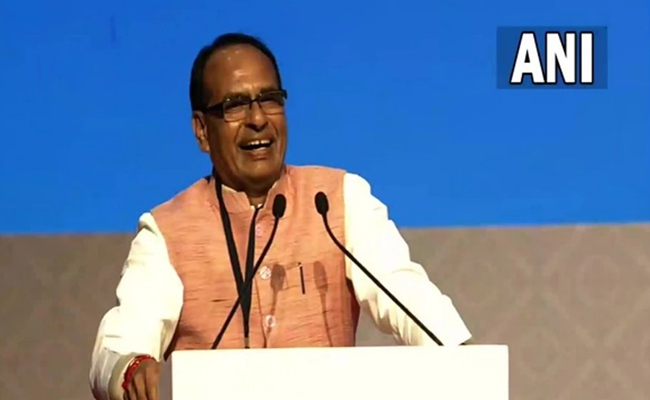
"I have been saying from the beginning and also during the campaign that Prime Minister Narendra Modi affection and leadership, (Union Home Minister) Amit Shah's strategy, (BJP president) JP Nadda's leadership and the hard work of party workers as well as the schemes of the state government will result in a huge victory for the BJP," said Chief Minister Shivraj Singh Chouhan.
Asserting that the "double engine government" of the BJP at the Centre and in MP had brought about huge development, Chouhan told PTI he was never in any doubt about his party retaining power.
"We always felt we will win and we are winning. The love and affection shown by our sisters, nieces and nephews (referring to citizens of the state) has been tremendous. At times, more women were present at our rallies than men. There was no 'kaante ki takkar (tough fight). Our ladli behanas have removed all the thorns," Chouhan said.
Meanwhile, in a post on social media platform X, MP Congress chief Kamal Nath said, "I have always said the country is run by a vision and not by television. Many exit polls have shown that the Congress is forming the government in the state, while some others are saying something different."
"You (party workers) should not get carried away by all these things and should remain focused on the aim like 'Arjun' on the counting to ensure each and every vote cast in favour of the Congress is counted for the party. This will ensure formation of the Congress government with a landslide victory," Nath further said.
Veteran Congress leader Digvijaya Singh, however, pointed out exit poll predictions are varied and nothing can be said about them.
"But I can firmly say Congress will get more than 130 seats in MP. There was a feeling of change in the people and they fought the polls along with Congress workers. The people are fed up with the BJP, its workers and Chouhan's false promises as well as bad governance," asserted Singh, a Rajya Sabha MP and former state CM.
State home minister Narottam Mishra, who contested from Datia seat, said the BJP will win more than 165 seats, adding that exit polls had paved the way for the Congress' "exit" from the state.
Let the Truth be known. If you read VB and like VB, please be a VB Supporter and Help us deliver the Truth to one and all.
4 held for sexually assaulting woman, girl on moving bus after social media alert in UP's Agra

Agra (UP) (PTI): Four people were arrested, after a prompt response by police following a social media alert, for allegedly sexually assaulting a woman and a girl inside a moving bus here, officials said on Tuesday.
According to an official police statement, at 12:27 am on April 27, information was received on the social media platform X about an incident of sexual assault on a bus travelling from Kanpur to Ahmedabad, which was approaching Namner crossing in Agra.
Acting under the direction of Police Commissioner Deepak Kumar, the Agra Police social media team immediately alerted the Rakabganj police station within minutes and coordinated with the victims to confirm the incident and obtain the exact location, it stated.
Police teams launched intensive checking at Namner crossing and intercepted the bus as it reached the spot. The four accused involved in the incident were apprehended on the spot, and legal action was initiated against them, the statement said.
The police said the swift response and coordination between the social media team and field units ensured timely action, bringing relief to the victims and other passengers, who expressed gratitude towards the police, it added.