MP polls: Viral video shows Congress candidate seeking blessing in slipper slaps

Ratlam, Nov 18: The Madhya Pradesh assembly polls may have concluded but elements tied to it continue to amuse citizens, particularly those on social media.
A video of the Congress candidate from Ratlam, Paras Saklecha, gladly taking slipper slaps doled out by a fakir is being widely shared on the internet.
Saklecha, who lost the elections in 2013 and 2018, visited the fakir on Thursday with a pair of new slippers to seek his blessing.
Saklecha could not be reached despite multiple attempts.
The video shows the fakir, who lives at a dargah on Mhow road, hitting the former legislator on the head and then cheeks.
As the elderly ascetic, affectionately called by locals as Abba', continues hitting Saklecha, the Congress leader requests him to stop saying "bas, bas, ho gaya (that is enough)", as per the video.
Many people visit the fakir, who smacks them with footwear, with the belief that it would bring good omen for them. While they offer him lungis and footwear, the ascetic accepts them from a few and throws away the rest.
After receiving blows, Saklecha was heard saying, "The fakir baba has warded off evil shadows if any upon me."
The Congress nominee has been pitted against BJP's Chetan Kashyap.
Saklecha won the Ratlam assembly constituency as an independent candidate in 2008, defeating the then home minister Himmat Kothari. However, he lost to Kashyap in the 2013 and 2018 polls.
While attempts to contact Saklecha and Kashyap did not succeed, their acquaintances said they might be resting after a hectic campaigning.
Assembly elections were held in Madhya Pradesh on Friday with a voter turnout of 76.22 per cent, the highest in the state's history. Votes will be counted on December 3.
‼️GEMS OF CONGRESS — Congress candidate Paras Saklecha got himself beaten with slippers by a fakir to win the election.#MadhyaPradeshElections | #CongRSS pic.twitter.com/EV9OGVdLNS
— Mister J. - مسٹر جے (@Angryman_J) November 17, 2023
Let the Truth be known. If you read VB and like VB, please be a VB Supporter and Help us deliver the Truth to one and all.
Three private doctors arrested in illegal scanning case involving 31 minor pregnant girls in KR Pet
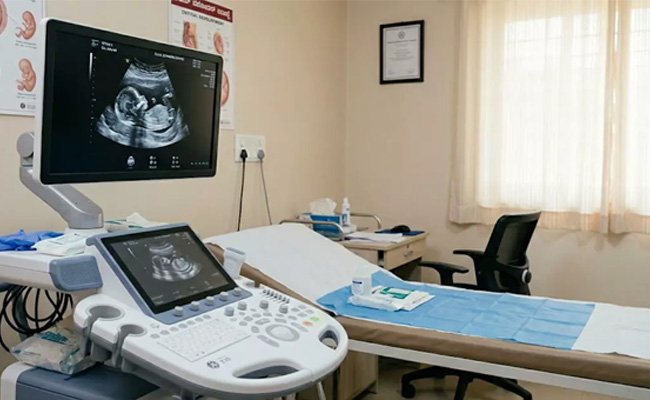
Mandya: Police on Tuesday arrested three private doctors in connection with a case involving alleged illegal scanning of 31 minor pregnant girls at a private diagnostic centre in KR Pet. The accused were later remanded to judicial custody.
The arrested doctors have been identified as Dr. Divyachetan of Chetana Maternity Centre, Dr. Harshit of Navi Diagnostic Centre, and Dr. Harish of Kushal Diagnostic Centre.
Police said Priyanka, a gynaecologist attached to a government hospital, is absconding and efforts are under way to trace her.
The case came to light after Karnataka Lokayukta Police recently conducted raids, during which illegal sex determination tests on minor pregnant girls were allegedly detected at two diagnostic centres in KR Pet town.
Following the raids, District Health and Family Welfare Officer Dr. Mohan, Deputy Director of the Women and Child Development Department P.S. Asha, and District Child Protection Officer Rashmi inspected several diagnostic centres and filed cases at KR Pet Town and Rural police stations.
According to the allegations, Navi Diagnostic Centre conducted scans on 24 minor pregnant girls, including 19 cases in 2024 and five in 2025. Kushal Diagnostic Centre is accused of conducting scans on seven minor pregnant girls.
Meanwhile, Deputy Commissioner Dr. Kumar has directed taluk vigilance committees to inspect all 63 ultrasound scanning centres in the district and submit reports within 10 days.
Officials said the Tahsildar of each taluk has been appointed chairperson of the respective committee.